
Google Patent Reveals Hidden Hinge That Snaps Foldable Devices Shut Automatically
One of the small but maddening problems with foldable phones is that they can creak open in your pocket or bag. Google is patenting a hinge mechanism that holds the device shut from the inside.
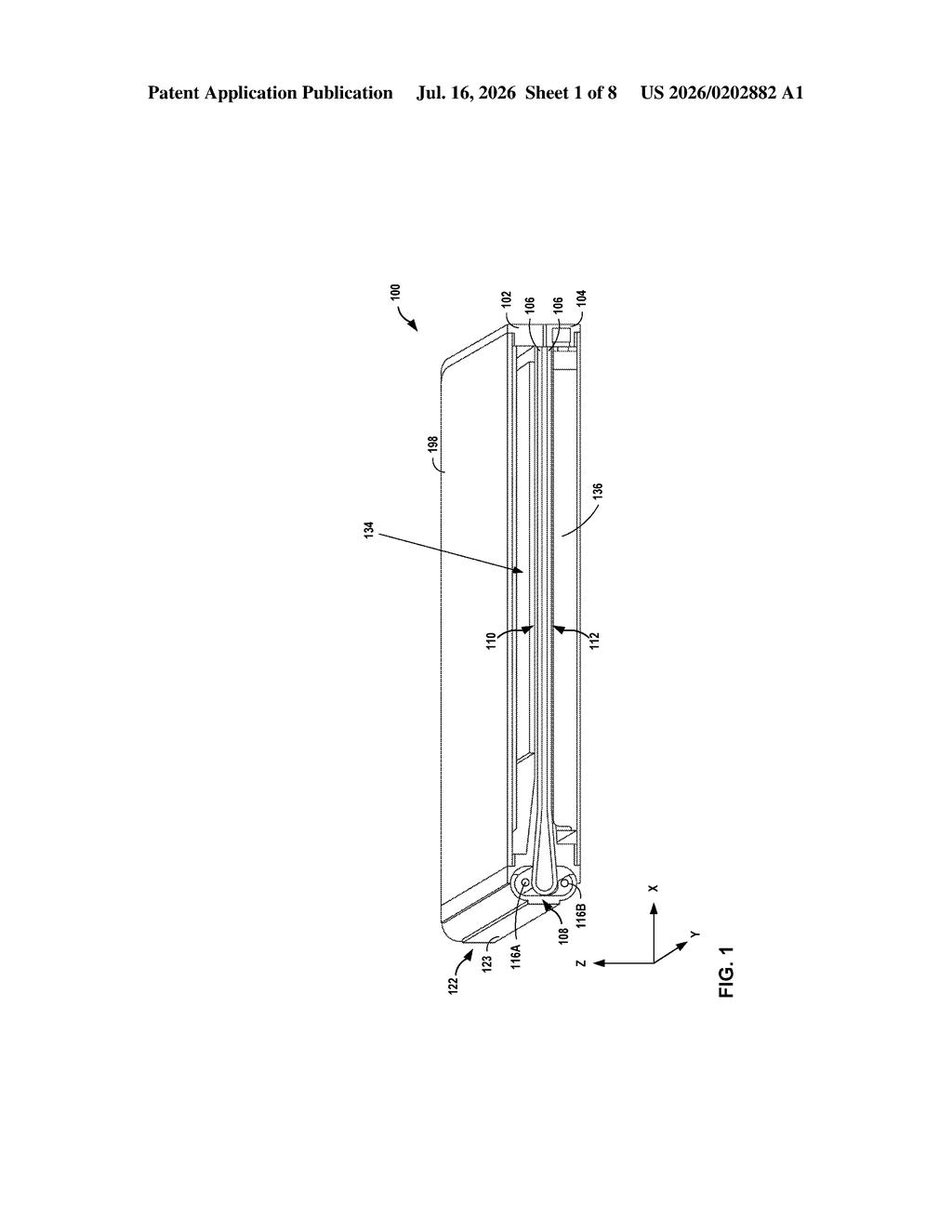
What Google's self-closing foldable hinge actually does
Imagine putting your foldable phone in your bag and having it slowly open on its own, bending the screen against whatever else is in there. It's a real-world annoyance with most current foldable designs, and it comes down to how the hinge holds tension when the phone is closed.
Google is working on a solution built entirely inside the hinge itself. When you fold the phone shut, a small mechanical piece inside the hinge slides into a track that snaps into place and applies a gentle holding force. No external latch, no button to press. The phone just stays closed because the hinge is designed to want to stay that way.
The same mechanism also keeps both halves of the phone moving together as you open or close it, so one side doesn't get ahead of the other. It's the kind of engineering that most people will never notice, which is exactly the point.
How the slider and latching track work together
The patent describes a foldable device where a hinge assembly handles two jobs at once: keeping both display halves synchronized as they open and close, and actively holding the device shut when folded.
The key piece is called a synchronization slider, a component that sits inside the hinge and slides back and forth along the fold axis as the two halves rotate. Because it connects to both sides mechanically, it forces them to move at the same rate, preventing the lopsided folding you sometimes feel on cheaper hinges.
The slider also has small projections (think tiny tabs or pins sticking out sideways) that interact with a latching track built into the hinge housing. As the device reaches the fully closed position, those tabs slot into the track in a way that generates a retaining force, physically resisting the device from opening back up on its own.
- The synchronization slider ensures both halves fold evenly
- Projections on the slider engage a latching track at full closure
- The latching track provides a passive holding force with no user-visible mechanism
The continuous display spans the entire hinge, meaning the screen runs uninterrupted across the fold, as in current foldable phone designs.
What this means for the next Pixel Fold
Foldable phones have improved a lot since the first-generation crease-fests, but hinge feel remains one of the sharpest dividing lines between a device that feels premium and one that doesn't. A hinge that holds itself confidently closed is a tangible quality signal every time you pick up the phone.
For Google specifically, this is relevant to the Pixel Fold line, which has faced criticism for being thicker and heavier than rivals from Samsung. A more mechanically sophisticated hinge that handles both synchronization and closure in one compact assembly could help Google reduce overall hinge bulk while improving feel. If this design ships, you'd notice it every single time you put the phone in your pocket.
This is exactly the kind of patent that matters more than it sounds. Hinge quality is one of the main reasons people return foldable phones, and a self-latching mechanism that requires no external hardware is a genuinely clean solution. Whether Google can execute it at production scale is a separate question, but the concept is sound.
There are more where this came from
We read every patent application Big Tech publishes and send you the ones worth knowing. Plain English, free, every week.
Want this weekly breakdown for a company we don't cover? Patentlyze Pro →
Be the first to weigh in