
Qualcomm Patents a Way to Send AI Training Updates Over Wireless Networks
What if your phone could help train an AI model without ever sending your raw data to a server? Qualcomm is filing patents to make exactly that kind of distributed learning work over wireless connections.
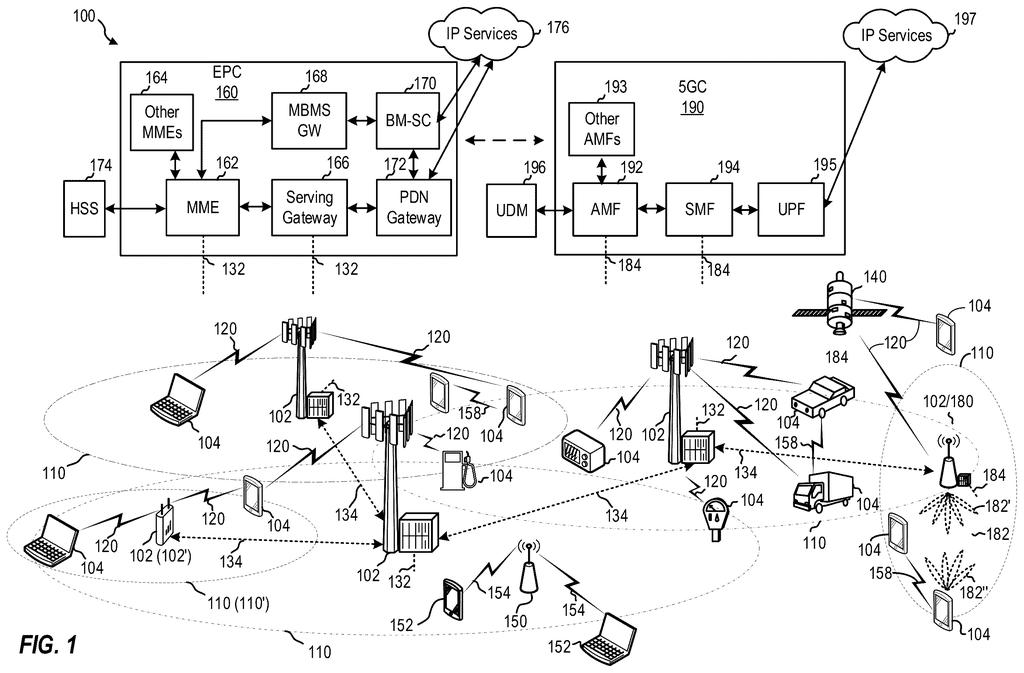
How Qualcomm spreads AI learning across wireless devices
Imagine a group of students all doing the same homework assignment but never sharing their answers with each other directly. Instead, they each send a coded summary to the teacher, who combines everyone's work to improve the lesson. That's roughly how federated learning works: many devices each train a small piece of an AI model locally, then share only the updates, not the underlying data.
The tricky part is that wireless signals have limited space, and sending those updates efficiently is genuinely hard. Qualcomm's patent describes a method for packing those AI training updates, called gradients, into a wireless signal in a way that spreads each update across all available signal components at once, rather than assigning one update to one slot.
The goal is to make AI training over wireless networks faster and more reliable, particularly in situations where many devices are all contributing to the same learning task simultaneously. This is the kind of low-level infrastructure work that makes future AI features on your phone actually possible.
How gradient projection maps onto wireless signal components
In federated learning, devices compute gradients (small mathematical nudges that tell a model how to improve) locally and report them back to a central coordinator. The challenge over wireless links is that gradients need to be encoded into a physical signal without too much noise or loss.
Qualcomm's approach uses a technique called unitary projection, a mathematical transformation that spreads each gradient across all available signal components simultaneously. Think of it like smearing ink evenly across a full page rather than writing one letter per slot. Because every gradient touches every part of the signal, the encoding is more resistant to interference and packet loss, which are constant problems on wireless links.
The key steps the patent describes are:
- Identifying the set of gradients computed at a device (the node)
- Projecting each gradient onto all signal components using a unitary matrix transformation
- Transmitting the combined signal back through the wireless channel
The receiving end (likely a base station or edge server) can then decode the combined signal and aggregate contributions from many devices. This kind of over-the-air computation lets multiple devices transmit simultaneously, and the wireless channel does part of the aggregation work automatically.
What this means for on-device AI and wireless standards
Federated learning is increasingly how companies want to train AI models on sensitive data, from keyboards that learn your typing patterns to health apps that personalize recommendations, without that data ever leaving your device. For that to work at scale, the wireless link connecting your device to the network has to handle gradient updates efficiently. Qualcomm's patent targets exactly that bottleneck.
For Qualcomm specifically, this is squarely in their lane: they make the chips and modems inside most Android phones and many base stations. A technique that improves how AI training signals travel over wireless networks could end up baked into 5G or 6G standards, which would give Qualcomm a meaningful position in how distributed AI gets built into the next generation of wireless infrastructure.
This is genuinely technical infrastructure work, not a consumer-facing feature anyone will notice. But Qualcomm is one of the few companies positioned to actually ship this kind of thing into real wireless hardware, and over-the-air federated learning is a real open problem in the standards community. Worth tracking if you follow AI at the network layer.
There are more where this came from
We read every patent application Big Tech publishes and send you the ones worth knowing. Plain English, free, every week.
The drawings
9 drawing sheets from US 2026/0222311 A1 · click any drawing to enlarge


Want this weekly breakdown for a company we don't cover? Patentlyze Pro →