
IBM Patent Enables Encrypted AI Inference Without Ever Exposing Your Data
What if an AI could analyze your medical records or financial data without ever seeing them in readable form? That's the core idea behind IBM's latest patent, which describes running a full AI model on data that stays encrypted the entire time.
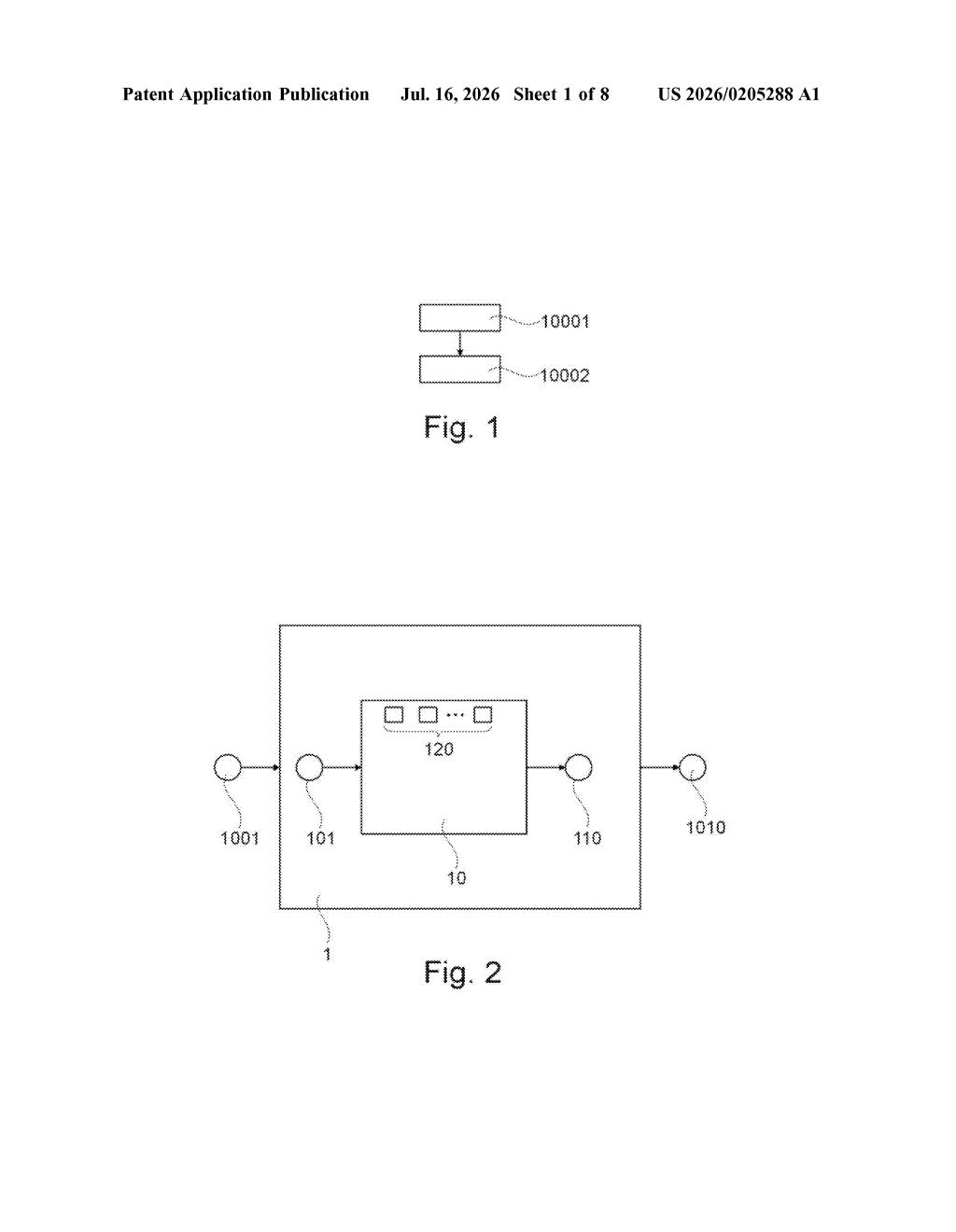
What IBM's encrypted AI computation actually does
Normally, when an AI processes your data, it has to decrypt it first, which creates a window where your information is exposed. IBM's patent describes a way to run an AI model on data that stays locked the whole time, from input to output.
The trick is a type of encryption called fully homomorphic encryption, which lets math happen on scrambled data without ever unscrambling it. The challenge is that modern AI models use complicated math functions that don't play nicely with this kind of encryption. IBM's approach pre-computes some of the harder math in advance, then breaks the AI's calculations into small, manageable approximations that work even when everything is encrypted.
The result is an AI that can answer questions about your data without you, or anyone else, ever handing over the raw information. Think of it like a calculator that works through a locked safe without opening it.
How the piecewise polynomial math keeps data locked
The patent targets a specific problem: transformer-based AI models (the architecture behind systems like ChatGPT and IBM's own Watson-era successors) rely on non-linear functions, like the softmax or GELU activation functions, that are mathematically awkward to compute under fully homomorphic encryption (FHE, a scheme where data stays encrypted during computation).
IBM's method handles this by approximating those non-linear functions using a set of polynomials (equations built from powers of a variable, which FHE can handle). Rather than using one polynomial across the entire input range, the system uses multiple polynomials, each centered at a different point, so each one only has to cover a small slice of the input space. A polynomial centered near a particular value is more accurate in that neighborhood, similar to how a local street map is more detailed than a world map.
The computationally expensive parts, called precomputed terms, are calculated once in advance and stored in encrypted form. When a new encrypted input arrives:
- The system measures the difference between the input and each polynomial's center point
- It selects or weights the relevant polynomials
- It combines the precomputed terms with those polynomials to produce an encrypted output
The final output is still fully encrypted, and only the authorized party with the decryption key can read it.
What this means for private AI and sensitive data
The practical use case is private AI inference: a hospital could send encrypted patient records to an AI service, get a diagnosis back, and the AI vendor would never see the actual data. The same applies to financial risk scoring, legal document review, or any domain where data confidentiality is both legally required and genuinely sensitive.
FHE-based AI has been a research goal for years, but the performance overhead has made it impractical. IBM's pre-computation approach is a real engineering attempt to chip away at that overhead. If it works at scale, it could shift the conversation around cloud AI from 'trust the vendor' to 'trust the math.'
This is a serious research-grade patent, not a product feature announcement. Fully homomorphic encryption is still painfully slow in real-world deployments, and IBM has been working in this space for years without a mainstream breakthrough. That said, the piecewise polynomial approach is a legitimate strategy for making FHE more tractable with transformer models, and the inventors include researchers from IBM's European lab with credible track records. Worth watching if you care about privacy-preserving AI, but don't expect a product launch soon.
There are more where this came from
We read every patent application Big Tech publishes and send you the ones worth knowing. Plain English, free, every week.
Want this weekly breakdown for a company we don't cover? Patentlyze Pro →