
ATI Technologies Patents a Fix for Misaligned Isometric Game Images
AI image generators are great at creating game art, but terrible at making sure every tile lines up at the same angle. ATI Technologies has a patent for fixing that automatically.
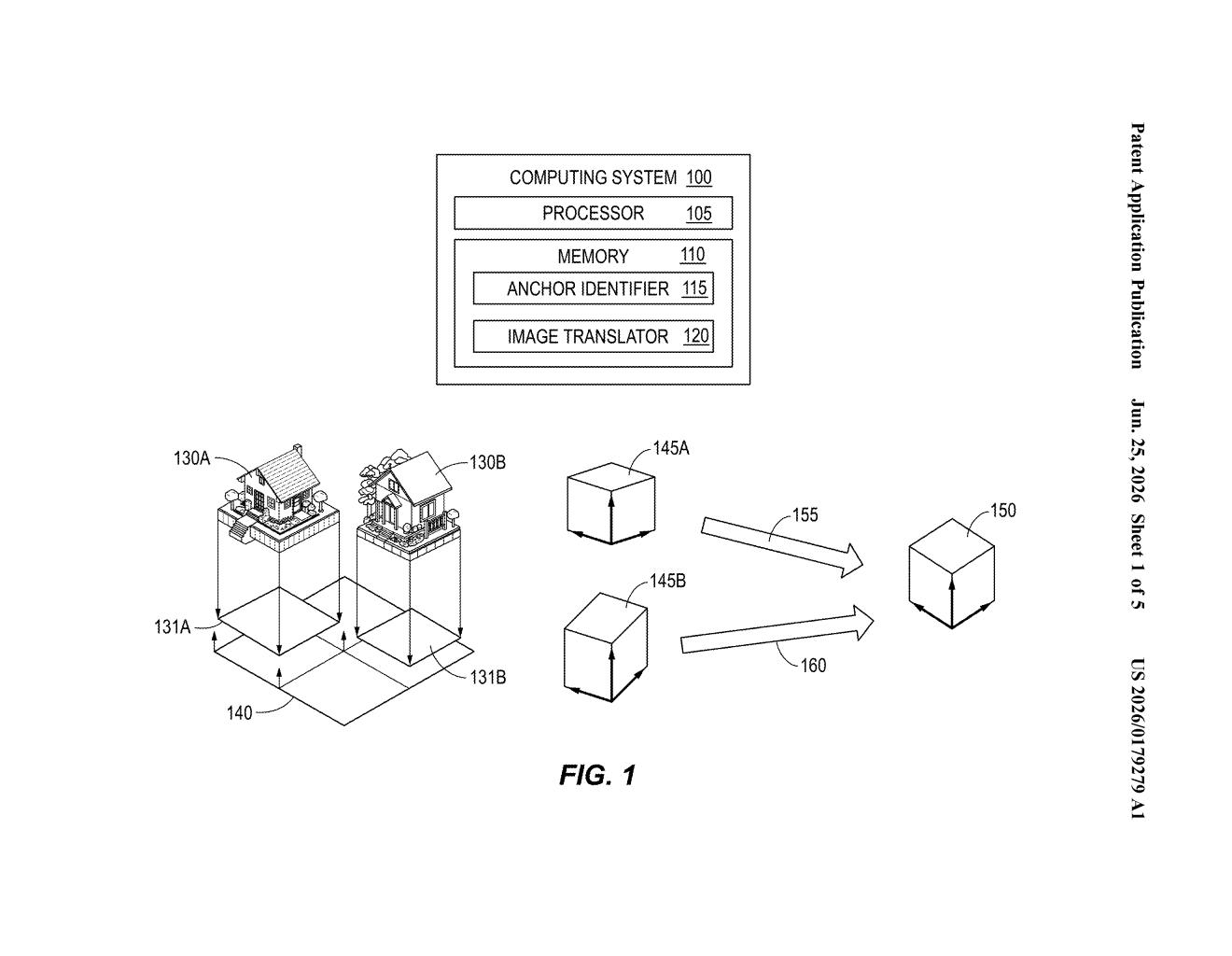
What ATI's isometric image correction actually does
Picture a top-down video game where everything looks like a tiny diorama, like the classic look of games such as SimCity or Diablo. That style is called isometric, and it depends on every single tile or object being drawn from the exact same angle. If even one piece is slightly off, it sticks out like a crooked picture frame.
Now imagine you're using an AI image tool to generate hundreds of those tiles. The AI is creative, but inconsistent. One tree leans a little left, one building is slightly wider than it should be. Fixing each one by hand would take forever.
ATI's patent describes a system that finds four key points on each image (think of them as the leftmost, rightmost, topmost, and bottommost tips of the object) and then uses math to nudge the whole image into the correct angle automatically. The result is a batch of tiles that all share the same perspective, ready to drop into a game grid without any manual tweaking.
How the anchor-point math realigns each image
The patent covers a computing system that corrects the orientation of isometric images by locating and repositioning four anchor points: the right, left, bottom, and top extremities of the image. These are the corners of the diamond shape that defines a standard isometric object.
Once those four points are identified, the system applies two rounds of mathematical adjustment:
- Horizontal correction uses polynomial interpolation (a curve-fitting technique that smoothly redistributes pixels across a row) to push or pull the image left or right.
- Vertical correction uses cubic polynomial interpolation (the same idea, but using a third-degree curve, which gives more control over the bend) to shift pixels up or down.
The goal is to reach a true isometric perspective, where the three visible axes (width, depth, and height) all meet at equal angles, typically 120 degrees apart. Images that were generated at slightly different angles get individually stretched and warped until they all conform to the same standard.
The patent specifically calls out AI-generated images as a primary use case, acknowledging that generative models produce output with inconsistent orientations that need to be normalized before they can be used together.
What this means for AI-generated game art pipelines
For game developers using AI tools to speed up asset creation, this kind of automated correction could remove a significant bottleneck. Right now, any studio using generative AI for isometric tile art either accepts imperfect results or spends time manually adjusting every image in a graphics editor. A built-in correction layer, potentially running on an AMD GPU, changes that workflow meaningfully.
More broadly, the patent signals that AMD's graphics division is thinking about the full pipeline from AI image generation to final game rendering, not just the rendering step itself. As AI-assisted game development becomes more common, tools that bridge the gap between "AI output" and "production-ready asset" will carry real value.
This is a narrow but genuinely useful patent. It solves a real, specific problem that anyone who has tried to use AI art generators for tile-based games has run into. It's not a flashy AI announcement, but it's the kind of practical tooling that makes developers' lives easier. Worth watching to see if it surfaces in AMD's GPU software stack.
There are more where this came from
We read every patent application Big Tech publishes and send you the ones worth knowing. Plain English, free, every week.
Want this weekly breakdown for a company we don't cover? Patentlyze Pro →