
New Patent Refines How Camera Sensors Lock Focus on a Subject
Autofocus sounds instant, but getting it right in low light or on fast-moving subjects takes careful engineering inside each individual pixel. Samsung's latest patent addresses exactly that, with a new internal wall structure that helps pixels measure focus more accurately.
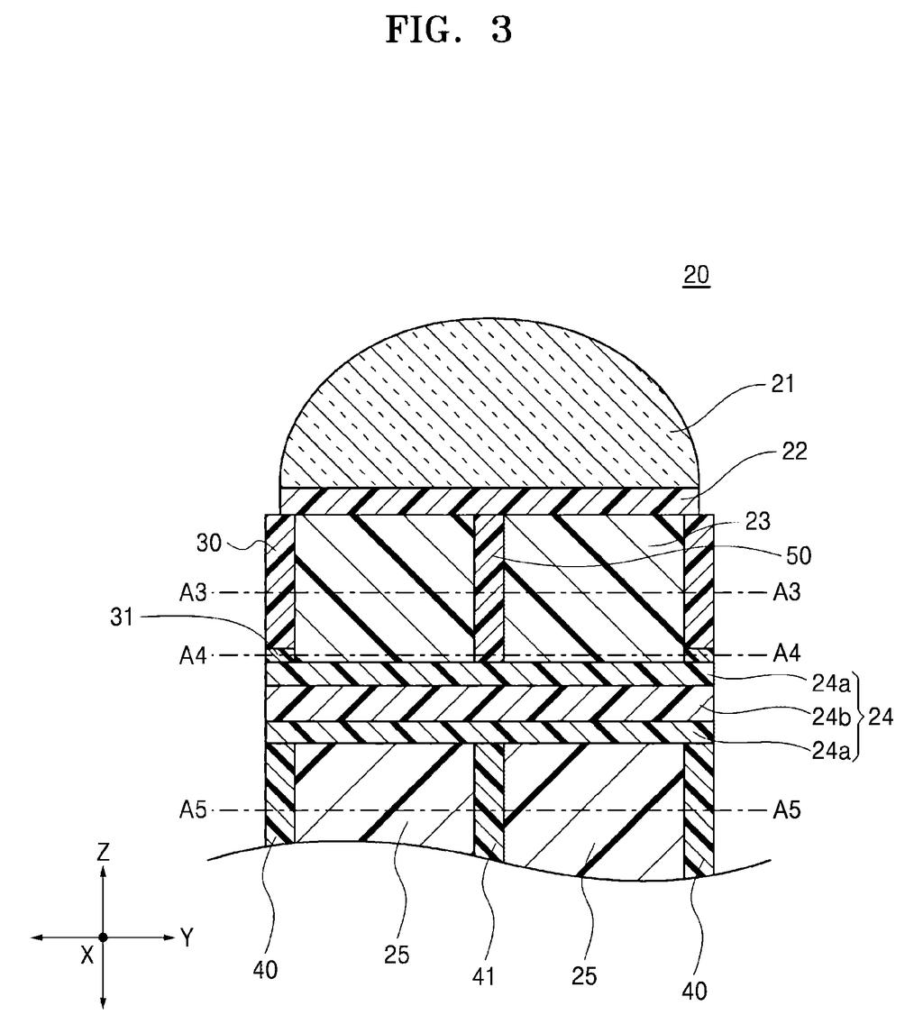
What Samsung's phase-detection autofocus pixel actually does
Imagine your phone camera trying to focus on a friend walking toward you in dim light. To do that quickly, the sensor needs special pixels that don't just capture a picture but also measure whether the image is sharp. These are called phase-detection pixels, and they work by splitting incoming light in two and comparing the halves.
Samsung's patent describes a new way to build those focus-detection pixels. Inside each one, a precisely positioned internal wall (called a light separation wall) runs parallel to another dividing structure inside the pixel. That careful alignment keeps stray light from leaking where it shouldn't, which means the sensor can make a cleaner comparison between the two halves of the image.
The result is a more accurate focus reading, especially in tricky conditions. Better focus information means your camera can lock onto a subject faster and hold it more reliably, whether you're shooting a portrait or a fast-moving pet.
… a boundary separation wall configured to divide the photosensor surrounded by the pixel separation wall into a plurality of parts; and a light separation wall between the on-chip lens and the photosensor …
Translation: Internal walls divide the sensor's light-catching parts to help the camera calculate focus precisely.
How the light separation wall guides focus inside one pixel
The patent describes a solid-state imaging device (the chip inside a camera that turns light into a digital image) where most pixels capture color and brightness, but a subset are dedicated phase difference-detection pixels. These special pixels are the hardware behind phase-detection autofocus, the system that measures how out-of-focus a scene is and in which direction the lens needs to move.
Each phase-detection pixel in Samsung's design contains several stacked layers:
- An on-chip lens that gathers incoming light
- A light transmission layer that filters for a specific wavelength (color)
- An anti-reflection layer to reduce internal bouncing of light
- Multiple separation walls that isolate each pixel from its neighbors
The key innovation is the light separation wall, a physical divider placed between the lens and the photodiode (the light-sensing element). The patent specifies that this wall must run parallel to a companion structure called the boundary separation wall, and both must sit on a plane perpendicular to the stacking direction of the pixel layers. In plain terms, the walls line up in the same direction, which minimizes cross-talk (light bleeding from one half of the pixel into the other).
That alignment matters because phase-detection autofocus relies on comparing two light signals from the same pixel. Any leakage between the two halves corrupts that comparison and makes autofocus less reliable.
… a light transmission layer, an anti-reflection layer, a light transmission layer separation wall, a pixel separation wall, a boundary separation wall, and a light separation wall arranged between the on-chip lens and the photodiode …
Translation: The patent piles up numerous specialized microscopic layers and walls to trap and direct light accurately.
What this means for Samsung camera autofocus performance
Phase-detection autofocus is already standard in flagship Android and iPhone cameras, but the quality of focus tracking still varies significantly in low light and with fast subjects. The precision of the internal pixel architecture is a real bottleneck, and small improvements in wall geometry translate directly into faster, more accurate focus.
For Samsung, which builds image sensors both for its own Galaxy phones and for other manufacturers, a better phase-detection pixel structure is a competitive advantage across a wide product range. If this design makes it into production sensors, you would most likely notice the difference when shooting video of moving subjects or taking portraits in dim indoor settings.
This is a focused, incremental improvement to a well-established autofocus technology rather than a conceptual leap. The geometry of pixel separation walls is exactly the kind of detail that separates a good camera sensor from a great one, so it's genuinely worth watching. That said, the novelty here is narrow, and Samsung's camera sensor team files many similar structural refinements every year.
There are more where this came from
We read every patent application Big Tech publishes and send you the ones worth knowing. Plain English, free, every week.
The drawings
32 drawing sheets from US 2026/0231550 A1 · click any drawing to enlarge


Want this weekly breakdown for a company we don't cover? Patentlyze Pro →
Be the first to weigh in