
Google Patents a Smarter Way to Measure Crosstalk in 3D Displays
When you put on a 3D headset and see ghosting — a faint double image bleeding from one eye's view into the other — that's crosstalk. Google has filed a patent for a more accurate way to measure it, by stripping out a sneaky measurement artifact called veiling glare.
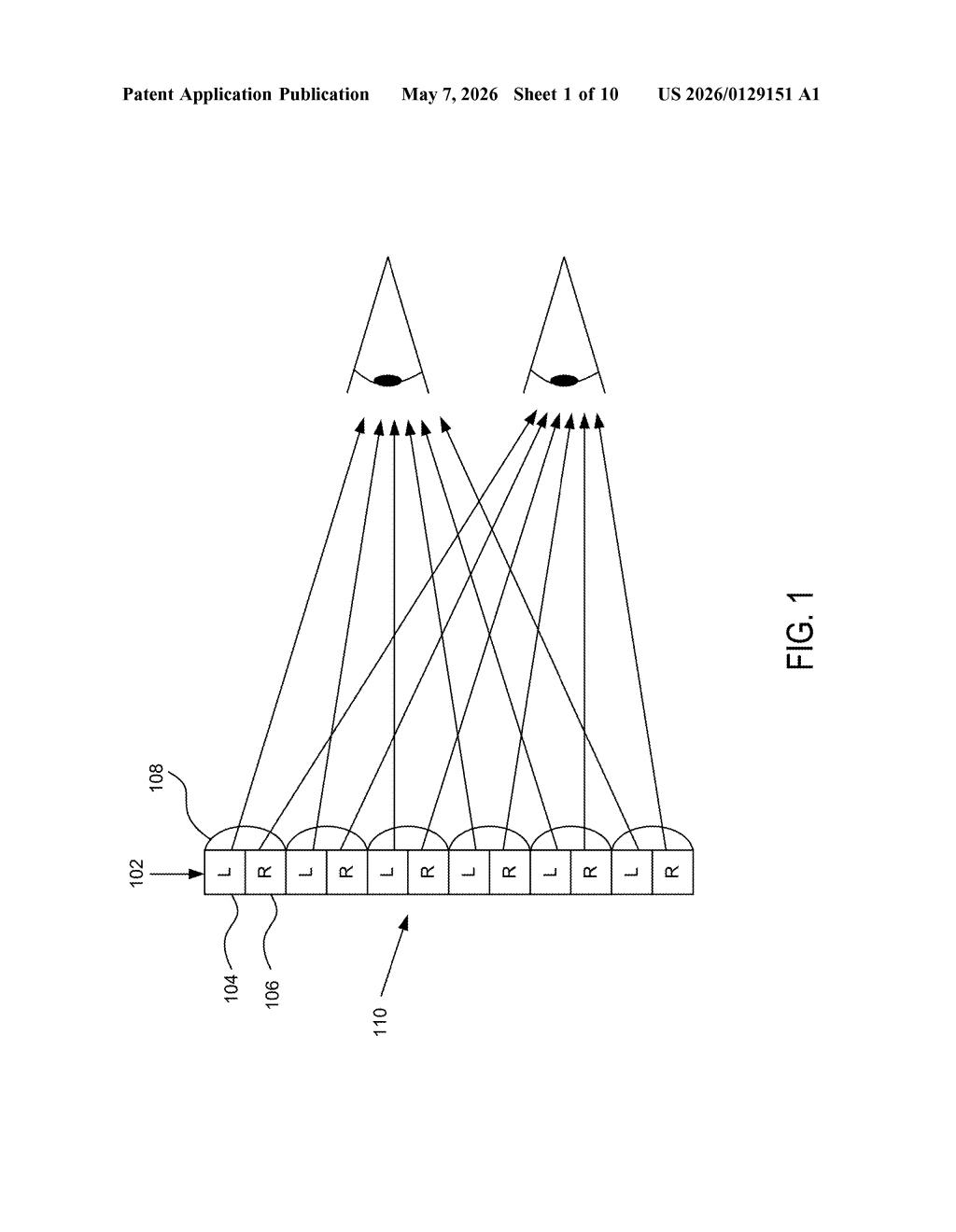
What Google's veiling glare crosstalk fix actually does
Imagine watching a 3D movie and noticing a faint ghost of the left-eye image peeking into your right eye's view. That leakage is called crosstalk, and it's one of the main reasons 3D displays can feel uncomfortable or look cheap. To fix it, display engineers first have to measure it precisely — and that's harder than it sounds.
The problem is that cameras used to measure crosstalk have their own flaw: veiling glare, a soft halo of scattered light that smears across the image sensor when bright areas are present. That glare fools the measurement system into thinking there's more crosstalk than there really is, making it impossible to calibrate correctly.
Google's patent describes a method to separate the real crosstalk from the measurement artifact. It uses two specially designed test patterns — a striped fringe pattern and a block-style gray code pattern — captured one after the other and compared. By mathematically canceling out the veiling glare, the system gets a much cleaner picture of what the display is actually doing wrong.
How fringe patterns and gray codes isolate true crosstalk
The patent describes a calibration pipeline with four main stages:
- Capture a fringe pattern image: The display shows an interleaved striped pattern (alternating bright and dark lines), and a camera captures it. This is the standard way to provoke crosstalk — but it also stirs up veiling glare in the camera lens.
- Generate and capture a gray code pattern: A gray code is a binary pattern where adjacent values differ by only one bit — here used as a non-interleaved block pattern with the same spatial period as the fringe. Because it lacks the rapid alternation of the fringe, it produces a different glare signature.
- Compare the two images: The system uses the difference between the two captures to mathematically back out the veiling glare contribution (the scattered light that doesn't represent real crosstalk).
- Determine intrinsic crosstalk: What's left after removing the glare artifact is the display's true, hardware-level crosstalk — the intrinsic value that should drive compensation algorithms.
The term intrinsic crosstalk here means the leakage baked into the physical display optics, as opposed to any measurement noise introduced by the test equipment itself. Getting this number right is essential before any software-based crosstalk compensation can work properly.
What this means for AR/VR display calibration quality
Crosstalk calibration is a foundational step in building any comfortable 3D display — whether it's a VR headset, an autostereoscopic screen, or an AR waveguide. If your baseline measurement is polluted by camera glare, every downstream correction is built on a shaky foundation. Google's approach targets that foundational accuracy problem directly.
For consumers, the downstream effect could mean headsets that cause less eye strain, or 3D content that looks noticeably sharper and less ghostly. This is the kind of unglamorous calibration work that rarely gets demoed at a keynote but quietly determines whether a display product feels polished or amateur.
This is careful, low-level metrology work — the kind of thing that separates display teams who really understand their hardware from those who don't. It won't ship as a visible feature, but it's exactly the type of foundational patent that ends up inside every display calibration toolkit Google builds. Worth noting for anyone tracking Google's AR/VR display pipeline.
There are more where this came from
We read every patent application Big Tech publishes and send you the ones worth knowing. Plain English, free, every week.
Want this weekly breakdown for a company we don't cover? Patentlyze Pro →