
Google Patents an AI That Watches Your Gameplay and Coaches You in Real Time
Google has filed a patent for an AI system that watches your video game footage, reasons through the optimal strategy, and then explains it to you in plain English — and lets you ask follow-up questions before you even make your next move.
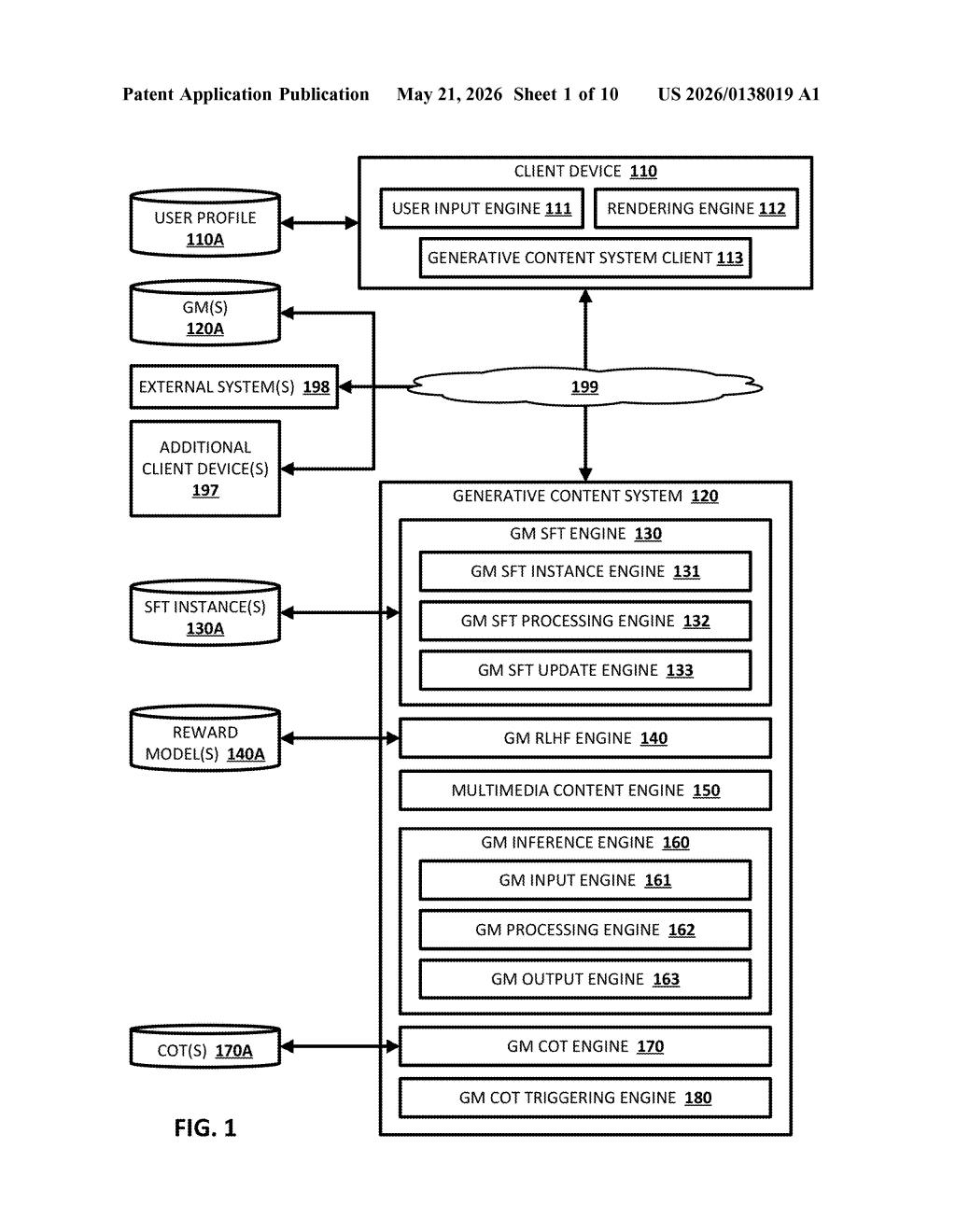
What Google's AI gameplay coach actually does
Imagine you're playing Madden, you're at the line of scrimmage, and you have no idea what the defense is doing. You just feel like something's off. Now imagine being able to ask an AI — right then and there — "what's going on here?" and getting a real, conversational answer back.
That's the core idea in this Google patent. An AI system receives the actual video or screenshots of your gameplay, processes what it sees, and builds a step-by-step breakdown of what's happening and what you should do. It doesn't just spit out a tip — it walks through its chain of thought, like a coach explaining their reasoning out loud.
The clever part is that it's interactive. If the AI says "the safety is creeping up toward the line," and you ask "what does that mean?", it keeps the conversation going and gives you a more specific answer. You're not locked into a fixed tutorial — you're having a back-and-forth with something that's actually watching what you're playing.
How the CoT engine reads frames and answers follow-ups
The system works in a few connected steps. First, it ingests multimedia content — actual image frames or video of your in-game session. This isn't metadata or game state data from an API; it's the visual output of the game itself.
Next, a generative model (GM) — think a large multimodal AI capable of understanding both images and text — takes in that visual content alongside a natural language prompt from the player. The model processes both together to produce its output.
From that output, the system constructs a chain of thought (CoT) — an ordered, step-by-step reasoning path (similar to how models like GPT-4 can be prompted to "think out loud" before giving a final answer). The patent explicitly structures this as a sequence of logical steps the AI takes to arrive at a strategy recommendation.
The CoT can be delivered in two modes:
- Reactive: The player asks a question, a portion of the CoT is rendered as an answer.
- Proactive: The system monitors ongoing gameplay and surfaces relevant CoT steps automatically — like a coach tapping you on the shoulder before you make a mistake.
Critically, follow-up questions are supported. The user can ask for clarification, and the system continues the reasoning conversation contextually.
What this means for in-game AI assistants
The interesting angle here isn't just "AI gives gaming tips" — it's that Google is patenting a multimodal, interactive reasoning loop baked into the gameplay experience itself. Most existing hint systems are static look-ups or pre-written tutorials. This describes something that reads your specific game state and reasons about it the way a knowledgeable human coach would.
For Google, this connects naturally to its Gemini model family, which is already multimodal and capable of visual reasoning. If this system shipped inside something like a game streaming platform or a companion app, it would make a compelling case for why you'd want an AI assistant that can actually see what you're doing — not just hear you describe it.
This is a genuinely interesting application of chain-of-thought reasoning to a consumer product context. The football example in the patent isn't just illustrative fluff — it shows Google thinking carefully about a real interaction pattern where a user needs just-in-time explanation, not a wall of text. Whether this ends up in a product is another question, but the underlying idea of a visual, interactive AI coaching loop is worth paying attention to.
There are more where this came from
We read every patent application Big Tech publishes and send you the ones worth knowing. Plain English, free, every week.
Want this weekly breakdown for a company we don't cover? Patentlyze Pro →