
Google's New Patent Teaches Search to Ask What You Mean Before Showing Ads
When you type something vague into Google, the system often has to guess what you actually want. This patent describes a way for Google's AI to just ask you to clarify before deciding which ad or result to show.
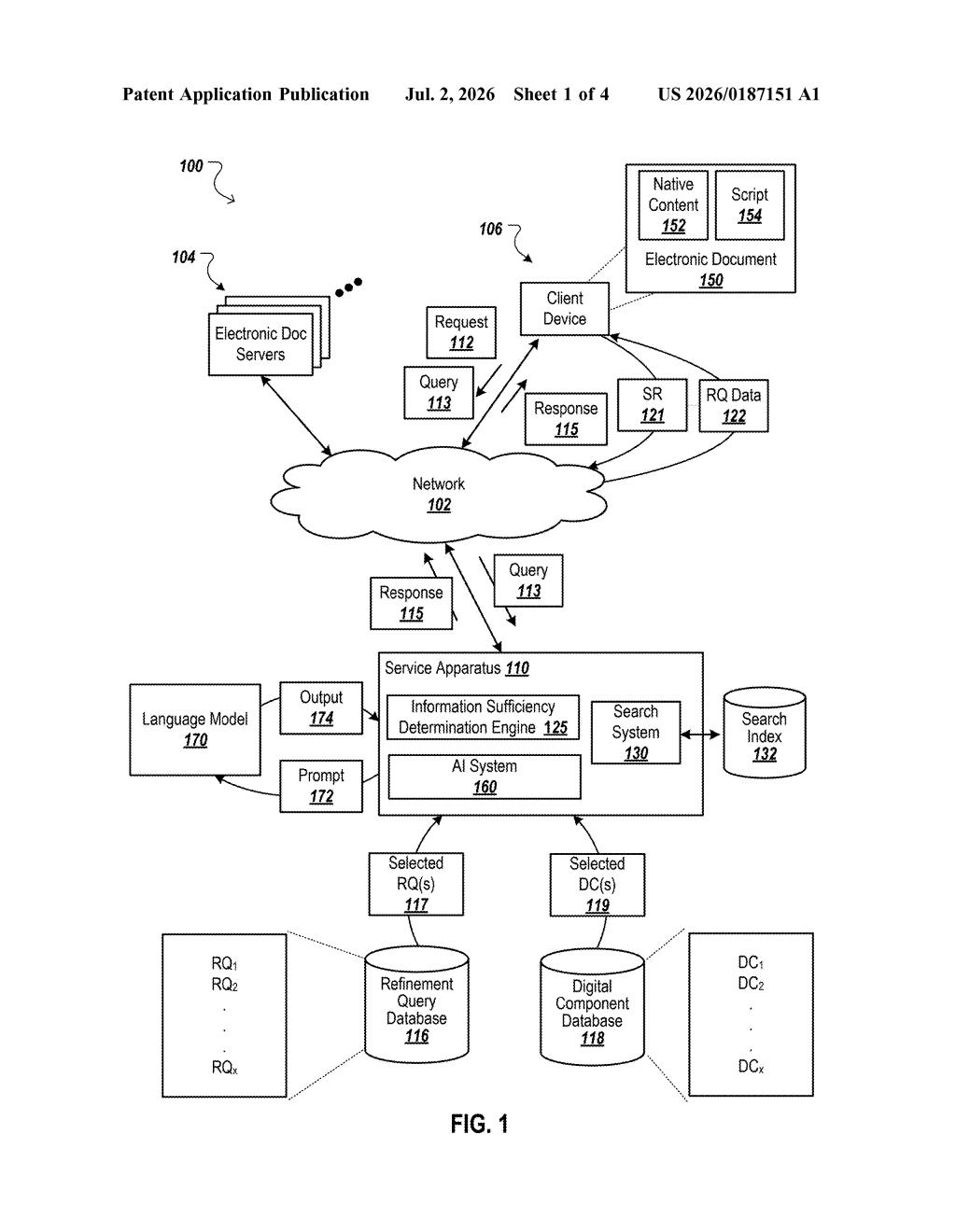
What Google's follow-up question system actually does
Imagine you search for "pain relief" on Google. That could mean headache tablets, a sports injury cream, a doctor's appointment, or a dozen other things. Right now, Google picks its best guess. Under this patent, it would ask you a follow-up question instead, something like "Are you looking for an over-the-counter medicine or a medical professional?"
Once you answer, Google uses both your original search and your answer together to pick the most relevant result or ad to show you. The system chooses the follow-up question from a pre-built library of questions, each one linked to a specific category of product or service.
In plain terms, Google is building a way for its ad engine to hold a short, structured conversation with you rather than making a blind guess. The goal is to match you with something more useful, though the underlying mechanism is very much about improving ad targeting.
How Google picks which follow-up question to ask
The patent describes a multi-step query system that sits between a user's initial search and the final selection of a "digital component" (Google's legal term for an ad or sponsored result).
Here is how the flow works:
- A user sends a search query that is too ambiguous for the system to confidently pick an ad.
- The system detects that ambiguity by checking "session data" (the history of what you've typed so far in that browsing session).
- It selects a follow-up question from a bank of candidate refinement queries, each mapped to a specific entity (a product category, brand type, or service area).
- That question is sent back to your device as part of the initial search response.
- Your answer becomes a "second query," which is then combined with the first to give the system enough context to pick a specific ad.
The key technical detail is the mapping: both the follow-up questions and the candidate ads are mapped to the same set of entities. This lets the system connect your answer directly to an ad pool without needing a full AI re-ranking pass, which keeps the process computationally lean.
Session data (the running log of what you've searched in the current session) is central to the decision of when to ask versus when to just show a result.
What this means for how Google Search serves ads
For everyday users, this could mean fewer obviously irrelevant ads after a vague search. Instead of seeing results for the wrong product category, you get asked one quick question and then see something closer to what you wanted. That is a real usability improvement, even if the motivation is better ad performance.
For advertisers, the bigger story is precision: Google would be serving ads only after confirming intent, which typically means higher click-through rates and more efficient ad spend. This fits Google's long-running push to make its ad system behave more like a conversation, especially as AI-powered search becomes the default experience for more users.
This is a straightforward ad-targeting patent dressed up in neutral language. The core innovation is modest: ask a clarifying question, then serve a better-matched ad. But the strategic direction it signals is clear: Google wants its search product to feel more conversational, and it wants that conversational layer to pay for itself through better ad matching. Worth watching, not for the technology, but for what it tells you about where the ad business is heading.
Get our take in your Top Stories
Liked this breakdown? Add Patentlyze as a preferred source on Google, and our plain-English take shows up more often in your Top Stories the next time Google patent news breaks.
There are more where this came from
We read every patent application Big Tech publishes and send you the ones worth knowing. Plain English, free, every week.
Want this weekly breakdown for a company we don't cover? Patentlyze Pro →