
Google Patents a System for Keeping 3D and 2D App Screens in Sync
Imagine rotating a 3D widget in your AR headset while a colleague sees the same change reflected on their laptop screen. That's the core idea behind Google's latest filing.
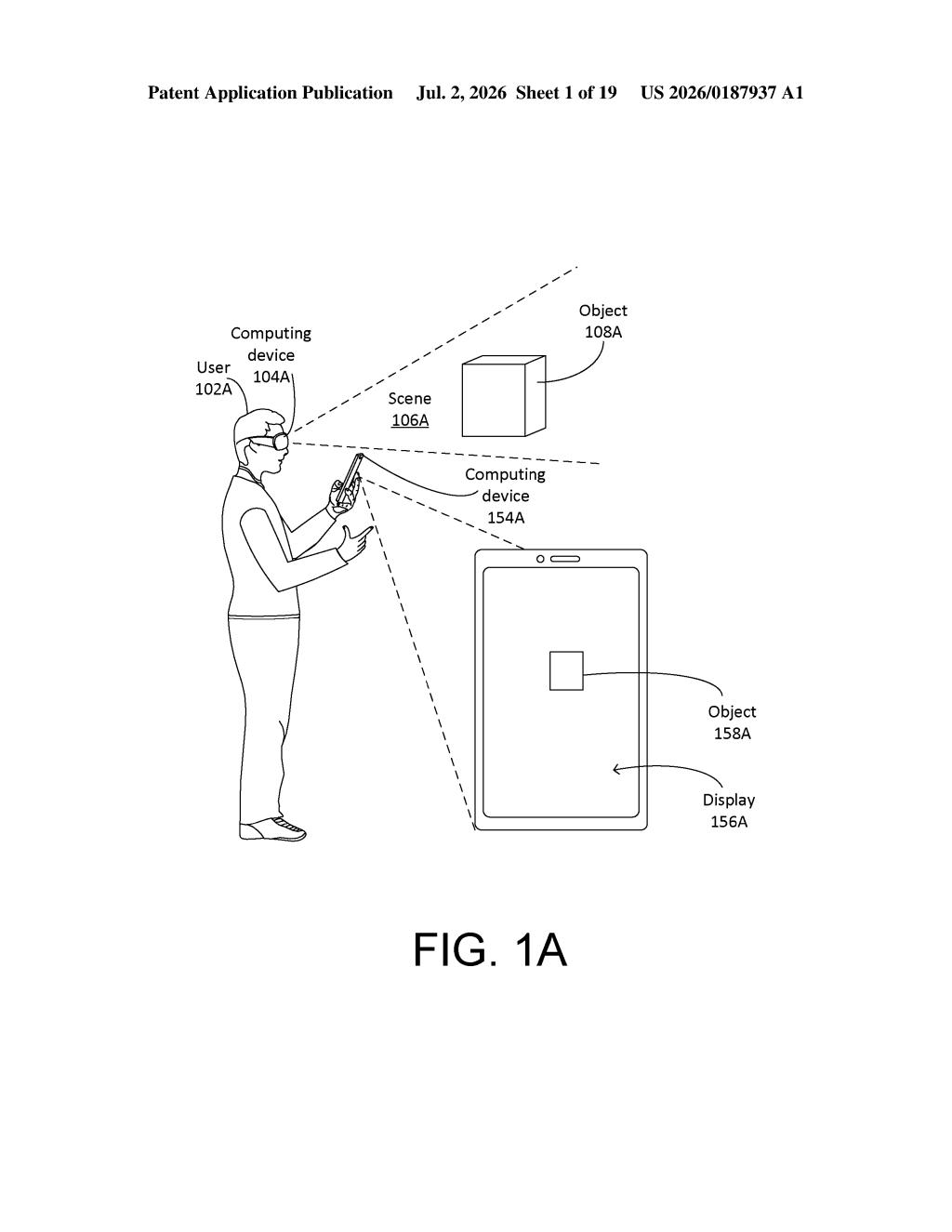
What Google's 3D-to-2D object sync actually does
Picture two people using the same app at the same time: one is wearing an AR headset and sees everything in three dimensions, and the other is on a regular flat laptop screen. Right now, those two experiences don't talk to each other very well. Google's patent describes a way to bridge that gap.
The system figures out whether your device supports 3D or stays in 2D, then creates the right kind of object for each. When you interact with the 3D version, say you rotate a dial or move a slider, the system translates that action into something the flat-screen user can see too, even though their screen can't show depth.
This matters because more people are starting to use spatial computing devices like AR glasses or headsets alongside regular computers. Google's approach would let developers write one app that works for both audiences without building two separate versions from scratch.
How the state change travels from 3D device to flat screen
The patent describes a coordination system between two devices running the same application: one in a three-dimensional environment (like an AR headset or spatial display) and one on a standard two-dimensional screen (like a phone or laptop).
When a request comes in to generate an object inside the app, the first device checks its own environment. If that environment supports three dimensions, it creates a 3D version of the object tailored to the parameters of the request. If the environment were flat, it would presumably generate a 2D version instead.
The key mechanic is what happens after the user interacts with the 3D object. Any change to the object's state (its position, rotation, value, or other properties) gets packaged up and sent to the second device, which is running the same app in a 2D environment. That device receives the state update and reflects it on the flat screen, keeping both users in sync.
Essentially, Google is patenting a translation layer that lets one canonical app instance serve both 3D and 2D clients simultaneously, with changes flowing from the richer 3D side to the flatter 2D side in near real time.
What this means for cross-device AR and flat-screen apps
As AR headsets and spatial computing devices become more common, developers face a real problem: they have to build and maintain separate app experiences for 3D and 2D contexts. Google's approach could let a single app logic handle both, which would lower the cost of building cross-platform tools and let teams collaborate across device types without anyone being locked out.
For you as a user, this could mean working in a spatial AR interface while a coworker on a regular computer sees your changes in real time on their flat screen. It also hints at where Google's app development platform may be heading as the company builds out its spatial and Android ecosystem to include more immersive device categories.
This is practical plumbing work, not a flashy concept. Google is solving a real interoperability headache that every developer will face as 3D devices enter workplaces alongside ordinary screens. It's not exciting on its own, but it's the kind of foundational patent that makes broader AR adoption actually workable.
Get our take in your Top Stories
Liked this breakdown? Add Patentlyze as a preferred source on Google, and our plain-English take shows up more often in your Top Stories the next time Google patent news breaks.
There are more where this came from
We read every patent application Big Tech publishes and send you the ones worth knowing. Plain English, free, every week.
Want this weekly breakdown for a company we don't cover? Patentlyze Pro →