
Google Patent Reveals AI Assistant Suggesting Answers Within Group Message Threads
Google is working on a way to let an AI assistant monitor ongoing text conversations and pop up with suggested questions or answers, pulling in personal information from users' accounts when they tap a prompt.
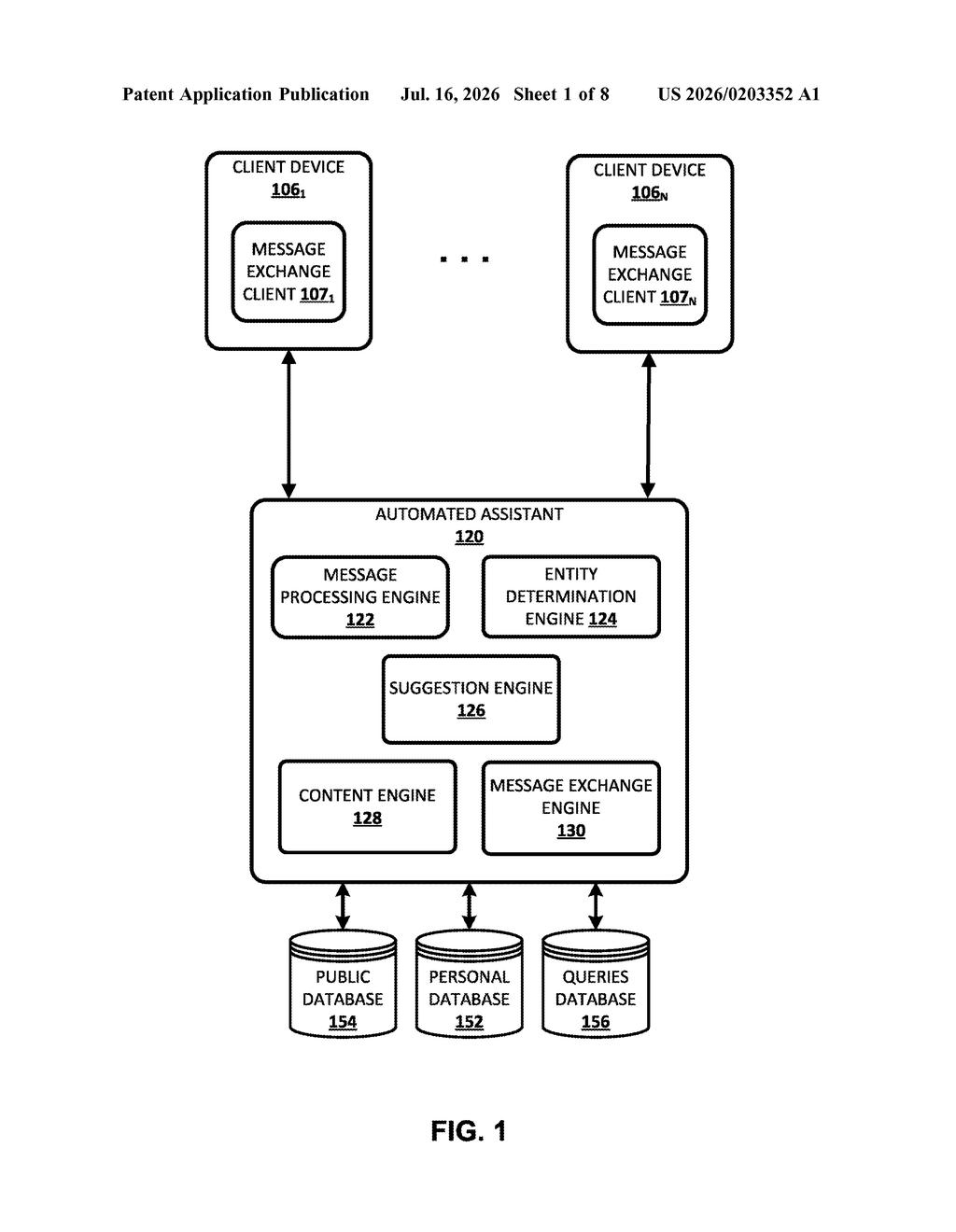
What Google's in-chat AI suggestion system actually does
Imagine you and a friend are texting about weekend plans, and a small button appears asking 'Want to share your calendar availability?' You tap it, and your schedule gets dropped right into the conversation. That's essentially what Google is patenting here.
The system watches an ongoing chat between two or more people, figures out from the context what kind of information might be useful, and then shows one or both participants a tappable suggestion. If you tap it, the assistant pulls in your personal data, like calendar entries, saved addresses, or other account info, and adds it to the chat.
The key detail is that the suggestion isn't just a canned response. It's supposed to be tailored to what's actually being discussed in the thread at that moment, and who taps it determines whose personal data gets used.
How the assistant reads messages and pulls personal content
The patent describes a system where an automated assistant runs in the background of a message exchange thread, processing the content of messages as they're sent.
Based on that processing, the assistant generates a contextually relevant suggestion and displays it as a selectable graphical element, basically a tappable button or chip inside the chat interface. The suggestion frames a question or action that a user could ask the assistant to answer on their behalf.
When a user taps the suggestion, the system checks which user tapped it, then accesses that specific user's personal content (the patent doesn't lock down exactly what type, but the framing implies account-linked data like calendars, contacts, or saved preferences). That content, or a relevant portion of it, is then inserted directly into the ongoing conversation.
- The assistant reads in-progress chat messages for context
- It generates a relevant, tappable suggestion shown to one or both participants
- Tapping the suggestion triggers access to the tapping user's personal data
- That data is incorporated into the chat thread automatically
The claim also leaves room for suggestions to appear to multiple users simultaneously, with the response varying depending on who taps first.
What this means for Google Messages and privacy
Google Messages already has some AI features, and this patent points toward a more proactive version where the assistant doesn't wait to be asked. Instead of you typing a question to Gemini separately, the assistant surfaces prompts inside the chat itself, reducing friction and making AI help feel like a natural part of the conversation.
The privacy angle here is real and worth watching. The system is designed to pull your personal data into a shared conversation thread, which means both participants could end up seeing information that was pulled from one person's private account. How Google handles consent, visibility controls, and data scoping will matter a lot when and if this ships.
This is a genuinely interesting design patent because it shifts AI assistance from something you have to go find to something that meets you mid-conversation. The detail about personal content being tied to whoever taps the suggestion is clever, though it also creates obvious privacy questions that Google will need to answer clearly before this could work in a mainstream chat product.
There are more where this came from
We read every patent application Big Tech publishes and send you the ones worth knowing. Plain English, free, every week.
Want this weekly breakdown for a company we don't cover? Patentlyze Pro →
Be the first to weigh in