
Google Patents an AI Meeting Assistant That Listens to Everyone at Once
Imagine a meeting where nobody has to stop and ask the AI a question, because it's already been listening to everyone and surfacing the answers. That's the core idea behind this Google patent.
What Google's always-on meeting AI actually does
Picture a team meeting where two colleagues are debating the Q3 numbers and neither can remember the exact figure. Right now, someone has to stop, wake up an AI assistant, and type or speak a specific question. Google's patent describes a different approach: an AI that's already listening to the whole room and can combine what multiple people say into a single background search.
The system works by flipping the assistant into a "conference mode" at the start of a meeting. In that mode, it transcribes everyone who speaks, figures out what the group is collectively trying to figure out, and then surfaces relevant information on the meeting device's screen, without anyone having to say "Hey Google" or tap a button.
When the meeting ends, the assistant detects that and switches itself back off. The idea is that the AI becomes a passive, always-available participant rather than a tool you have to consciously invoke every time you need something.
How the assistant merges multiple speakers into one query
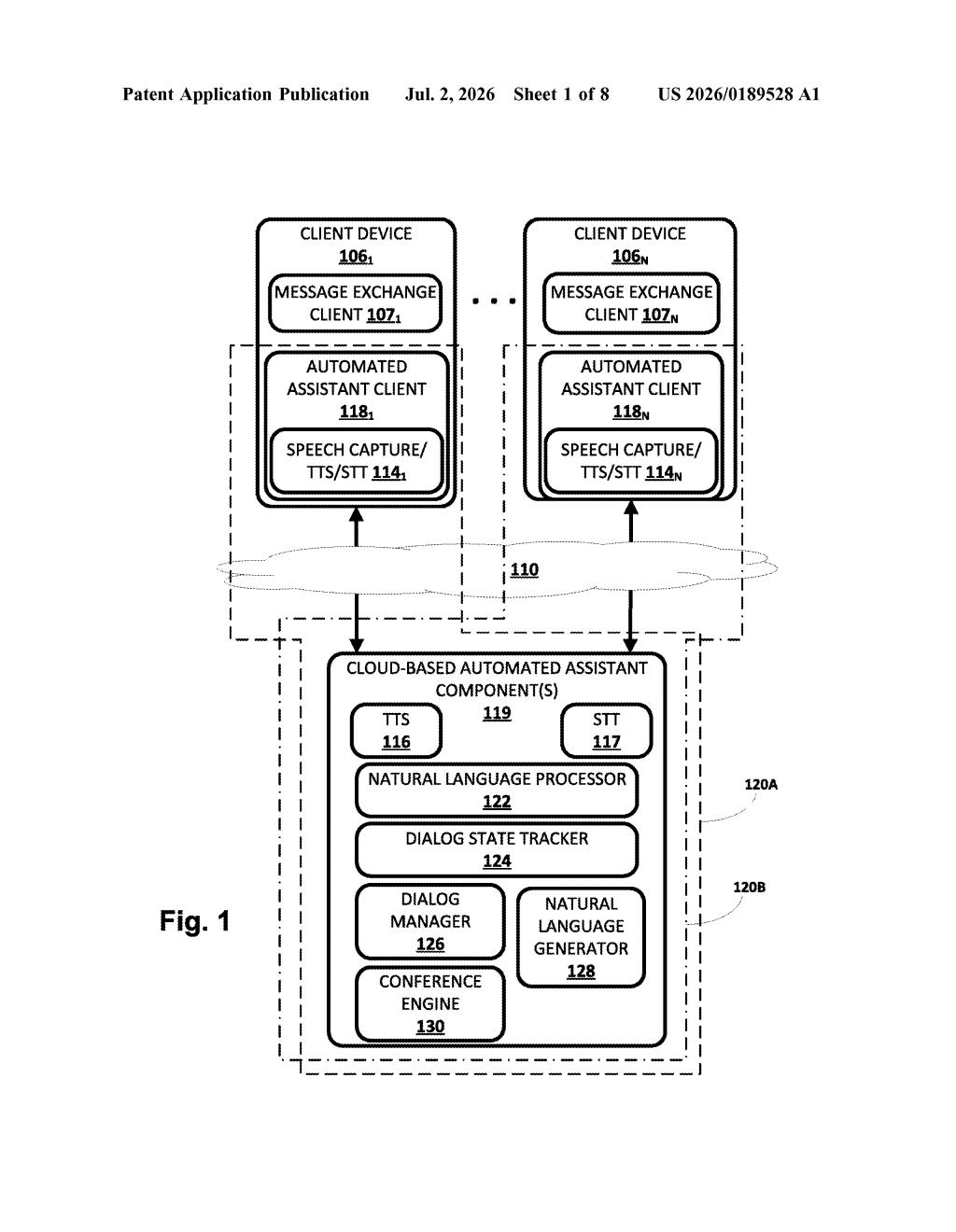
The patent describes a two-part architecture built around what Google calls conference mode, a distinct operating state for its automated assistant.
In conference mode, the assistant does four things in sequence:
- Continuously transcribes speech from all participants via the meeting device's microphones (speech-to-text processing running in parallel across multiple speakers)
- Performs semantic processing on those transcripts, meaning it analyzes meaning and intent, not just words
- Combines content from different speakers into a single consolidated query, so if one person says "what was our churn rate" and another says "last quarter" in separate utterances, the system merges those into one coherent information request
- Outputs the resulting data to participants on the conference device's display
The claim is explicit that none of this requires the participants to explicitly invoke the assistant before each utterance. That's the key structural difference from how most AI assistants work today, where every interaction starts with a wake word or button press.
The patent also covers the assistant detecting when a meeting has concluded and automatically reverting to a standard, non-conference mode. The detection mechanism isn't specified in detail in the claim, but it implies the system monitors signals like prolonged silence or a formal session-end event.
What this means for Google Meet and Workspace users
For anyone who uses Google Meet or a Workspace-connected conference room device, this patent points toward a future where the AI assistant becomes part of the meeting itself, not a sidebar tool you remember to consult. The practical payoff is that relevant context, definitions, data, or documents could appear on screen in real time without breaking the conversation's flow.
The broader strategic angle is Google competing more directly with tools like Microsoft Copilot in Teams, which already offers AI-generated meeting summaries and action items. An always-on assistant that combines multiple speakers' inputs into live, in-meeting answers is a step beyond post-meeting summaries. Whether this ever ships in a consumer or enterprise product depends on privacy controls and hardware support, but the filing signals Google is thinking about AI as an active meeting participant, not just a note-taker.
This is a genuinely interesting filing because it tackles something annoying about current AI assistants in meetings: the constant interruption of having to invoke them. The multi-speaker consolidation idea, combining fragments from different people into a single query, is the most novel part and solves a real problem in group settings. That said, the patent is light on how it handles the hard parts, like privacy consent, speaker attribution, or what happens when the AI's "consolidated query" misreads what the group actually wanted.
Get our take in your Top Stories
Liked this breakdown? Add Patentlyze as a preferred source on Google, and our plain-English take shows up more often in your Top Stories the next time Google patent news breaks.
There are more where this came from
We read every patent application Big Tech publishes and send you the ones worth knowing. Plain English, free, every week.
Want this weekly breakdown for a company we don't cover? Patentlyze Pro →