IBM
IBM · AI / ML · Filed Jan 8, 2025 · USPTO published Jul 9, 2026 · Jul 9 release
IBM Patents a System That Caches Your Next Question Before You Ask It
IBM is patenting a system that watches how you use an AI chatbot, predicts what you're going to ask next, and ships that answer to a server near you before you've even typed the question.
- Publication number
- US 2026/0195537 A1(US20260195537A1)
- Applicant
- INTERNATIONAL BUSINESS MACHINES CORPORATION
- Filed · Published
- Jan 8, 2025 · Jul 9, 2026
- Inventors
- Sarbajit Kumar Rakshit, Sathya Santhar, Sridevi Kannan, Samuel Mathew Jawaharlal
- Status when we published
- Examiner raised objections; the company can respond
- Document
- 20 claims
- US classification
- 704/9
- Examiner
- CAUDLE, PENNY LOUISE (Art Unit 2657)
What IBM's prompt prediction system actually does
Imagine you're chatting with an AI assistant and you've just asked it to summarize a document. Before you even think to ask your next question, something behind the scenes has already guessed it might be "now translate it into Spanish" and prepared the answer nearby.
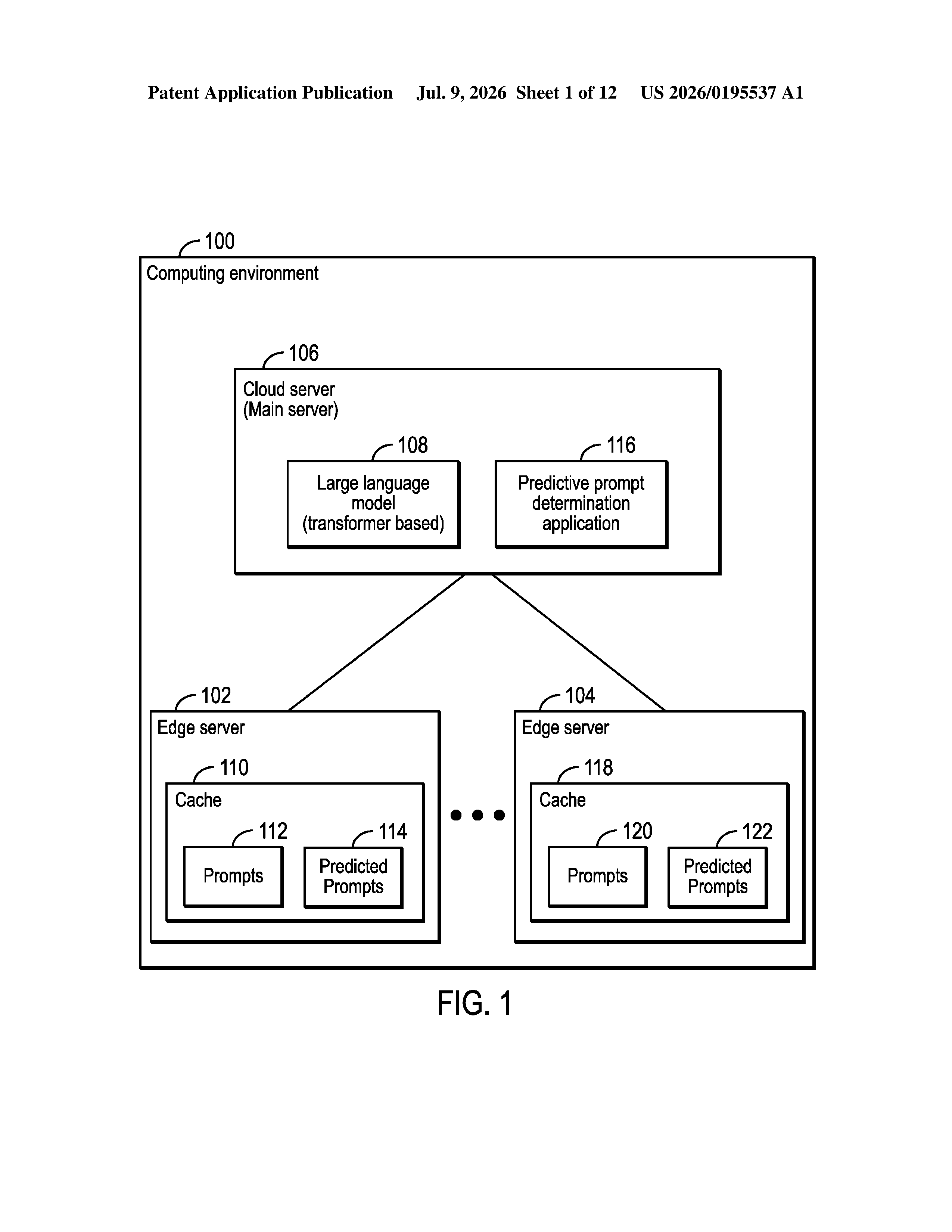
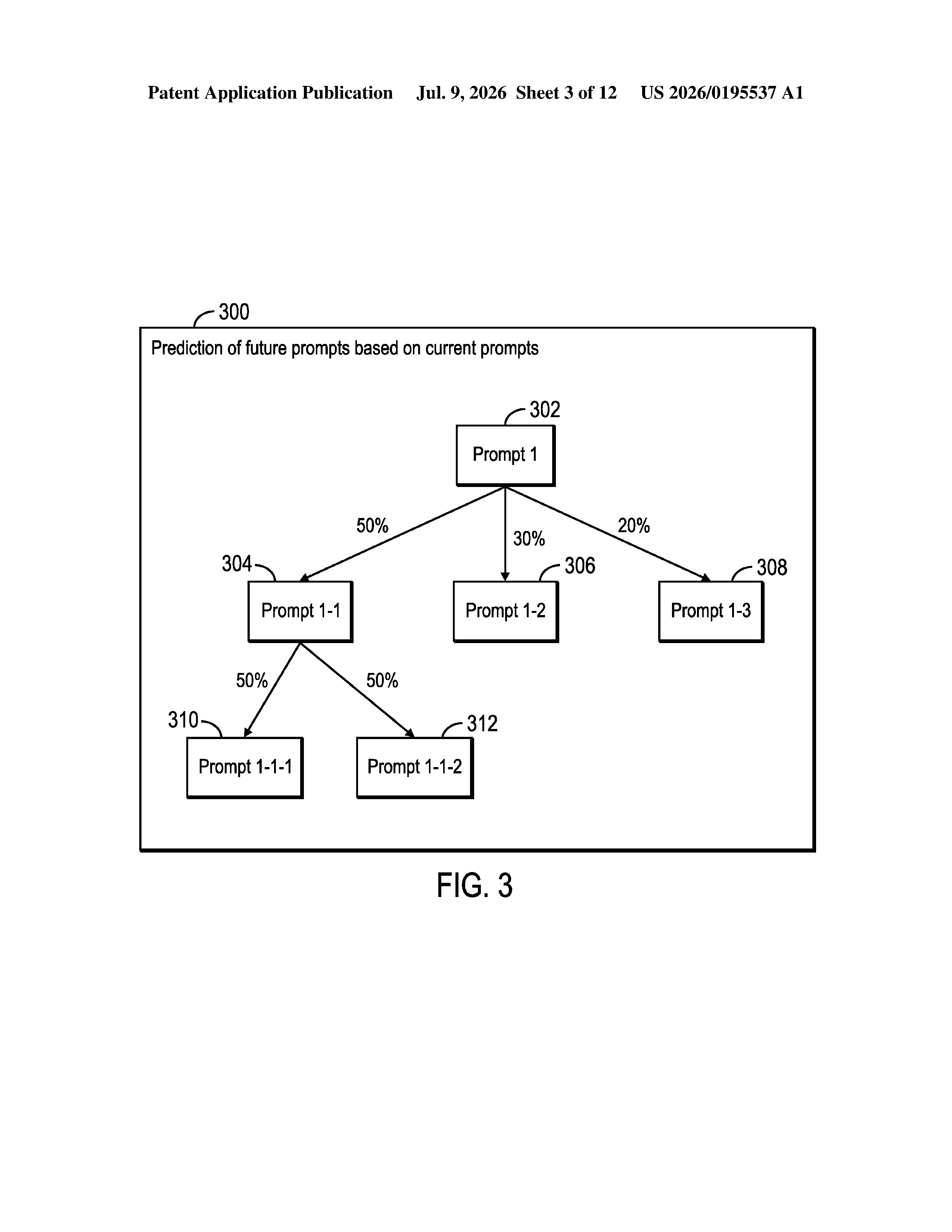
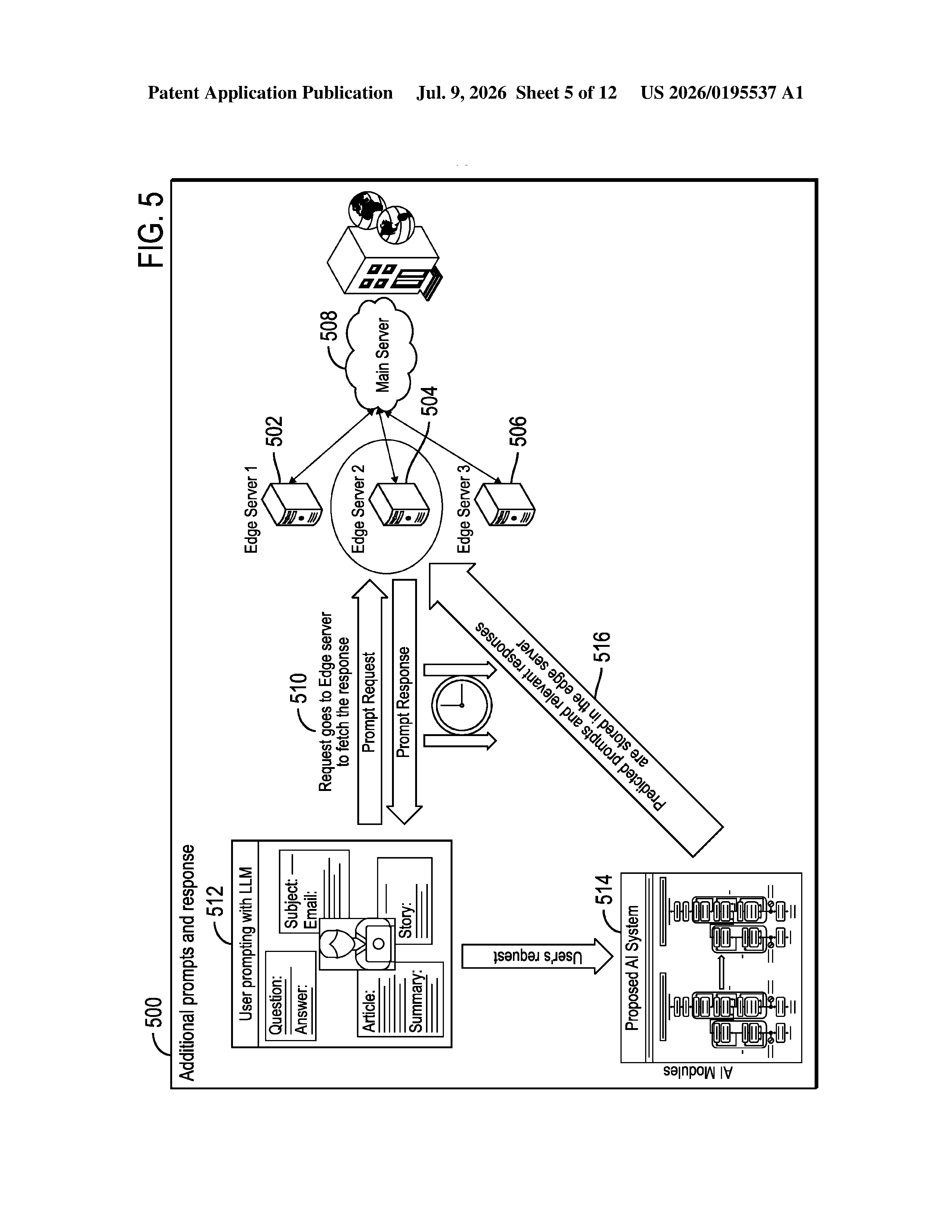
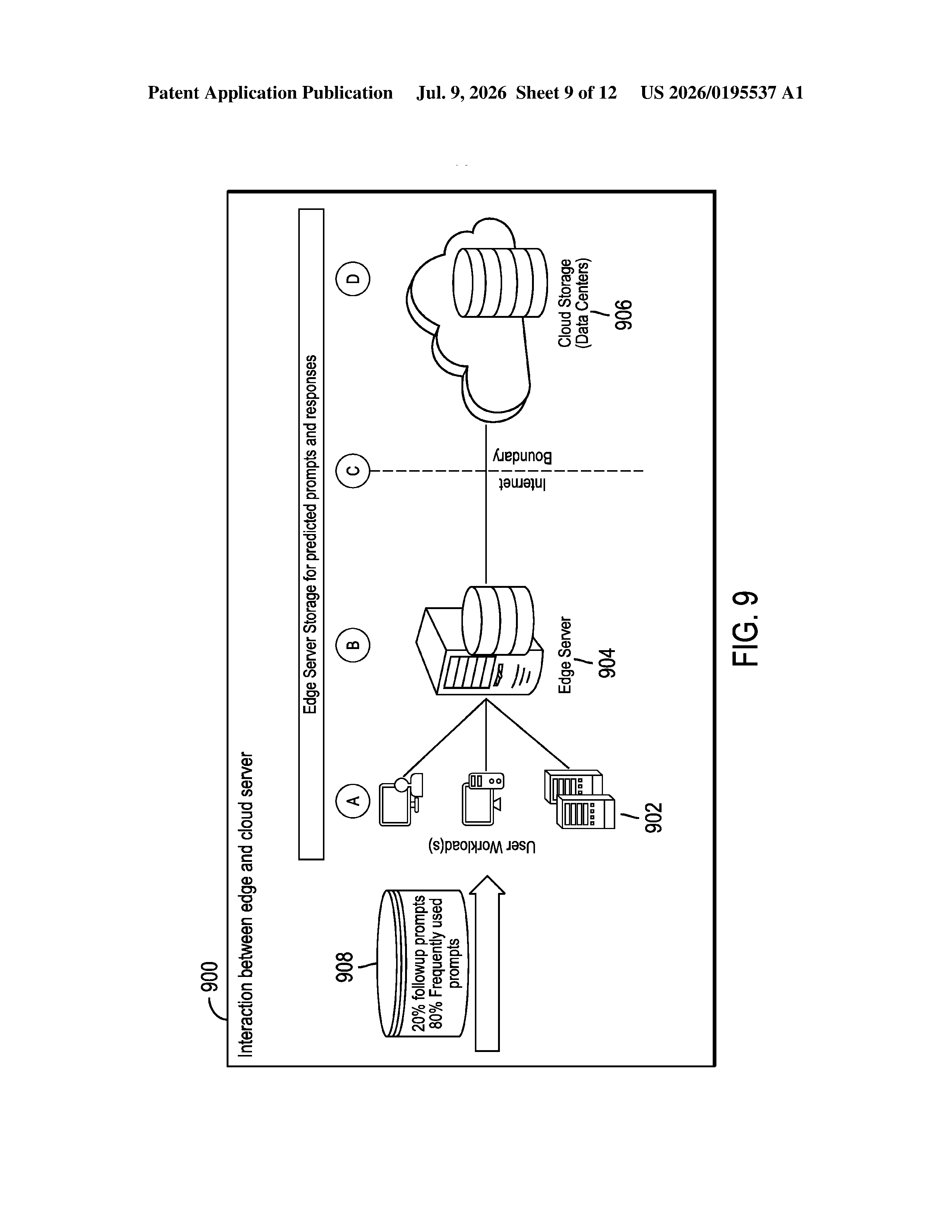
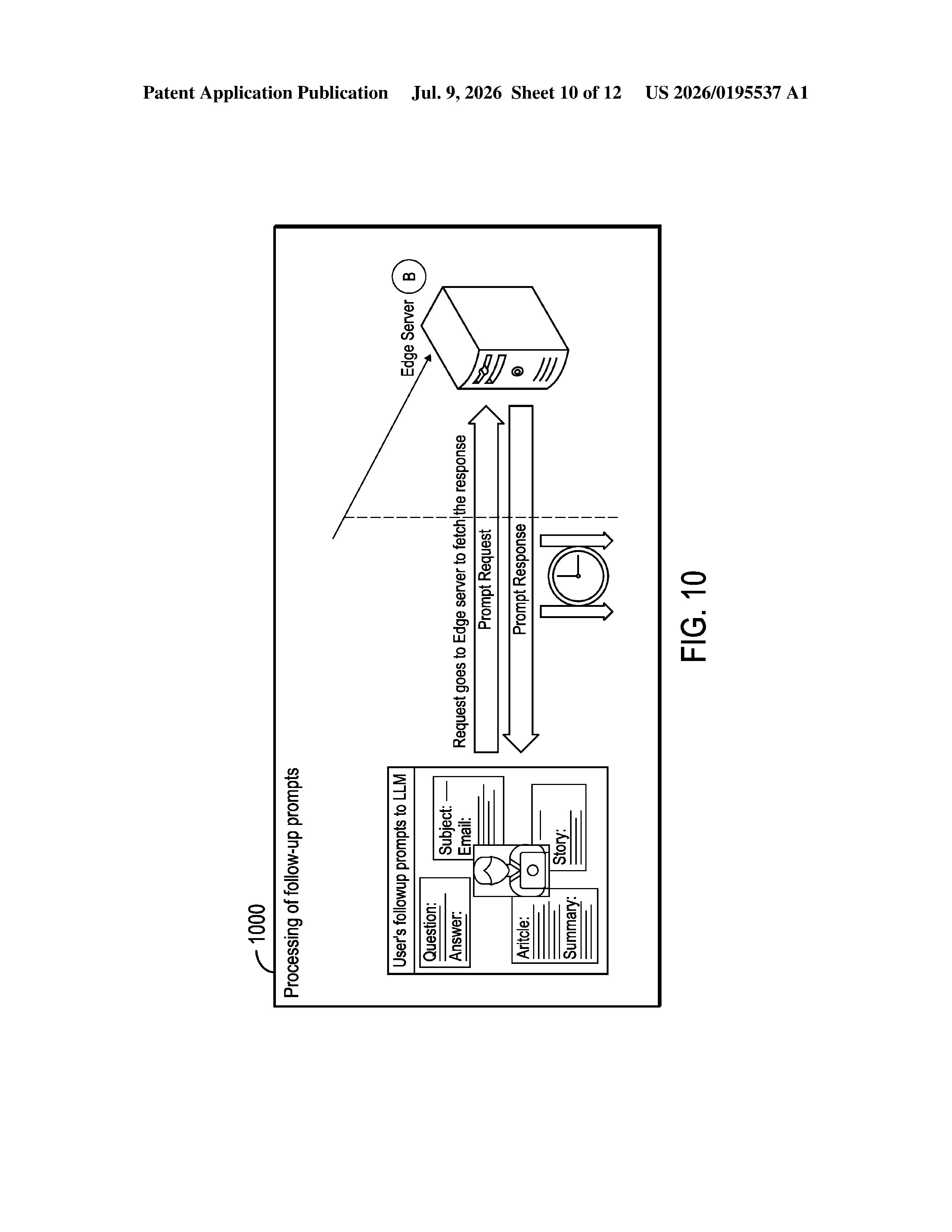
That's the core idea in this IBM patent. A cloud-based system watches the flow of your current conversation and compares it against how thousands of other users have interacted with AI in similar situations. From that, it predicts your probable next prompt and sends it to an edge server, which is a smaller, faster computer physically closer to you than a central data center.
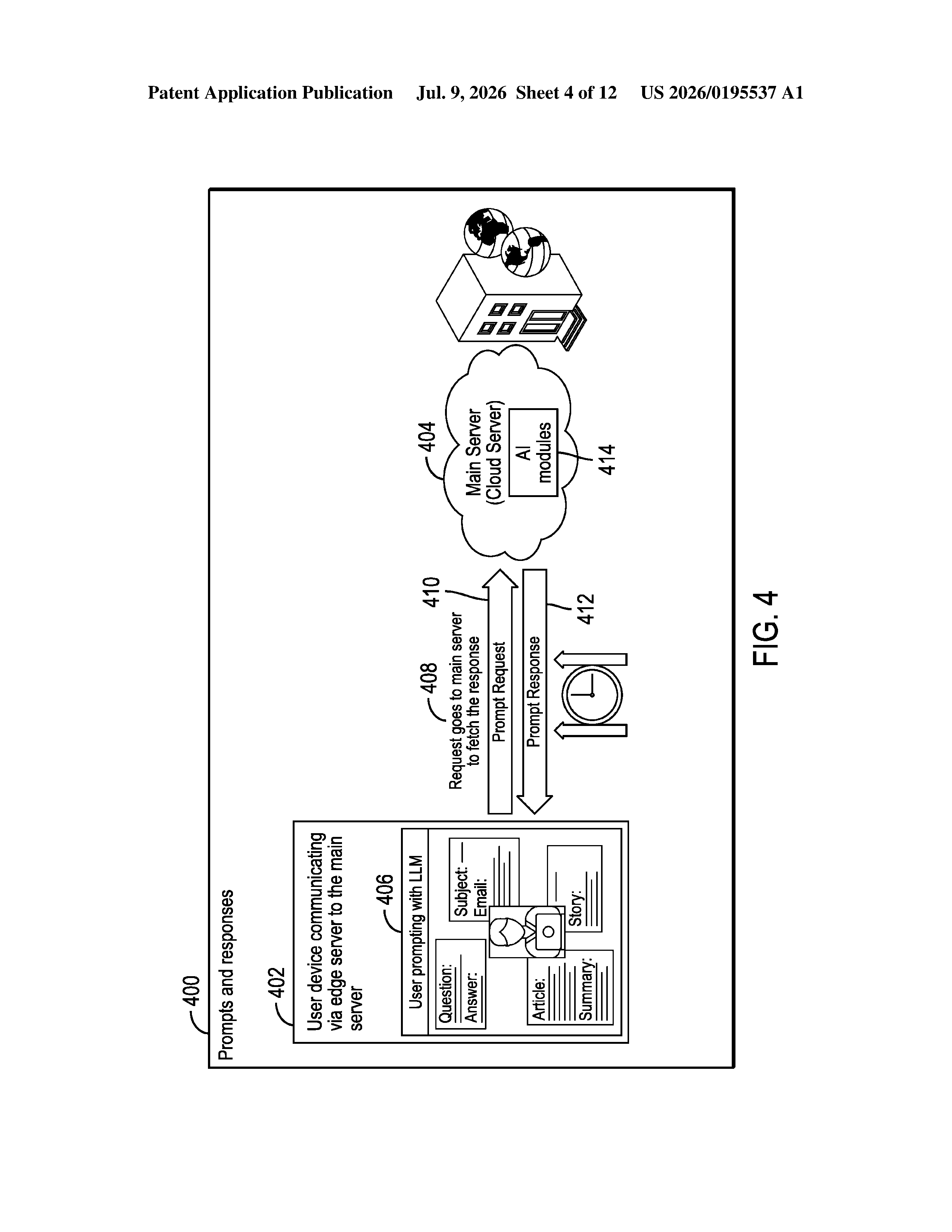
The goal is to cut the waiting time between when you press send and when the AI responds. Instead of your question traveling all the way to a distant server and back, the pre-guessed response is already waiting nearby.
How the cloud predicts and the edge server delivers
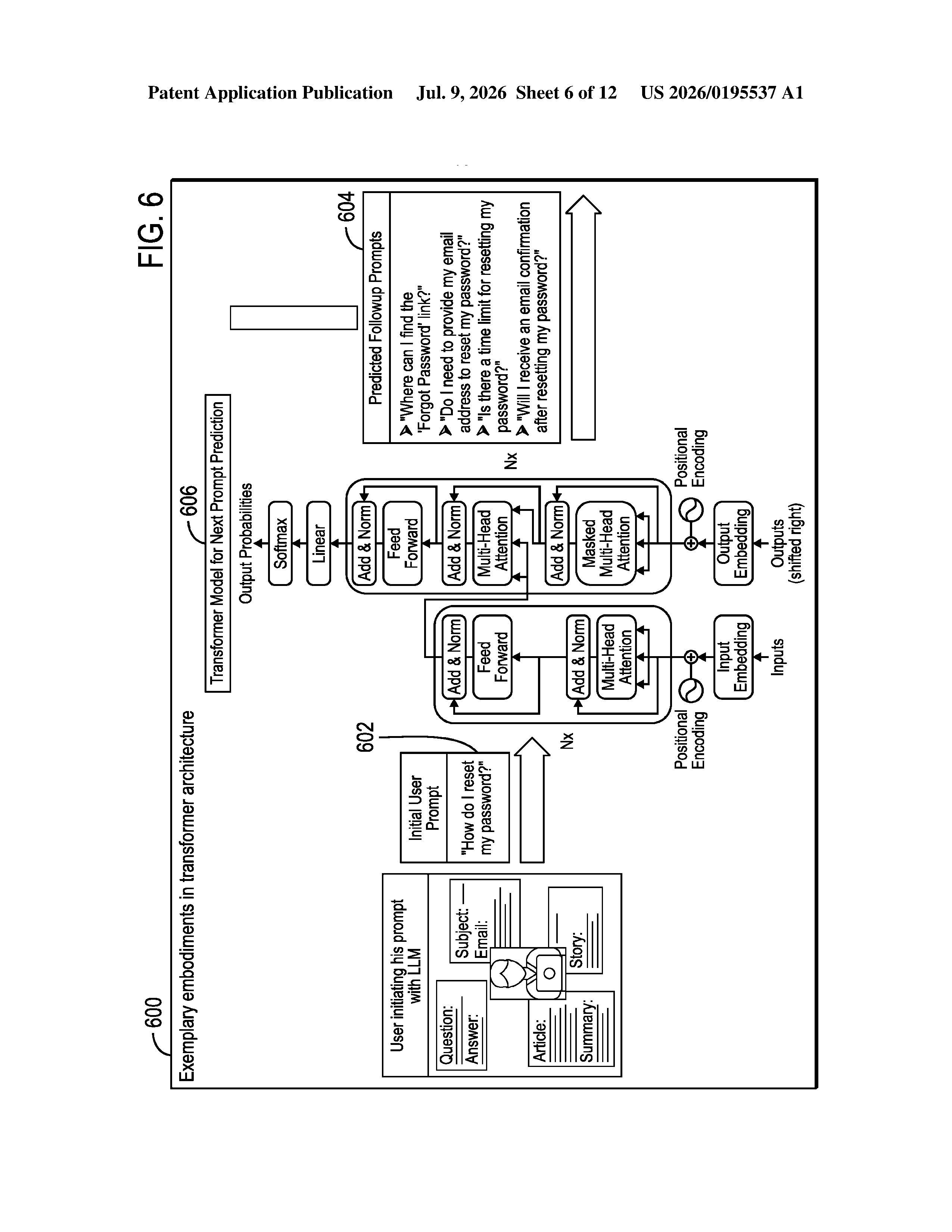
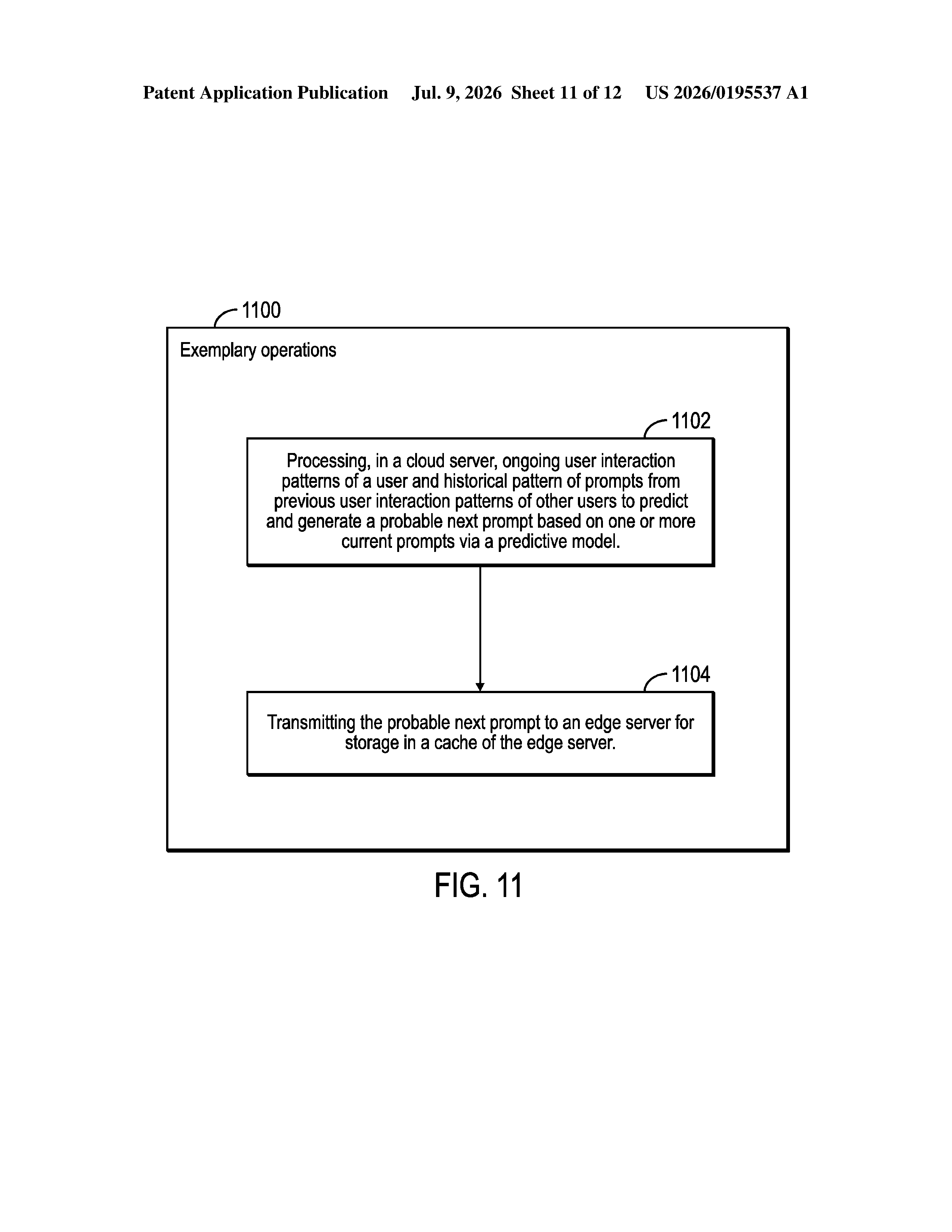
The system works in two layers. First, a predictive model running on a central cloud server analyzes two sources of data: your ongoing interaction patterns (what you've typed so far in the current session) and historical prompt patterns from other users who have gone through similar conversations before.
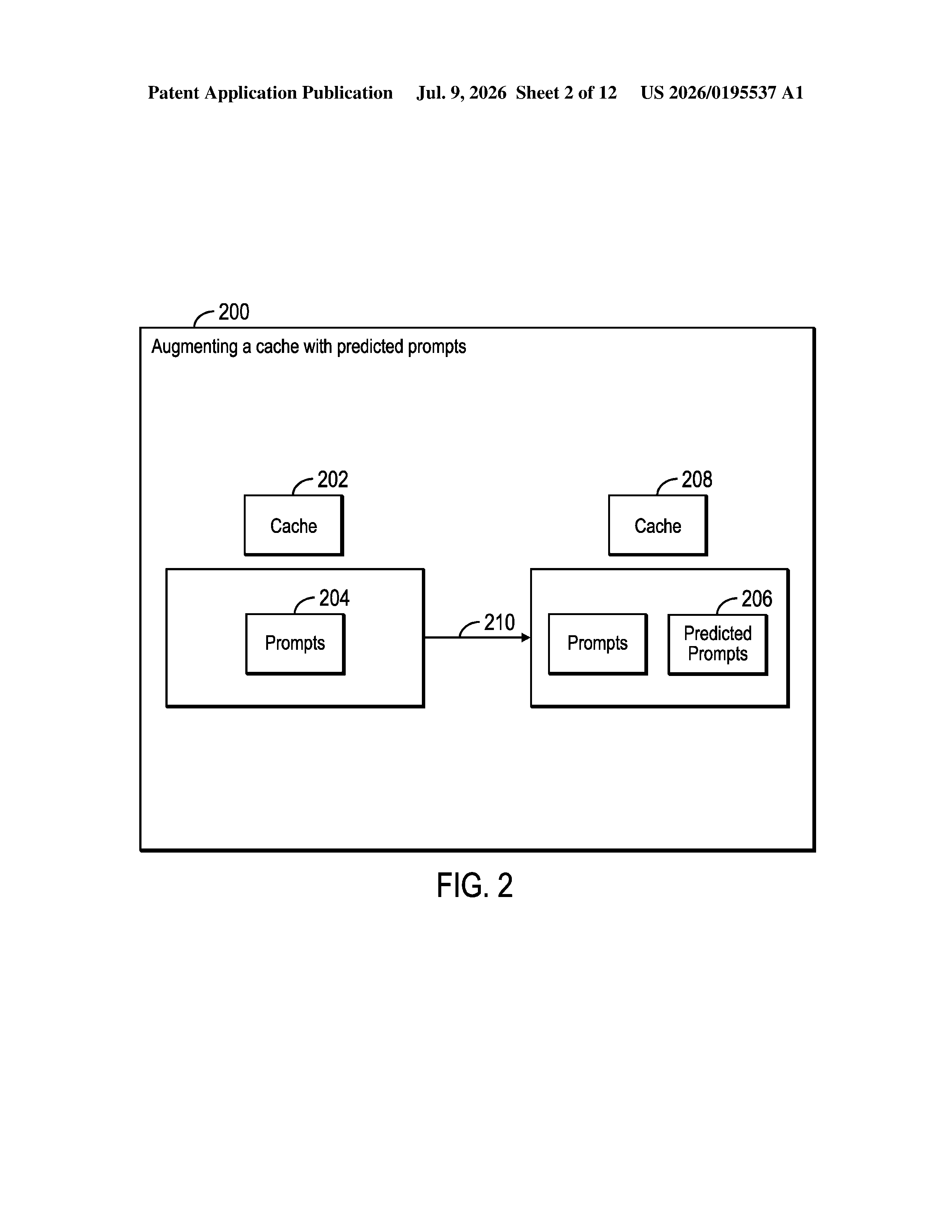
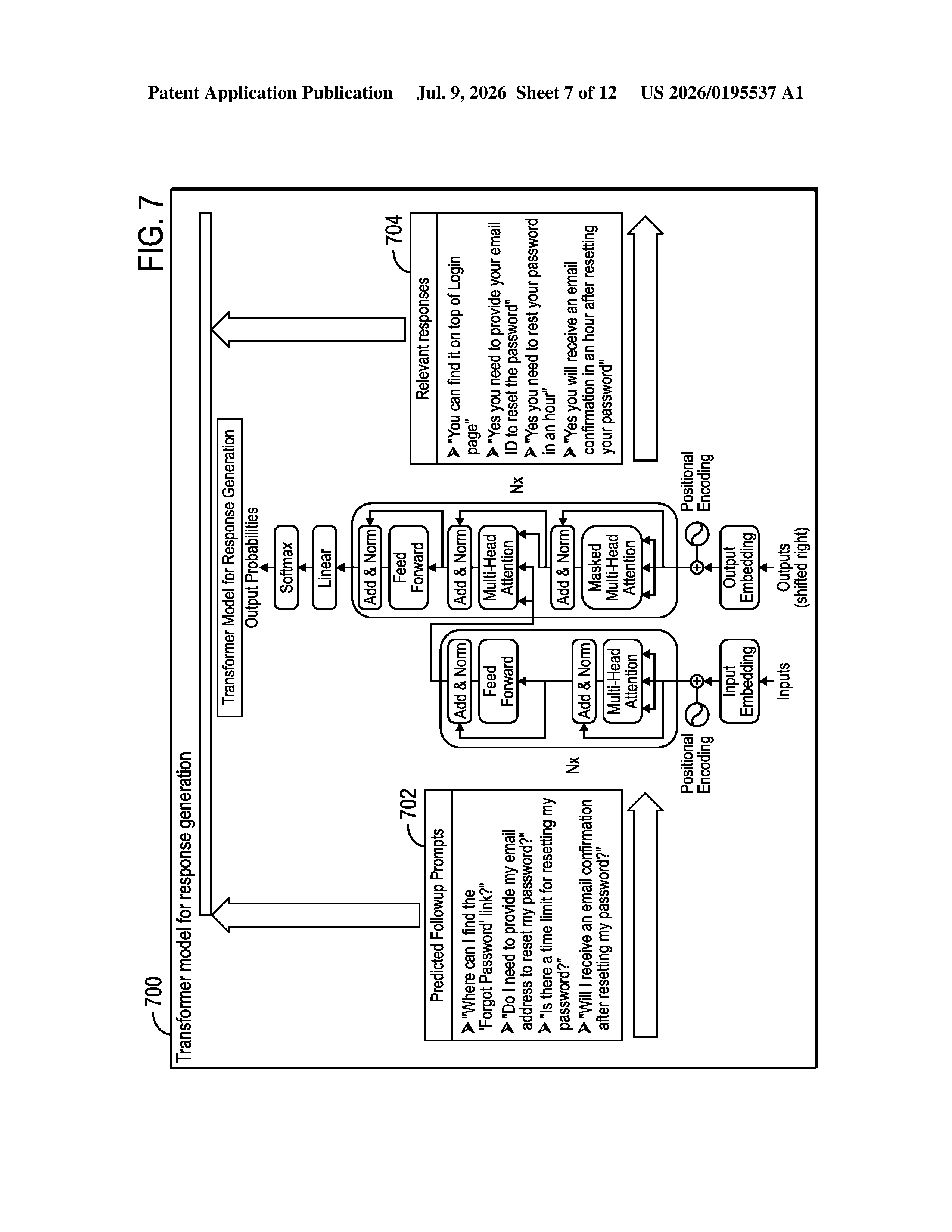
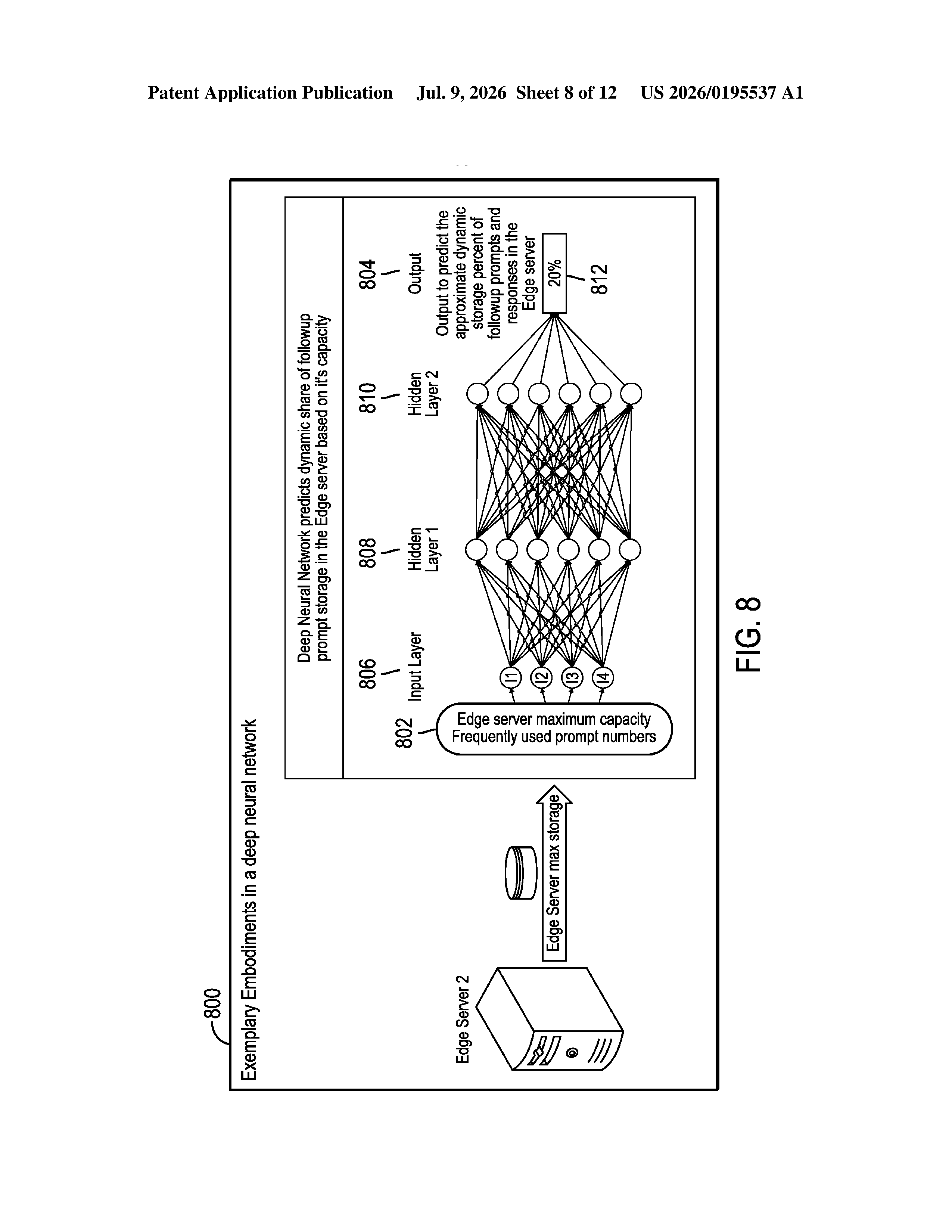
From those inputs, it generates a probable next prompt, essentially a best guess at what you're likely to ask next. This predicted prompt is then pushed out to an edge server (a server geographically close to the end user, reducing the round-trip time that causes AI response lag) and stored in its cache.
- Cloud server: runs the prediction model and handles the heavy computation
- Edge server: stores the pre-generated prompt response close to the user for faster retrieval
- Cache: a fast-access storage layer where the predicted response sits, ready to serve instantly
If the prediction is right and you do ask that next question, the response can be served from the nearby edge cache rather than requiring a full round-trip to a distant data center. The patent focuses on the prediction and caching pipeline itself, not on how the LLM generates the actual answer.
What faster AI responses could mean for everyday users
Response speed is one of the biggest friction points in AI assistant products. Even small delays break concentration, and for enterprise tools where employees are running dozens of AI interactions a day, those fractions of a second add up. A system that can correctly anticipate follow-up questions and pre-position answers nearby could make AI feel noticeably more immediate.
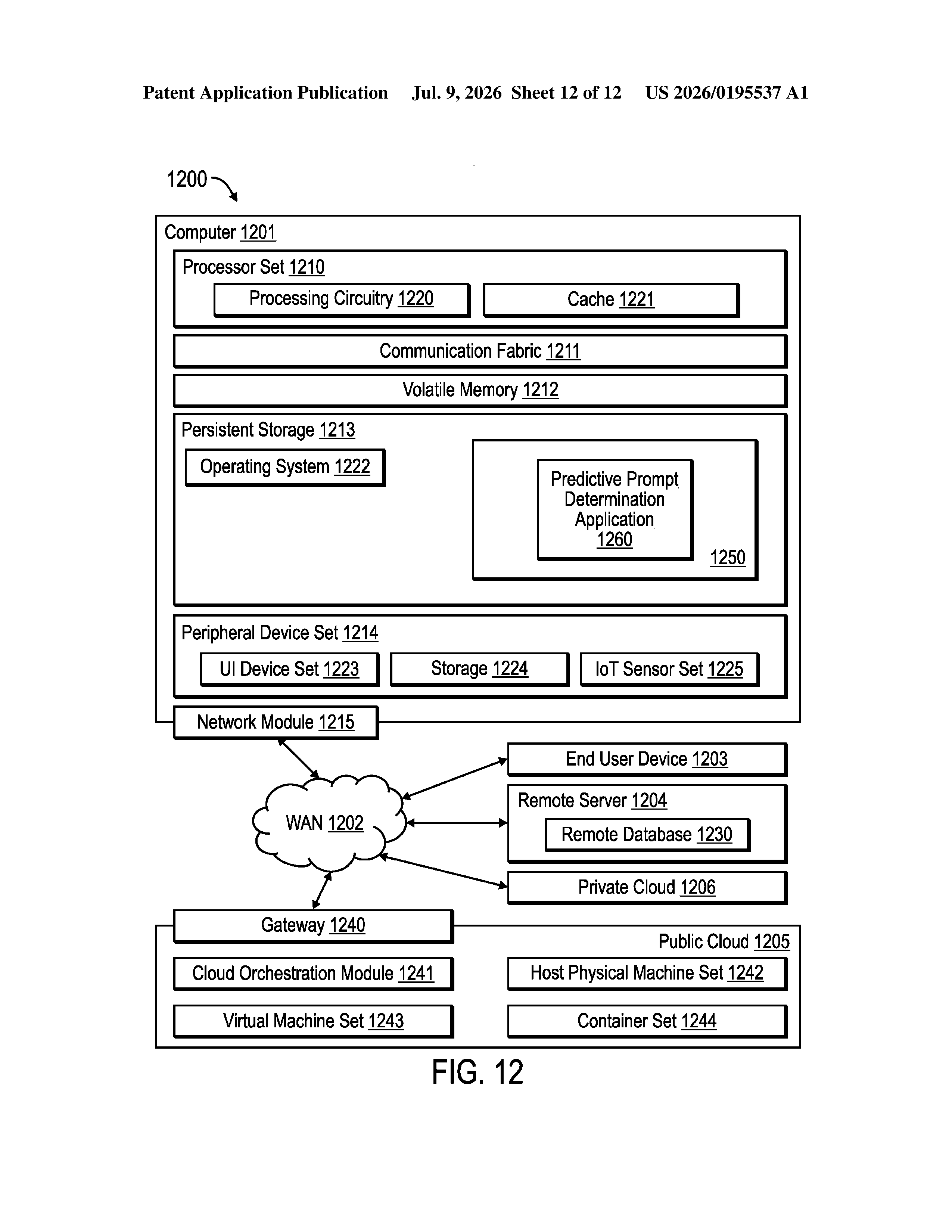
For IBM, which sells AI and cloud infrastructure to large businesses, this fits squarely into its edge computing strategy. The patent is less about the AI model itself and more about where and when inference results get staged, which is an infrastructure problem IBM's enterprise clients deal with constantly.
Source: US 2026/0195537 A1 at the USPTO (PDF). Full patent text and figures are in the official publication.
Get our take in your Top Stories
Liked this breakdown? Add Patentlyze as a preferred source on Google, and our plain-English take shows up more often in your Top Stories the next time IBM patent news breaks.
Add Patentlyze on Google
One click.
There are more where this came from
We read the new patents from Big Tech, carmakers and more and send you the ones worth knowing. Plain English, free, every week.
The drawings · 12 sheets
12 drawing sheets from US 2026/0195537 A1 · click any drawing to enlarge
Show the other 4 sheets
More from IBM
All 481 IBM patents →
More in AI assistant & agent
All 436 AI assistant & agent patents →
Google
Google Patent Reveals AI Health Assistant With Real-Time Wearable Data Access
Samsung
Samsung Patents an AI Assistant That Skips the Heavy Thinking When It Already Knows the Answer
Microsoft
A New Microsoft Patent Lets AI Remember and Learn From Past Chats
Apple