
AI Writer Patent Teaches Automatic Document Formatting
Every time you use an AI tool to write inside a document, you probably have to fix the font, the spacing, or the heading style afterward. Google's new patent describes a system that skips that step entirely by teaching the AI to read your document's formatting rules before it writes a single word.
What Google's format-aware AI writing tool actually does
Imagine you're working on a company report. It has specific fonts, heading sizes, and bullet-point styles throughout. You ask an AI to add a new section, and it generates perfectly written text, but in the wrong font, with the wrong spacing, and none of the right headers. You then spend five minutes reformatting it by hand. Sound familiar?
Google's patent describes a way to fix that. Before the AI writes anything, the system looks at your document and pulls out its formatting rules, things like text styles, spacing, and structure. It then bundles those rules together with your request and hands the whole package to the AI, so the generated text comes out already styled to match.
The key idea is that the formatting rules travel with your question, not as a separate afterthought. The AI gets your document's visual "personality" baked into its instructions before it starts writing, so what it produces fits in from the start rather than needing a cleanup pass.
How the system reads formatting rules before generating text
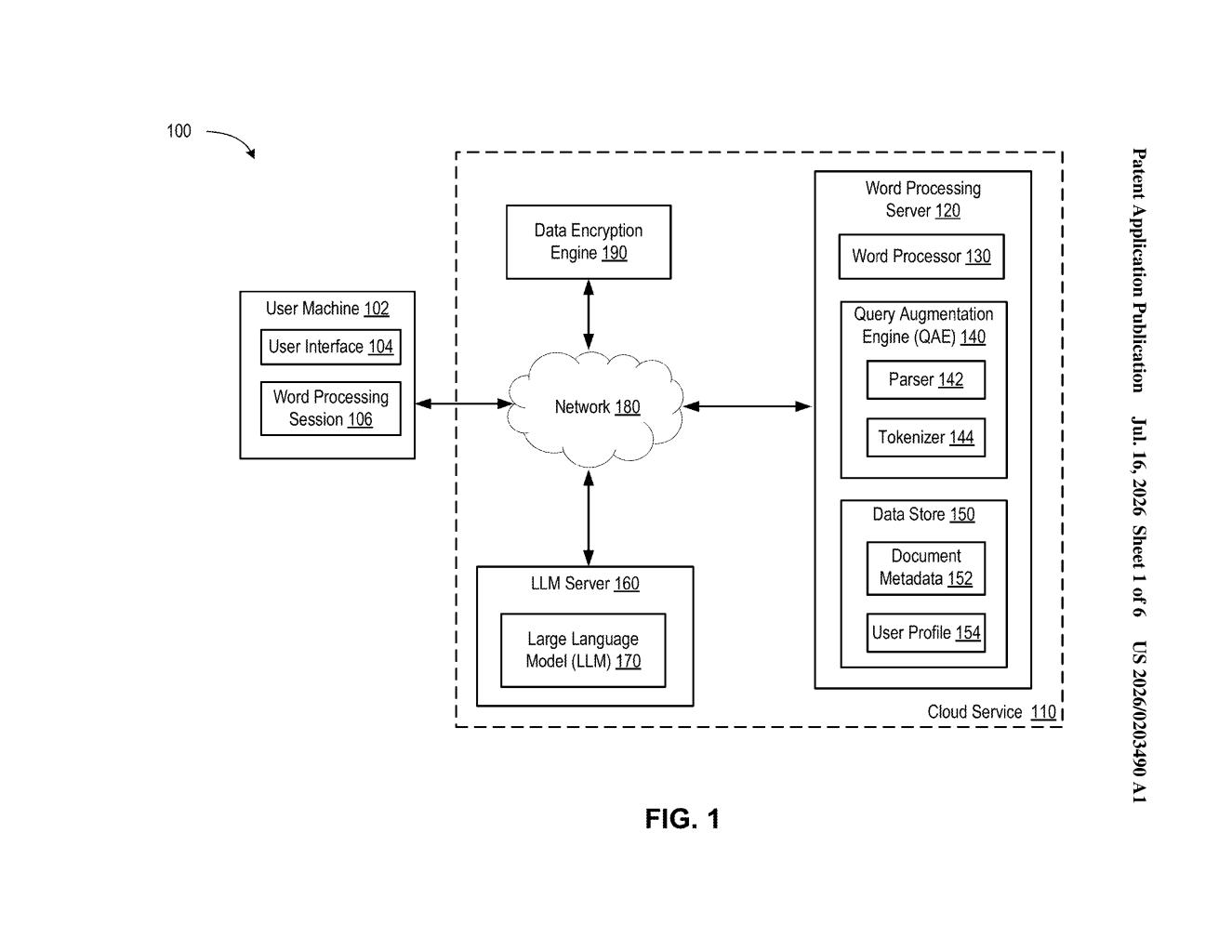
The system works by intercepting your writing request before it reaches the AI model. When you type a prompt, say, "add an executive summary", the system identifies which parts of the document's formatting metadata (the stored rules for fonts, paragraph styles, spacing, heading levels, and similar properties) are relevant to that request.
It then builds what the patent calls an augmented query: a combined package that includes both your original request and a representation of those formatting rules. That combined package is what gets sent to the large language model (LLM), the AI system that does the actual writing.
Because the model sees the formatting requirements alongside your content request, it can generate text that already conforms to the document's structure. The result gets written directly into the document without a separate formatting step.
- The system reads the document's existing style rules before generating anything.
- It selects only the formatting rules relevant to your specific request, not the entire document's metadata.
- The AI model receives a single combined instruction covering both content and format.
- The finished text is inserted directly into the document, pre-formatted.
What this means for AI writing inside Google Docs
For anyone who uses AI writing tools inside Google Docs today, the constant friction is the formatting cleanup. AI-generated text lands in your document looking generic, and you fix it manually. This patent describes a tighter integration where the AI is format-aware from the start, which would make AI-assisted writing feel less like pasting from a different app and more like a natural extension of what you're already doing.
For Google, the strategic angle is clear: making Google Docs stickier by building AI features that actually understand your document rather than just appending text to it. If the generated content fits your style on the first try, you're less likely to reach for a separate AI writing tool.
This is a practical, unglamorous fix to a real problem that anyone who has used AI inside a word processor has hit. It's not a flashy AI capability, it's plumbing work that would make existing AI writing features noticeably less annoying. That said, the core idea is straightforward enough that it will face real competition from similar approaches already being explored across the industry.
There are more where this came from
We read every patent application Big Tech publishes and send you the ones worth knowing. Plain English, free, every week.
Want this weekly breakdown for a company we don't cover? Patentlyze Pro →
Be the first to weigh in