
Adobe Patent Reveals AI Reading Research to Trace Variable Influence in Data
Knowing that two things are correlated is easy. Knowing *why* is the hard part. Adobe is patenting a system that uses AI language models to automatically hunt for hidden factors that make two trends look related when they're actually being driven by something else entirely.
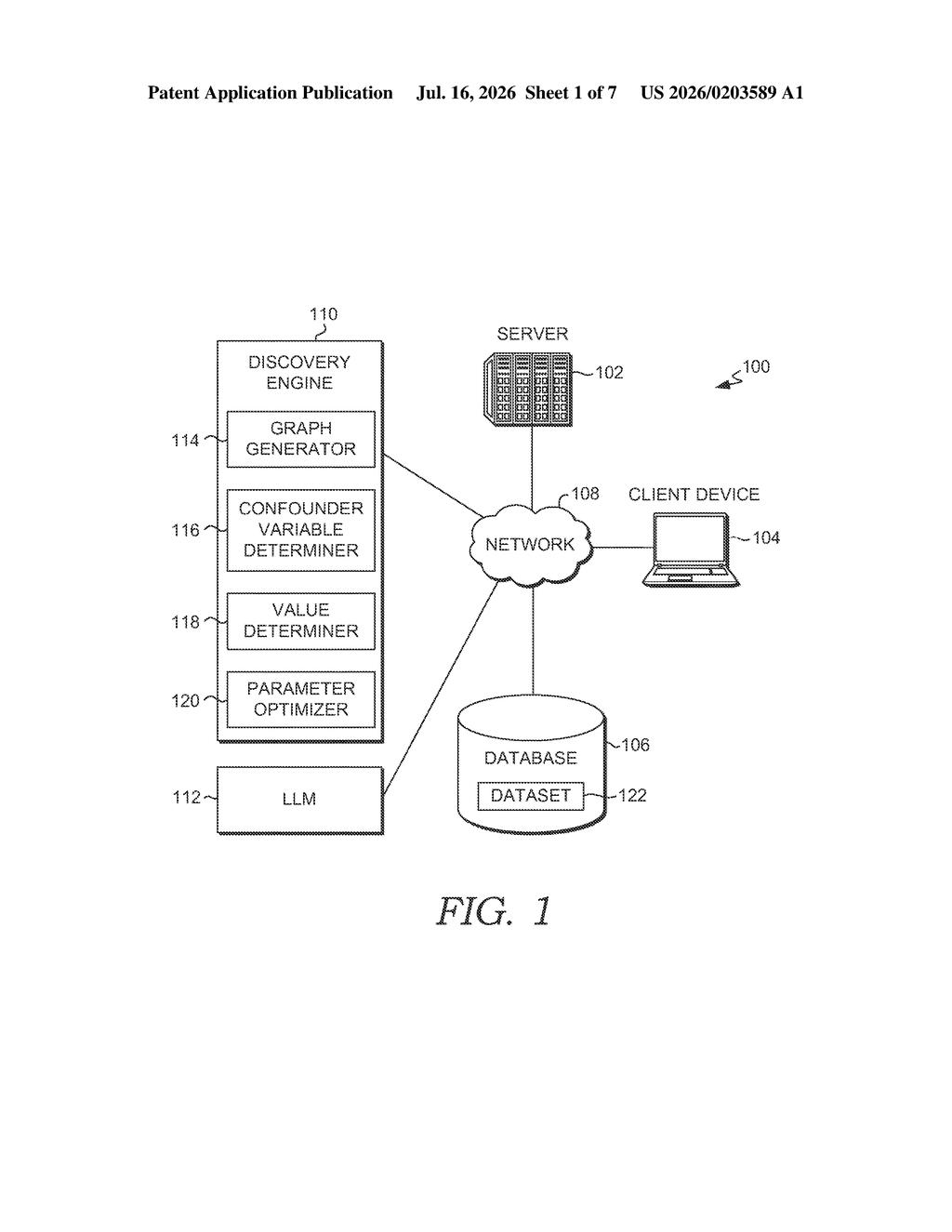
What Adobe's AI cause-finder actually does
Imagine your company's data shows that ice cream sales and sunscreen sales rise and fall together. A naive system might conclude one causes the other. The real culprit, of course, is hot weather driving both. Finding that hidden third factor, called a confounder, is one of the hardest problems in data analysis.
Adobe's patent describes a system where an AI language model acts like a knowledgeable consultant. You feed it a map of relationships in your data, and it suggests what hidden variables might actually explain those relationships. It doesn't just name the variable; it also estimates how strongly that hidden factor connects to the others.
The system then uses those estimates as a starting point and runs math to fine-tune how strong each connection really is. The goal is to give analysts a much more accurate picture of what's actually causing what in their data, not just what happens to move together.
How the LLM spots hidden confounding variables
The patent describes a pipeline with four main steps:
- Graph generation: The system reads a dataset and builds a causal graphical representation (think of it as a flowchart showing which variables appear to influence which others). Specifically, it can produce a partial ancestral graph, a type of diagram that flags pairs of variables connected by a two-headed arrow, meaning the system suspects they share a hidden common cause rather than one directly causing the other.
- LLM consultation: An AI language model is then prompted to look at those flagged pairs and suggest a confounder variable, a real-world factor not yet in the dataset that would explain why both variables move together.
- Value estimation: The LLM is also asked to provide an initial numerical value representing how strongly that confounder connects to the other variables. This is essentially asking the AI to make an educated first guess based on its broad knowledge.
- Parameter optimization: That first guess is refined using a math process (Bayesian inference, which updates beliefs as new evidence arrives) so the final model reflects the actual data, not just the LLM's prior knowledge.
The result is a causal model that incorporates outside knowledge without being entirely dependent on it.
What this means for data analysts and business decisions
For anyone making business decisions from data, confounders are a constant trap. Marketing teams misattribute sales lifts to the wrong campaign. Healthcare researchers draw wrong conclusions about treatments. Adobe's approach could make it faster and cheaper to produce causal models that are actually trustworthy, because the LLM does the hard work of proposing candidates that a human analyst might miss.
This fits into Adobe's push to make its analytics and data products more useful for non-statisticians. If your analytics tool can automatically flag "you're probably seeing a common cause here, and it might be this," that's a meaningful shift from tools that just show you correlations and leave the interpretation to you.
This is a genuinely interesting fusion of two things that usually live in separate worlds: the broad world-knowledge baked into large language models and the mathematical rigor of causal inference. The risk is that LLMs can confidently suggest plausible-sounding confounders that are wrong, so the optimization step is doing real load-bearing work here. If Adobe can make this reliable, it's a useful addition to any analytics product aimed at business users who aren't statisticians.
There are more where this came from
We read every patent application Big Tech publishes and send you the ones worth knowing. Plain English, free, every week.
Want this weekly breakdown for a company we don't cover? Patentlyze Pro →
Be the first to weigh in