
Google Patent Reveals Plans to Turn Human Skin Into a Wearable Touchscreen
Google is working on glasses that turn your hand or arm into a touchscreen, projecting app controls directly onto your body when the device senses you want to use them.
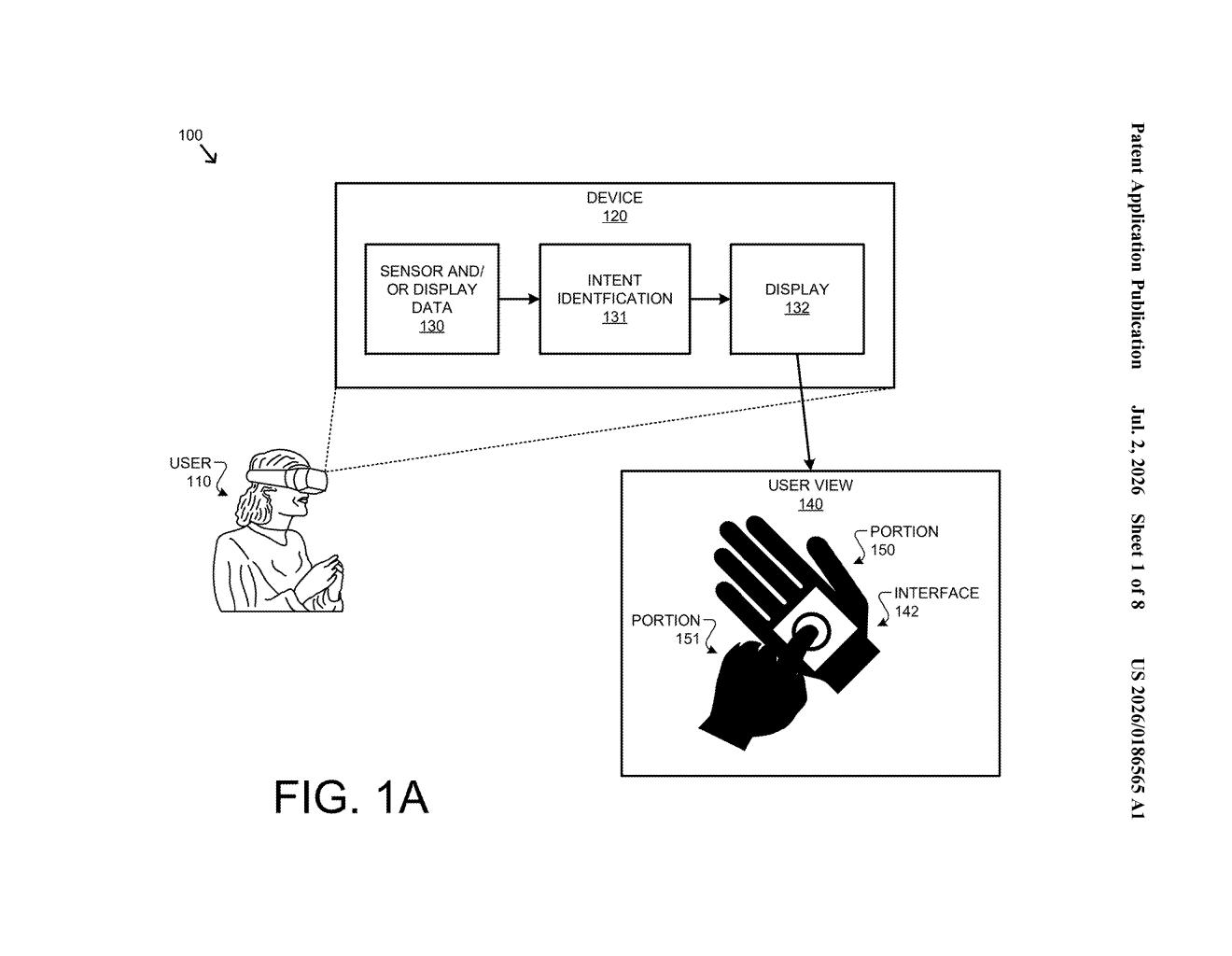
What Google's body-overlay interface actually does
Imagine you're wearing a pair of smart glasses and want to skip a song. Instead of fumbling for your phone or tapping a tiny frame button, the glasses notice your intent and project playback controls right onto the back of your hand. You tap your own hand to skip the track.
That's the core idea in this Google patent. The glasses watch sensor data (things like eye movement, hand position, or what you're doing) to figure out when you want to interact with an app. Then they overlay that app's interface onto whatever part of your body is in view, so it appears as though the controls are printed right on your skin.
This approach sidesteps one of the biggest frustrations with wearables: there's almost no good surface area for controls. Your wrist gets one screen, your glasses frame gets one button. Turning your forearm into a display solves that problem without adding hardware.
How the glasses detect intent and place the overlay
The patent describes a wearable device (almost certainly glasses with a see-through display) that does three things in sequence.
- Reads intent: The device collects sensor data and applies at least one criterion to decide whether the user actually wants to open or use an app. This could involve eye-gaze tracking, hand gesture detection, proximity sensors, or context cues like audio.
- Picks the right interface: Once intent is confirmed, the system selects which app interface to show. Different apps could produce different control layouts, tailored to what makes sense for that body position.
- Overlays it on the body: The interface is displayed on the glasses screen in a position that places it visually between the user's eye and a part of their body, so the controls appear to sit on the skin or clothing.
The key engineering detail is the positioning constraint: the interface is anchored to a body part, not floating in space. That means if you move your hand, the controls follow it, staying registered to your arm rather than drifting across your field of view. This kind of body-anchored augmented reality is significantly harder to implement than a simple heads-up display, because it requires real-time tracking of your own limbs.
What this means for Google's wearables push
For Google's wearables strategy, this patent lands right in the middle of the Android XR push the company announced in 2024. Android XR is Google's platform for glasses and headsets, and one of its open problems is how you control things when you have no keyboard and almost no physical buttons. Body-projected interfaces are one serious answer to that question.
For you as a potential user, this would change what it feels like to wear smart glasses all day. Right now, wearables either demand your phone or give you a postage-stamp-sized screen on your wrist. A system that turns your forearm into a context-aware control panel is a meaningfully different experience, and it doesn't require you to buy a larger device.
This is a real idea with real engineering behind it, not a defensive patent. Google has been visibly building out Android XR hardware and this filing fits that roadmap directly. The body-anchoring detail is the part worth watching: getting that tracking reliable enough for daily use is hard, and whether Google can pull it off determines whether this becomes a feature or a demo.
Get our take in your Top Stories
Liked this breakdown? Add Patentlyze as a preferred source on Google, and our plain-English take shows up more often in your Top Stories the next time Google patent news breaks.
There are more where this came from
We read every patent application Big Tech publishes and send you the ones worth knowing. Plain English, free, every week.
Want this weekly breakdown for a company we don't cover? Patentlyze Pro →