
New Google Patent Lets One App Cast Any Streaming Service to Your TV
Flipping between Netflix, Max, and Disney+ to find something to watch is a small daily annoyance. Google is patenting a way to make a single app handle all of that and send whatever you pick straight to your TV.
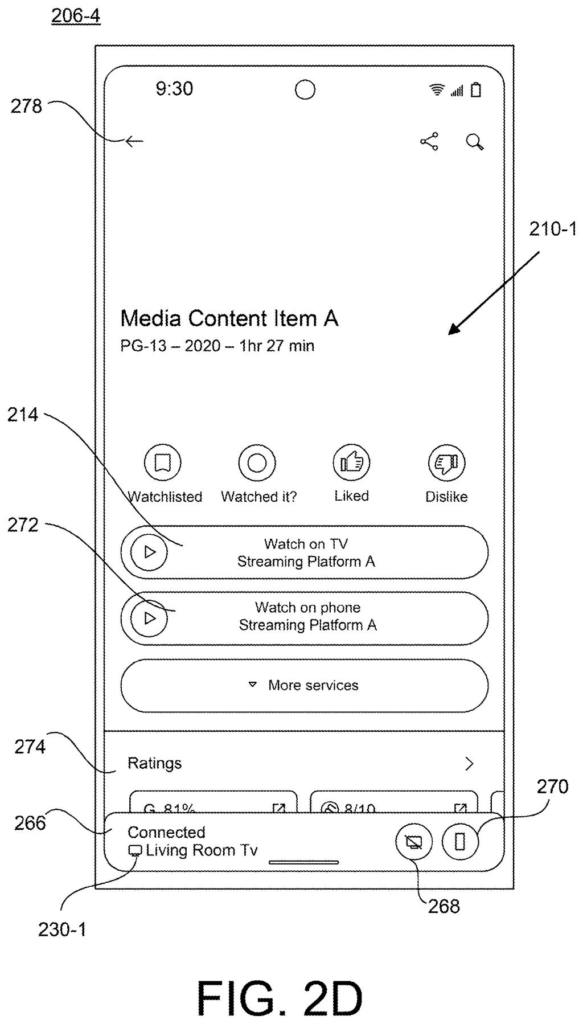
What Google's streaming aggregator actually does on your TV
Imagine browsing one app on your phone that shows you movies and shows from Netflix, Hulu, Disney+, and every other service you subscribe to, all in the same list. When you find something you want to watch, you tap one button and it plays on your TV. No switching apps, no hunting for the right remote.
That's essentially what this Google patent describes. A single media aggregator app pulls together content from multiple streaming platforms and gives you a cast button next to each title. When you tap it, your TV receives a signal that tells it which service to open and which show to play.
The clever part is that your TV doesn't just mirror your phone screen. It actually opens the native app for that streaming service and plays the content directly, which means you get the full quality and features of the original app without your phone having to do any of the heavy lifting.
How the cast request launches the right app on your TV
The patent describes a media aggregator application running on a phone or tablet that displays content from multiple streaming platforms in a single unified interface. Think of it as a universal browse screen that doesn't care which service actually owns the content.
When a user selects a title and taps the cast button, the aggregator sends a cast request over the local network to a TV or other display device. That request contains enough information for the TV to know which native app to open (say, the Netflix app or the Prime Video app) and which specific piece of content to start playing.
The TV then handles everything itself:
- It launches the appropriate streaming service's native app
- It authenticates and starts streaming the content directly from the platform
- It plays the video on the TV display without routing through the phone
This approach means the phone acts only as a remote control and discovery layer. Once the cast command is sent, the TV and the streaming platform communicate directly, keeping quality high and phone battery usage low.
What this means for how you browse streaming services
Right now, most people have to juggle several apps or use a service like Google TV's existing interface to browse across platforms. This patent formalizes a deeper version of that idea, where a single cast button can hand off to any streaming service's native app without you ever opening that app yourself. For you as a viewer, that's fewer taps and less friction getting from "I want to watch something" to actually watching it.
For Google, it reinforces the role of Android and Google TV as the connective tissue between the streaming industry's fragmented ecosystem. If Google controls the aggregation layer, it has a strong position regardless of which streaming services win or lose subscribers.
This is a practical, unglamorous improvement to something millions of people do every day. Google already has Google TV doing some version of this, so the patent likely represents a more formalized and extended version of that casting flow rather than a brand-new product category. It's worth watching as a signal of where Google wants the aggregator experience to go, even if the idea itself isn't surprising.
There are more where this came from
We read every patent application Big Tech publishes and send you the ones worth knowing. Plain English, free, every week.
The drawings
24 drawing sheets from US 2026/0214288 A1 · click any drawing to enlarge


Want this weekly breakdown for a company we don't cover? Patentlyze Pro →
Be the first to weigh in