
Google Patent Teaches Wearables to Wake Up Only at the Right Moment
Your smartwatch lights up constantly for nothing. Google is patenting a system that figures out what you're doing first, then decides whether waking up the screen is actually worth it.
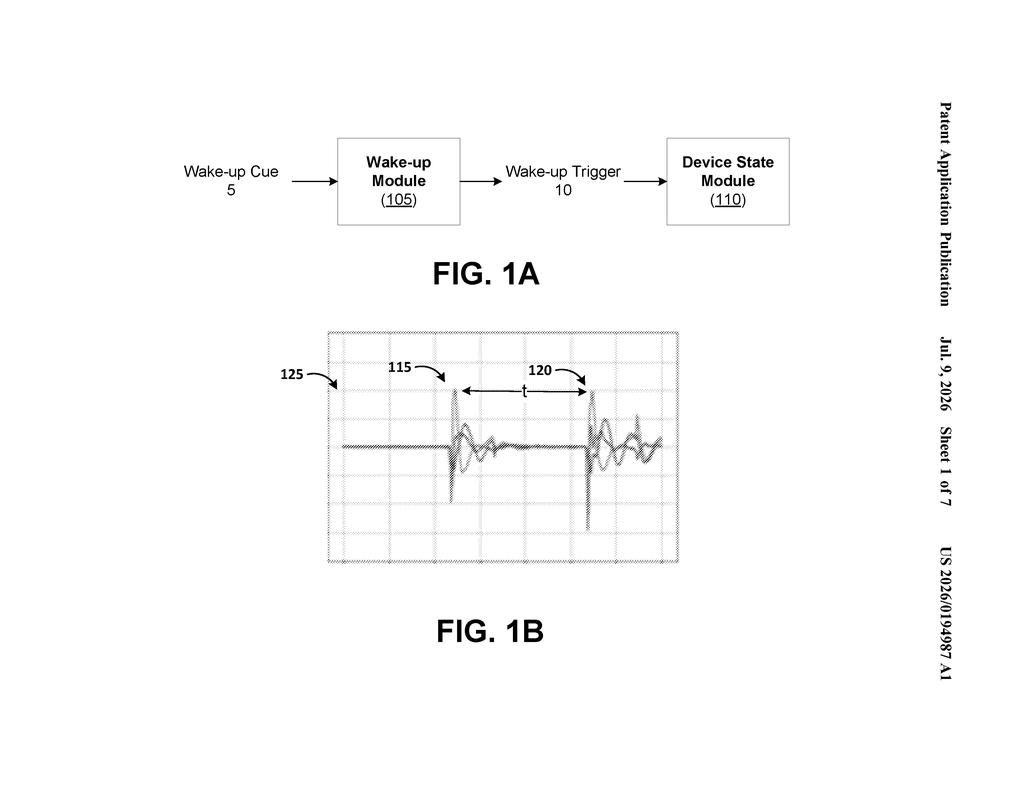
How Google's context-aware wake-up actually works
Picture this: you're on a run, and your watch screen flickers on every time your wrist moves even slightly. Or you're in a meeting and it lights up from a subtle gesture. These false wake-ups drain your battery and pull your attention away.
Google's patent describes a wearable that reads its own situation before deciding to turn on. It checks context clues, like whether you're moving, sitting still, or in a specific environment, then picks the best-matched AI model for that situation. That model then interprets whatever triggered the possible wake-up (a wrist flick, a voice sound, a tap) and makes a prediction about whether this is a real wake-up moment or background noise.
The result is a device that gets better at ignoring the irrelevant stuff and responding to the moments that actually count. Think fewer accidental activations and a longer battery charge, because the device isn't wasting energy on phantom signals.
How the device picks a model before acting on a cue
The patent describes a four-step process running entirely on the wearable device itself:
- Context sensing: The device reads what Google calls a "contextual cue", environmental or behavioral signals like motion patterns, ambient sound levels, or activity state (exercising, idle, in conversation).
- Model selection: Based on that context, the device picks one of several pre-trained input models. Think of each model as a specialist: one tuned for detecting a deliberate wrist raise while running, another for recognizing a voice command in a quiet room.
- Feature representation: The chosen model processes the incoming wake-up cue (a gesture, tap, or sound) and converts it into a compact internal description of what it detected. This is called a feature representation, essentially a fingerprint of the signal.
- Wake-up prediction: A final layer evaluates that fingerprint and predicts whether a genuine wake-up trigger occurred, then either activates the display or ignores the cue.
Running this logic on-device rather than in the cloud means faster decisions and no round-trip to a server. The context-switching part is what makes this different from a single always-on model: instead of one generalist trying to handle every scenario, the device dynamically routes signals to the right specialist.
What this means for smartwatch battery life and UX
Battery life is still one of the biggest complaints about smartwatches. Every unnecessary screen activation burns power and breaks focus. A system that adapts its detection logic to the current situation could meaningfully reduce false positives without making the device feel less responsive.
For Google's Pixel Watch line, this kind of on-device adaptive inference fits neatly into the direction Wear OS has been moving, with more local AI processing and less cloud dependence. If this approach works as described, you'd get a watch that knows not to light up when you're washing dishes but still catches a genuine raise-to-wake the moment you lift your arm to check the time.
This is a real quality-of-life problem that smartwatch users deal with every day, and the solution here is genuinely considered rather than cosmetic. Routing signal detection through context-matched models is a thoughtful architectural choice, not a one-liner fix. Whether Google ships this in recognizable form is an open question, but the patent is solving the right thing.
Get our take in your Top Stories
Liked this breakdown? Add Patentlyze as a preferred source on Google, and our plain-English take shows up more often in your Top Stories the next time Google patent news breaks.
There are more where this came from
We read every patent application Big Tech publishes and send you the ones worth knowing. Plain English, free, every week.
Want this weekly breakdown for a company we don't cover? Patentlyze Pro →