
Google Patents a Server-Side Streaming System for Digital Twin 3D Models
Google is patenting a pipeline that takes heavy 3D digital twin data, simplifies it on the server using parallel processing, and streams the result to any end-user device — no beefy GPU required on your end.
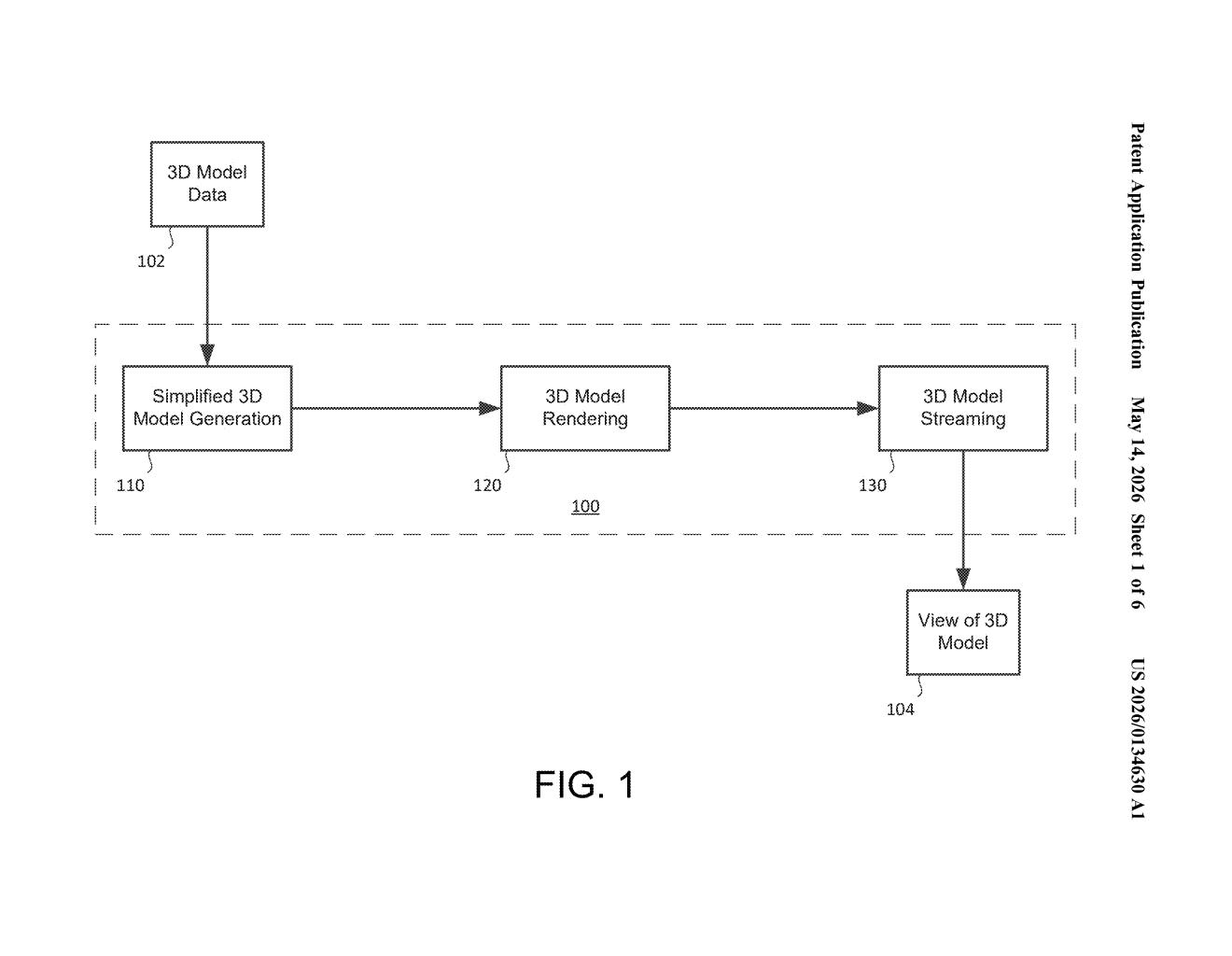
What Google's digital twin streaming system actually does
Imagine a city planner, factory manager, or building engineer who needs to walk through a detailed 3D replica of their facility — but their laptop or tablet isn't powerful enough to render all that geometry. That's the problem Google's patent is designed to solve.
The idea is to do the hard work on Google's servers. A complex digital twin (a detailed 3D virtual copy of a real-world place or object) gets crunched down into a lighter version using a fast, parallel processing pipeline. That simplified model is then rendered from a specific camera angle and converted into a streamable video-like format — similar to how game streaming services like GeForce Now work.
The result gets sent over a network to your device, which just displays the stream. You get a smooth, interactive view of a complex 3D environment without needing specialized hardware. It's essentially cloud gaming infrastructure, but applied to digital twins.
How Google simplifies and streams 3D models at scale
The patent describes a multi-stage pipeline for making large 3D model data (think detailed architectural scans or industrial digital twins) practical to deliver over a network.
The core steps are:
- Ingest: Raw 3D model data representing a real-world setting is received by the system.
- Simplify: A parallel processing pipeline architecture (multiple processing threads working simultaneously to speed up the job) converts the heavy model into a simplified model — reducing polygon counts, texture complexity, or other geometric detail.
- Render: The simplified model is rendered using a 3D model rendering platform from a specific viewpoint — a defined position and camera angle.
- Encode: That rendered view is converted into a streamable format (essentially compressed video or image frames suitable for network transmission).
- Transmit: The encoded stream is sent to an end-user terminal — a phone, tablet, browser, or thin client — over a network connection.
The heavy lifting stays server-side. The client device only needs to decode and display a video stream, not render complex geometry locally. The claim specifically anchors the view to a specific position and specific angle, suggesting the system renders on-demand based on where the user is looking in the model.
What this means for cloud-rendered digital twins
Digital twins are increasingly used in construction, manufacturing, smart cities, and infrastructure management — but they're typically expensive to view because they demand high-end workstations or specialized software. A server-side streaming approach could make that access much broader, letting any networked device interact with complex spatial data.
For Google, this fits neatly into its cloud infrastructure ambitions. Google Cloud already competes for enterprise customers running spatial computing and simulation workloads. A managed digital twin streaming service would be a natural upsell — and this patent suggests the company is at least thinking seriously about owning that delivery layer, not just the compute underneath it.
This is a competent infrastructure patent, not a conceptual leap — the idea of server-side rendering and streaming 3D content has been around since OnLive. What's notable is Google formalizing it specifically for the digital twin use case, which signals real enterprise intent. Whether this surfaces as a Google Cloud product or stays internal tooling is the more interesting question.
There are more where this came from
We read every patent application Big Tech publishes and send you the ones worth knowing. Plain English, free, every week.
Want this weekly breakdown for a company we don't cover? Patentlyze Pro →