
Google Patents a Cellular Radio That Uses Sensor Data to Optimize Its Own Signals
Most wireless radios are blind to the physical world around them — they just blast signals and hope for the best. Google's new patent describes a system where the radio itself learns from sensor data to send and receive more intelligently.
What Google's sensor-aware cellular radio actually does
Imagine your phone's cellular radio is trying to send data while you're in a crowded stadium, moving fast in a car, or pressed up against a metal surface. Right now, the radio has no real awareness of those conditions — it just adjusts based on signal feedback after the fact.
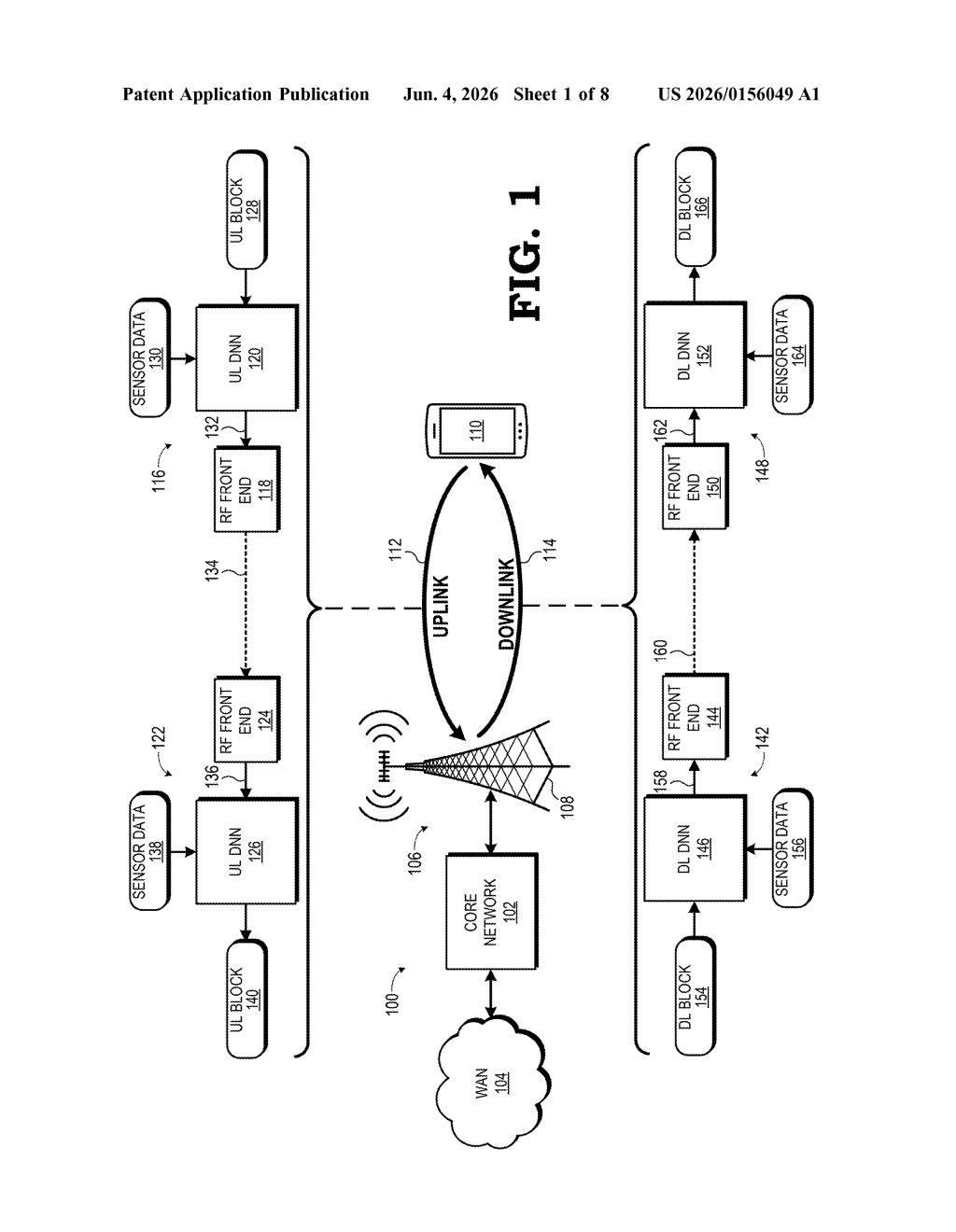
Google's patent describes a different approach: feed data from physical sensors (think accelerometers, gyroscopes, proximity sensors, or even environmental detectors) directly into a neural network that controls how the radio transmits and receives. The neural network processes both the data you're trying to send and what the sensors are telling it about the physical environment, then shapes the radio signal accordingly.
The same idea applies on the receiving end too — a second neural network takes the incoming radio signal and sensor context together, then decodes the message. The result is a radio that doesn't just react to interference — it anticipates it.
How the neural network fuses sensor data with radio signals
The patent describes two paired neural networks — one on the transmitter side and one on the receiver side — that replace or augment the traditional signal processing pipeline in a cellular radio.
On the transmit side: a neural network (called the "transmitter neural network") takes two inputs simultaneously:
- An information block — the actual data payload you want to send
- Sensor data from one or more onboard sensors (the patent doesn't restrict which sensors, leaving that open)
The network processes both together and outputs control signals that drive an RF transceiver (the hardware chip that generates the actual radio waves), shaping the transmitted signal based on real-world context.
On the receive side: a second neural network takes the raw RF output from the receiver hardware plus a matching set of sensor data, processes them jointly, and reconstructs the original information block. This is significant because traditional decoding treats the received signal in isolation — adding physical context could help the network make better guesses when signals are corrupted or weak.
The core idea is sensor fusion at the physical layer (the lowest level of radio communication, where raw bits become electromagnetic waves). Rather than bolting intelligence on top of an existing radio stack, Google is proposing to bake it in at the foundation.
What this means for next-gen connected devices
Traditional cellular radios operate on decades-old signal processing assumptions. Neural network approaches to the physical layer — sometimes called learned communications or AI-native radio — have been an active research area, and this patent positions Google squarely in that space. For consumer devices like Pixel phones or future Android hardware, a radio that adapts based on motion, orientation, or proximity data could mean fewer dropped calls and better throughput in challenging environments.
The broader implication is for IoT and robotics devices that are already sensor-rich. A robot, a smart vehicle, or a wearable has abundant context about its physical state — if that context can meaningfully improve wireless reliability, it unlocks more dependable connectivity in exactly the environments where traditional radios struggle most.
This is a genuinely interesting research-to-patent move. AI-native physical layer design is a real frontier in wireless engineering — standards bodies like 3GPP have already started discussing it for 6G. Google filing in this space suggests they're not just watching from the sidelines. Whether this shows up in Pixel hardware or in Google's network infrastructure ambitions is worth tracking.
There are more where this came from
We read every patent application Big Tech publishes and send you the ones worth knowing. Plain English, free, every week.
Want this weekly breakdown for a company we don't cover? Patentlyze Pro →