
Google Patents a Zoom Slider That Expands or Collapses How Much Text You Read
Google has filed a patent for a system that lets you dial the detail level of any document up or down, the way you zoom a map in or out, so you can skim or dig deep without switching apps or hunting for a summary.
What Google's text-zoom idea actually does for readers
A student cracks open a 60-page policy report at 11 p.m. and needs the gist in five minutes. Right now, that means jumping between the original text and a separate summarizer tool, hoping the summary captured the right parts. You lose context, you lose time, and you never quite trust that the short version got it right.
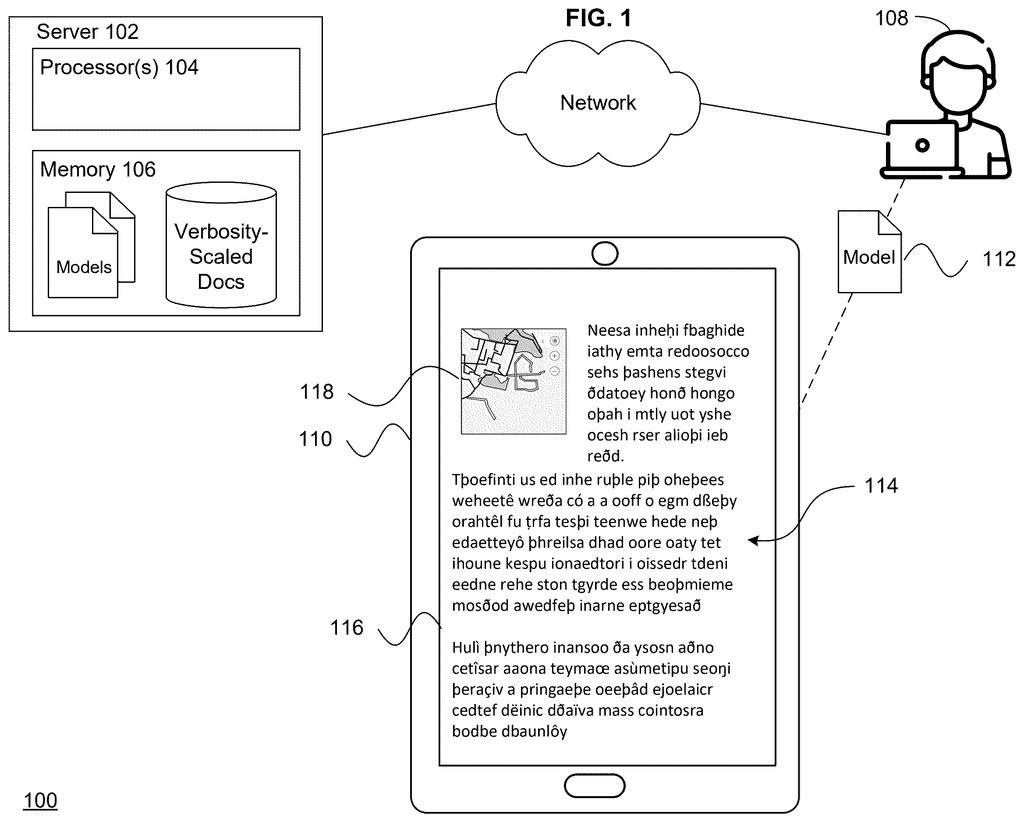
Google's patent describes a single slider-style control built right into a document interface. Drag it toward "less detail" and the text condenses automatically. Drag it back and the full explanation reappears. The system uses a trained AI module to rewrite each section at whichever level of detail you choose, so every zoom level reads like real prose, not a bullet-point skeleton.
You can also apply different zoom levels to different sections of the same document. Need the introduction in full but just the highlights from the appendix? The system handles each piece independently, keeping your reading experience coherent from start to finish.
obtaining, by a trained summarizer module of a computing system, an input electronic document, the input electronic document comprising at least one text segment; obtaining, by the trained summarizer module, user input identifying a zoom level to be applied to at least a portion of the at least one text segment; …
Translation: The system reads a document and waits for the user to adjust the zoom slider.
How the summarizer picks the right level of detail
The patent describes a trained summarizer module that takes an input document and accepts a user-specified zoom level, a numerical value representing how verbose or detailed the output should be. The module then generates new text segments calibrated to that verbosity level, which can be stored for later or rendered immediately on screen.
A key component is a verbosity level classifier trained to score text by how much detail it contains. Think of it as a measurement tool that tells the summarizer: "this passage is currently at verbosity 8; the user wants verbosity 4, so cut roughly half the explanatory material while keeping the core meaning." The classifier and summarizer work together so the output at any zoom level reads naturally, not like a truncated fragment.
The system operates at two scopes:
- Document-wide zoom: apply one verbosity level across the entire file
- Section-level zoom: set a different level for individual paragraphs or chapters independently
The claim covers the full pipeline: accepting the document, accepting the zoom input, generating the rewritten segments, and either storing them or displaying them. That end-to-end framing is deliberately broad, covering the behavior regardless of which AI model sits underneath.
This beneficially enables users to “zoom” in and out of the text via a user interface while reading. The amount of detail is readily adjustable to provide either less or more detail than the original content, which enhances readers'ability to efficiently navigate and comprehend large documents.
Translation: Readers can change how much detail they see to read long documents much faster.
What this could mean for Google Docs and Search
If this technology ships inside something like Google Docs or Google Search's AI features, it could change how people handle long reading tasks. Instead of copying text into a separate summarizer and losing the original structure, you would adjust detail inline, the way you pinch-to-zoom a photo. That keeps you inside one tool and one document, which is a real friction reduction for researchers, students, and anyone who reviews contracts or reports for a living.
The section-level granularity is the more interesting half. A document-wide summary is already common; tools like NotebookLM or Docs' existing "Summarize" feature do a version of that. Per-paragraph zoom control, where you decide which sections get compressed and which stay full, gives readers editorial agency that current AI writing tools don't really offer.
Google's 86th filing in the Language AI work we've tracked since May adds to a run that includes one on smarter document search and one on smoother audio dialogue.
Claim 1 is written at a high level of abstraction. It covers any computer-implemented method that takes a document, takes a zoom level, and produces text at the requested verbosity. It does not specify a particular AI architecture, a particular zoom-level scale, or even a particular interface element. That breadth is a double-edged situation: the claim could potentially apply to a wide range of AI-driven summarizers if granted, but the same generality makes it a target for prior-art challenges, since adjustable summarization has appeared in academic and commercial tools for years.
The most defensible piece of the patent is likely the verbosity classifier trained specifically to measure and control detail level as a continuous, user-adjustable scale, rather than the binary "full text vs. Summary" that most current tools offer. If that classifier training approach is novel enough to survive examination, the patent has real teeth. If examiners find prior art that already scores and scales text verbosity, the claim may need significant narrowing.
Google has been filing around AI-assisted document reading since at least 2023, and this fits that pattern. For readers, the practical question is whether the zoom-level experience ever ships in a product they use. The patent describes the concept clearly; the hard engineering work of making the rewritten text feel natural at every zoom level is a separate problem entirely.
There are more where this came from
We read every patent application Big Tech publishes and send you the ones worth knowing. Plain English, free, every week.
The drawings
8 drawing sheets from US 2026/0278239 A1 · click any drawing to enlarge


Want this weekly breakdown for a company we don't cover? Patentlyze Pro →
Be the first to weigh in