
Google Patents a Way for AI Chatbots to Remember Images You Already Shared
Every time you start a new message in an AI chat, you probably have to re-upload the photo you're asking about. Google is patenting a system that makes that unnecessary.
What Google's image-memory fix actually does for you
Every time you send a photo to an AI assistant and then ask a follow-up question, there's a good chance you have to attach that photo again. The AI treats each message almost like a fresh start, which wastes your time and can feel oddly forgetful for something billed as intelligent.
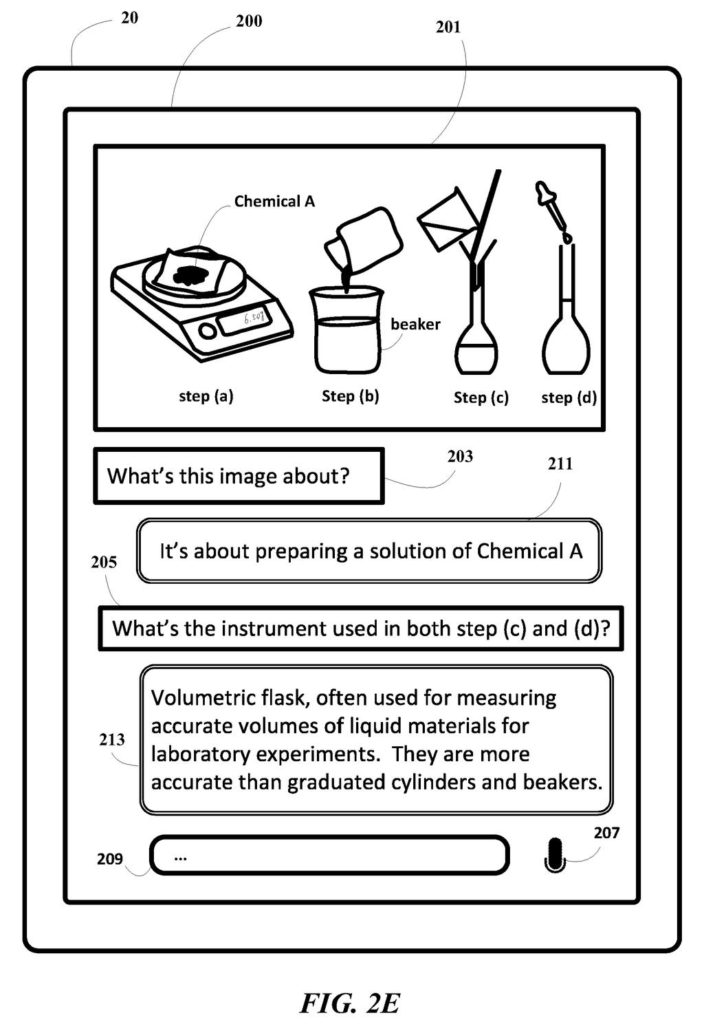
Google's patent describes a way for the AI to hold onto an image across an entire conversation. The first time you send a photo, the system processes it and saves a compact version of it, tied to that conversation or your account. Later messages can pull from that saved version automatically, so you and the AI can keep talking about the same image without you doing anything extra.
The practical result: you send a photo of, say, a leaky pipe or a rash or a restaurant menu once, and every follow-up question in that same chat already "knows" what you were looking at. The conversation feels more like talking to a person who remembers what you showed them.
maintaining a structured file including a sequence of dialog entries for a multi-turn human-to-computer dialog, the structured file including at least a first entry representing previously processed visual content, and the first entry including an explicit visual content marker identifying a tokenized representation of the visual content; …
Translation: The system keeps a running chat history that labels and saves past images.
How Google stores and retrieves image data mid-conversation
When you send a message containing both text and an image to an AI system, the system today typically processes everything together from scratch each time. That's computationally expensive and means image context can get lost or dropped as a conversation grows longer.
Google's patent introduces a structured dialog file, a running record of your conversation that explicitly tracks images using what the patent calls an explicit visual content marker. Think of it as a bookmark the system drops into the conversation log the first time it sees an image. That bookmark points to a saved, processed version of the image called a tokenized representation (essentially a compressed, AI-readable encoding of the visual content).
When you send a follow-up message, the system scans the conversation log for those markers. If it finds one, it fetches the already-processed image data from a database rather than re-analyzing the original image. That stored representation is then fed into the generative model (the AI that writes responses) alongside the text of your new question.
- Image is received and processed once into a tokenized form
- That token is stored and linked to the conversation or user account
- Future messages in the same dialog automatically retrieve and reuse it
- The AI generates replies with full image context intact, no re-upload needed
If the visual content is subsequently referenced in the dialog, the corresponding tokenized representation of the visual content is retrieved from the database.
Translation: When you mention an old picture again, the chatbot pulls its saved data back up.
What this means for AI assistants you use with photos
For anyone who uses AI assistants to get help with something visual, like a document, a photo, a diagram, or a product image, this matters in a concrete and immediate way. Right now, multi-turn conversations about images are clunky: context degrades, you repeat yourself, and the AI sometimes behaves as if it has never seen what you showed it two messages ago.
A system like this would make image-based AI conversations feel far more natural. Google's interest in multi-turn AI dialog shows up across several recent filings, and this one targets a specific friction point that affects anyone using tools like Google Gemini for visual questions. The more you rely on AI to help interpret things you can see, the more this kind of memory layer would change your day-to-day experience.
Google filed its 32nd application we've tracked since May in our AI assistants that remember you watchlist, building on work like remembering what you asked for and learning your formatting habits.
The frustration this patent addresses is one most people have hit without knowing what to call it: you share a photo or screenshot in a conversation, ask a few follow-up questions, and suddenly the AI treats the image like it never existed. You paste it in again. Same result. The whole exchange falls apart.
Google's solution here is less about making the AI smarter and more about giving it a reliable memory for what you showed it. The image gets stored and tagged to your conversation the first time you share it, so every question you ask afterward can still reference it without you doing any extra work.
For the person on the other end of the conversation, the payoff is simply that things stop breaking in ways that feel arbitrary and embarrassing. A tool that remembers what you showed it behaves more like a capable colleague and less like a goldfish, and that shift in reliability is what turns occasional use into genuine habit.
There are more where this came from
We read every patent application Big Tech publishes and send you the ones worth knowing. Plain English, free, every week.
The drawings
12 drawing sheets from US 2026/0289126 A1 · click any drawing to enlarge


Want this weekly breakdown for a company we don't cover? Patentlyze Pro →
Be the first to weigh in