
Microsoft Patents a Way to Keep AI Chatbots From Forgetting Long Conversations
Every AI chatbot has a memory limit, and when you hit it, the bot starts forgetting the beginning of your conversation. Microsoft has filed a patent for a system that keeps the full picture intact, even as chats run on for hours.
What Microsoft's AI memory fix actually does for you
Ever tried to pick up a long conversation only to find the other person has forgotten everything you said an hour ago? That's exactly what happens when you use an AI assistant for an extended work session.
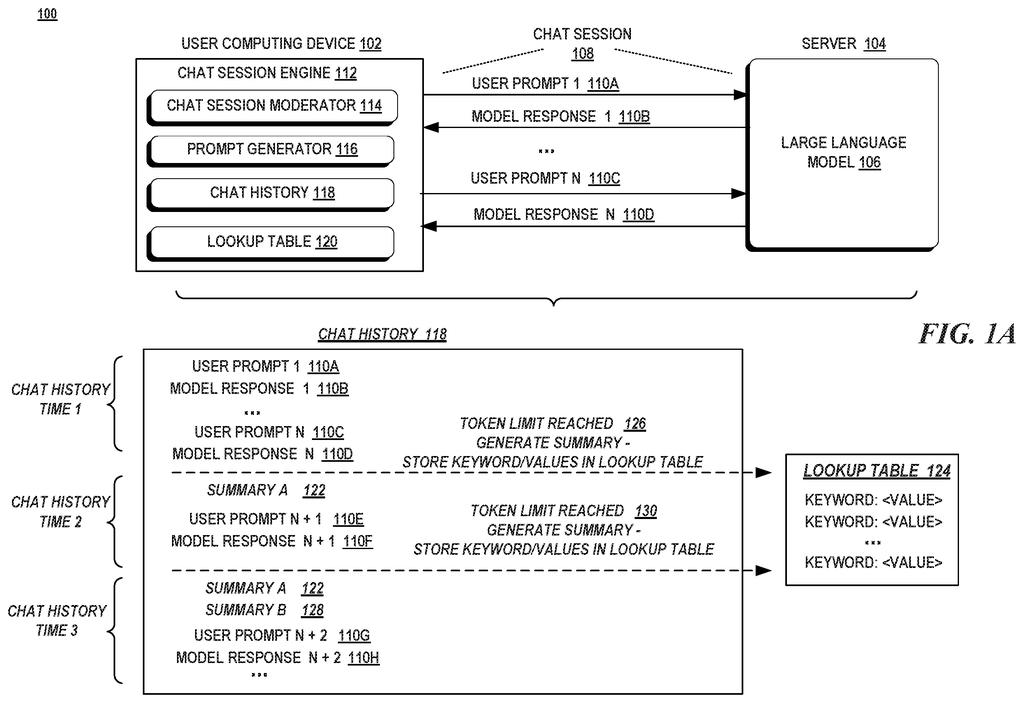
AI models can only hold a certain amount of text in their "working memory" at once. Once your conversation gets too long, the oldest messages fall off the edge, and the AI loses track of what you discussed earlier. Microsoft's patent describes a system that, instead of simply dropping old messages, compresses them into a short summary and tucks away the full original text in a searchable archive.
If the AI later needs a specific detail from the archived portion, it can ask for it by keyword, retrieve the full original text, and carry on as if nothing was lost. You get a bot that can handle much longer, more complex tasks without losing the thread.
… in response to determining that the fixed-size of the context window has been exceeded: generate a summarized chat history; replace, in the memory, the chat history with the summarized chat history; and create a first prompt, wherein the first prompt comprises the summarized chat history and the user query; …
Translation: When the chat gets too long, the system swaps the old messages for a summary before sending your new question.
How the summary-and-lookup system preserves old chat details
AI language models work with a context window (think of it as the model's short-term memory: everything the model can "see" at once, measured in tokens, which are roughly word fragments). When a conversation exceeds that limit, something has to give.
Microsoft's system intercepts at that moment. Instead of silently dropping old messages, it:
- Generates a summarized chat history that condenses what was said into a compact form the model can still use.
- Stores the original, uncompressed messages in a lookup table indexed by keywords, so nothing is permanently deleted.
- Gives the model explicit instructions that allow it to request the original content of any summarized section by querying that lookup table.
The next prompt sent to the model contains the summary plus the new user query. If the model determines it needs more detail from the archived history, it can signal that need and the system retrieves the full original text from the lookup table and passes it back.
This is a software-only approach: no new hardware, no changes to the model itself. The logic lives in a layer that sits between the user interface and the model, managing what gets sent and when.
The original content of the summarized chat history is stored in a lookup table and indexed by keywords. Instructions are provided to the model that allow the model to ask for the original content of the chat history summary which is obtained from the lookup table and provided to the model.
Translation: The AI can look up specific past details using keywords if it needs to remember older parts of the chat.
What this means for long AI work sessions
For anyone using an AI assistant on a long project, a debugging session, or a multi-hour writing task, memory loss is a real friction point. You end up re-explaining context, re-pasting documents, or restarting the conversation entirely. A system like this could make AI tools far more useful for sustained, complex work.
Microsoft's run of AI-assistant infrastructure filings suggests the company is thinking hard about what makes AI tools actually usable day-to-day, not just impressive in short demos. This particular patent sits close to the surface of products like Microsoft Copilot, where long, iterative work sessions are common.
This is the 14th Microsoft filing we've tracked since June on our assistants that remember you watch, following applications like the three-layer memory system and the temporary work folders applications.
The whole system runs on software and existing tools, no new hardware required. A competent team could likely have a working version in weeks.
The harder problem is judgment: summarizing a conversation always drops something, and when the wrong detail gets lost, the AI just operates on incomplete information rather than admitting it doesn't know. That silent failure is the real risk here, because people tend to trust these tools with work that actually matters.
What makes this design honest is that it keeps the original conversation stored and searchable, so the AI can go back and ask for specifics when the summary isn't enough. That backup instinct, building retrieval in rather than hoping summaries are always good enough, is what separates a careful design from an overconfident one.
There are more where this came from
We read every patent application Big Tech publishes and send you the ones worth knowing. Plain English, free, every week.
The drawings
6 drawing sheets from US 2026/0281066 A1 · click any drawing to enlarge


Want this weekly breakdown for a company we don't cover? Patentlyze Pro →
Be the first to weigh in