
New Google Patent Uses Your Browsing History to Answer Search Queries
What if Google Search already knew you'd researched something and surfaced those exact pages the next time you asked? A new Google patent describes a system that does exactly that, treating your browsing history as a personal index to search against.
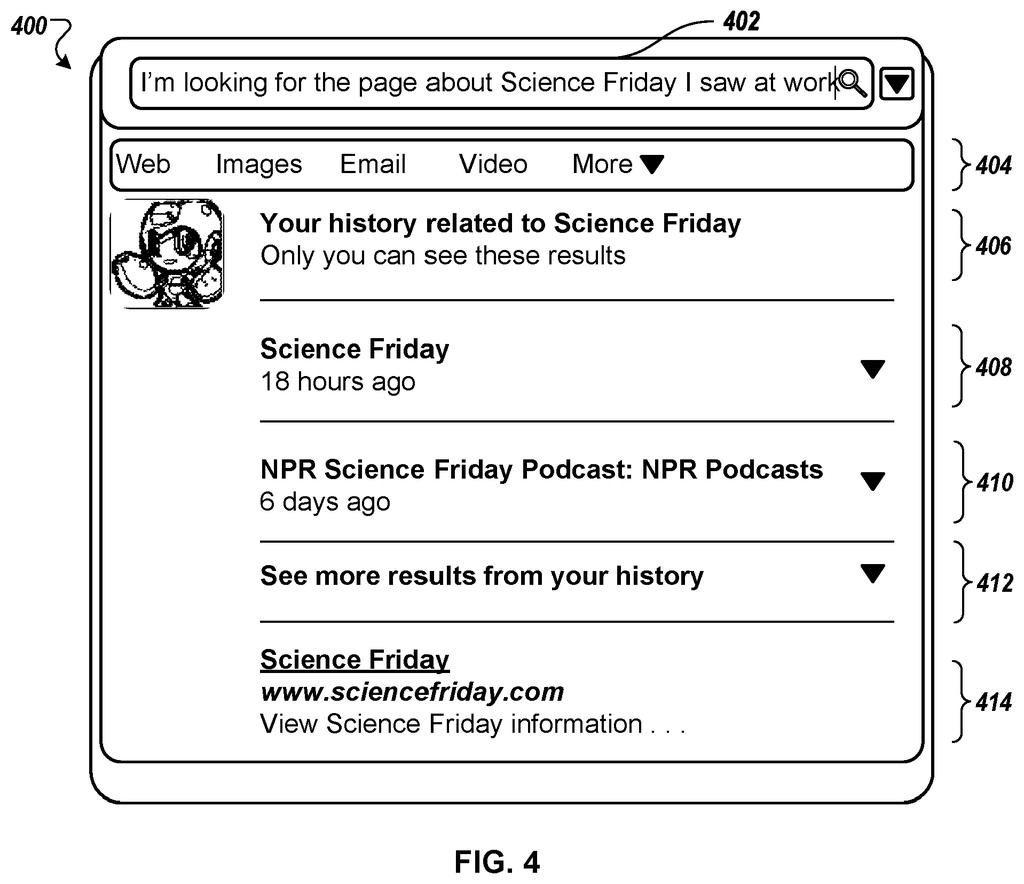
How Google would search your history, not just the web
Imagine you spend an hour on your laptop reading articles about buying a used car. A week later, you pick up your phone and search for something related to car insurance. Normally, Google just searches the whole web. But this patent describes a system where Google would recognize that your new question is related to the car topic you already dug into, and push those same articles you read before back to the top of your results.
The system is designed to work across your devices. You could do the original research on your desktop, then ask a follow-up question on your phone days later, and Google would connect the dots between both sessions.
The idea is that the most relevant result for you isn't always the most popular page on the internet. Sometimes it's the page you already found useful.
How the system links old visits to new queries
The patent describes a two-stage process tied to a specific user's session history.
At an initial moment, a user sends a query from one device. Google processes that query normally and returns a set of results. If the user clicks through and engages with a resource on a particular topic, the system logs that interaction against the user's account.
Later, on the same or a different device, the user sends a follow-up query. The system does two things: it identifies whether the new query is semantically related to a topic the user previously explored, and if so, it includes the previously visited resource in the new response set. In other words, the user's past interactions become a personal corpus (a private collection of documents) that the search engine can draw from.
Key components include:
- A query classifier that decides whether a new query is the kind that benefits from personal history
- Cross-device session linking, so research done on a laptop surfaces on a phone
- Topic matching between the original query terms and the new query's terms
The claim is deliberately broad: it doesn't require the user to explicitly ask for personal results. The system infers that a query belongs to a topic the user already knows.
What this means for your search privacy and results
For everyday users, this could mean fewer dead ends when you're doing research in stages across multiple devices. If you spent time finding a genuinely useful page, you wouldn't have to remember where it was or re-hunt for it. Google would surface it automatically because it knows you already found it relevant.
The privacy angle is harder to ignore. This system requires Google to persistently link your browsing interactions to your identity across devices and sessions. That's data Google largely already collects, but this patent formalizes a new way that data shapes what you see. People who use Google while logged out, or who clear history regularly, would likely get no benefit from this system at all. It's one more way that personalized search and private search diverge.
This is a logical extension of Google's already deep personalization stack, and it's the kind of patent that probably already reflects work happening inside the company. The cross-device piece is the most interesting part technically. The privacy concern is real but not new: Google has been tying your history to your results for years. What changes here is that it becomes the explicit, declared mechanism rather than a background factor.
There are more where this came from
We read every patent application Big Tech publishes and send you the ones worth knowing. Plain English, free, every week.
The drawings
5 drawing sheets from US 2026/0211881 A1 · click any drawing to enlarge


Want this weekly breakdown for a company we don't cover? Patentlyze Pro →
Be the first to weigh in