
Google Files Patent for Smart Glasses That Remember Where You Left Your Keys
Google has filed a patent application for smart glasses that watch your day and remember it for you. Later you can ask where you left your keys, or what that cafe with the blue awning was called.
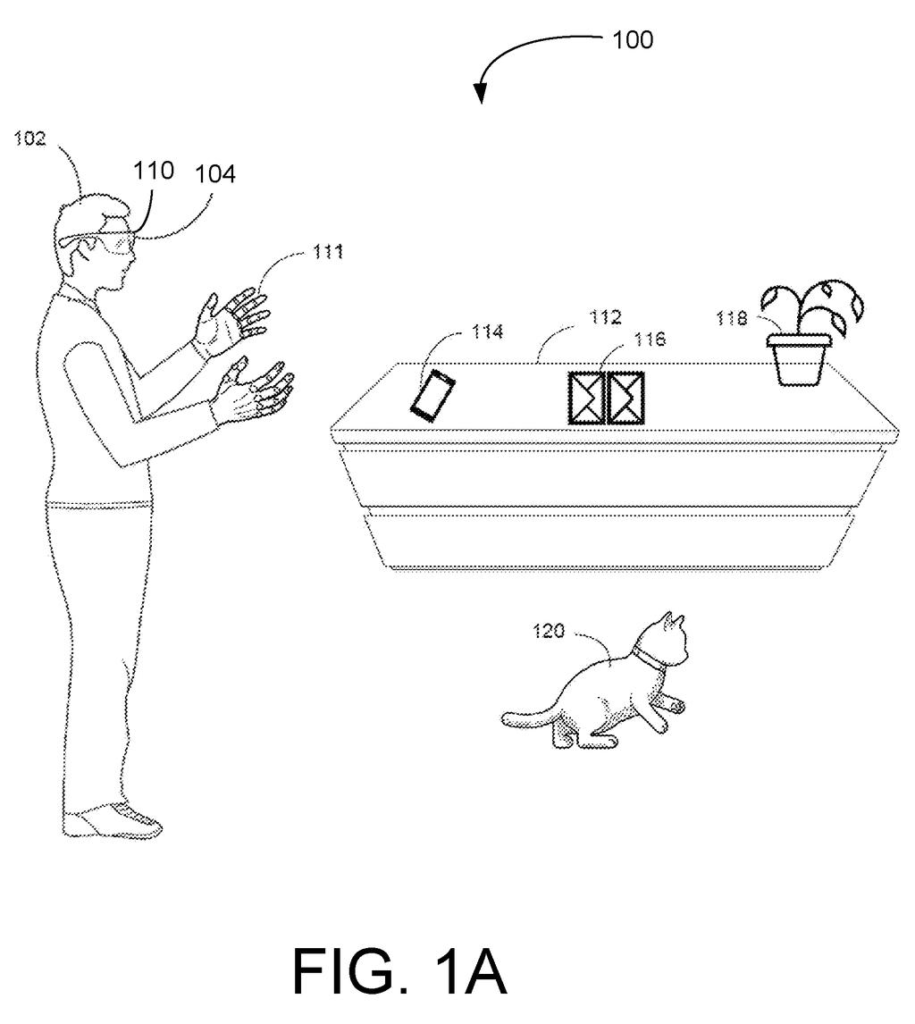
What Google's memory glasses actually do
Ever spent ten minutes hunting for your keys, certain you just had them? Now suppose you could ask your glasses, "Where did I last leave my keys?" and hear that they were on the kitchen counter this morning.
Google's patent application describes smart glasses with a camera, microphone and motion sensors that keep watch in the background at low power. When something seems worth remembering, such as your wallet, a word you say, or an object you stare at, the glasses save a sharper snapshot along with details like the time and place.
Later, you ask a question out loud and an AI assistant searches those saved moments to answer. Faces and password text get blurred before anything leaves the glasses, and saved clips move to your phone and the cloud in batches to spare the battery.
capturing data from a point of view of a user via a sensor included in a head-wearable device; storing a first portion of the data in a memory in response to determining that the first portion of the data is associated with the user based on a context of at least a second portion of the data; …
Translation: The glasses watch through your eyes and decide what moments are worth remembering.
How the glasses decide what to remember
The claims cover a head-worn device whose sensors (a camera, a microphone, a motion sensor) capture what the wearer sees and hears. The device keeps a piece of that data only when another piece gives it context. For example, a camera frame is saved because you said "I'm leaving my wallet here," or because your gaze stayed on an object longer than a set time, such as five seconds.
To save power, the sensors run in a low-power mode at low resolution. When a trigger appears (a known object like keys, a spike in noise, a movement pattern, a recognized word), the device raises its sampling rate (how often a sensor takes a reading, like frames per second) and saves a high-quality version. Blurry frames and near-duplicates get dropped.
Storage works in three tiers:
- On the glasses: a short-term cache.
- On your phone: data moves here in batches, timed by battery level, buffer space and connection strength.
- In the cloud: longer-term storage.
Before data leaves the glasses, a small model on the device masks faces and text like passwords.
When you ask a question, the system turns it into an embedding (a numerical fingerprint of its meaning) and compares it with fingerprints of saved memories. The best match, plus long-lived facts like your favorite color and the conversation so far, goes to an AI model that writes the answer.
Data storage and transfer may be managed based on logistical factors such as connection strength and power state to optimize battery life.
Translation: The system saves battery by being smart about when it uploads your memories.
What this means for Google's smart glasses
If you wear smart glasses, you could ask them where you left your keys, whether you already own a book you spotted in a library, or what the cafe with the blue awning was called. The filing also describes unprompted nudges, such as showing a bathroom code as you approach the door or reminding you that you left a backpack in the car.
For Google, always-on sensing costs battery, storage and privacy, and the filing spends much of its effort there: low-power triggers, batched transfers, and blurring faces and passwords on the device before upload. Remember that this is a patent application, not a product, so nothing here says when or whether glasses like this will ship.
Google's 49th filing we've tracked in our AR glasses race watch since May follows its patents for landmark navigation audio and spill hazard alerts.
Forgetting where you put things is a small problem, but almost everyone has it, and it comes up again and again in an ordinary week. A device that answers "where are my keys?" would earn its place on your face fast.
The patent's answer is bigger than that problem. It builds a camera that watches your whole day, and then spends most of its pages on the costs of doing so: battery drain, storage and privacy. The trigger system, batched uploads and on-device blurring are sensible responses to those costs, and they show Google knows a lifelog that records everything would fail in practice.
The open question is trust. The filing lists audio from bystanders among the sensitive data to mask, which hints at the real hurdle. People may like a helper that remembers their keys, and still not want a camera logging the room around them.
Get our take in your Top Stories
Liked this breakdown? Add Patentlyze as a preferred source on Google, and our plain-English take shows up more often in your Top Stories the next time Google patent news breaks.
There are more where this came from
We read every patent application Big Tech publishes and send you the ones worth knowing. Plain English, free, every week.
The drawings
11 drawing sheets from US 2026/0350018 A1 · click any drawing to enlarge


Show the other 3 sheets


Want this weekly breakdown for a company we don't cover? Patentlyze Pro →
Be the first to weigh in