
Google Patent Reveals Satellite Messages May Secretly Carry Device Tracking Data
Every time your phone sends a satellite message, there's often a little empty space left over in that transmission. Google wants to use that leftover room to report nearby Bluetooth and Wi-Fi devices to the network.
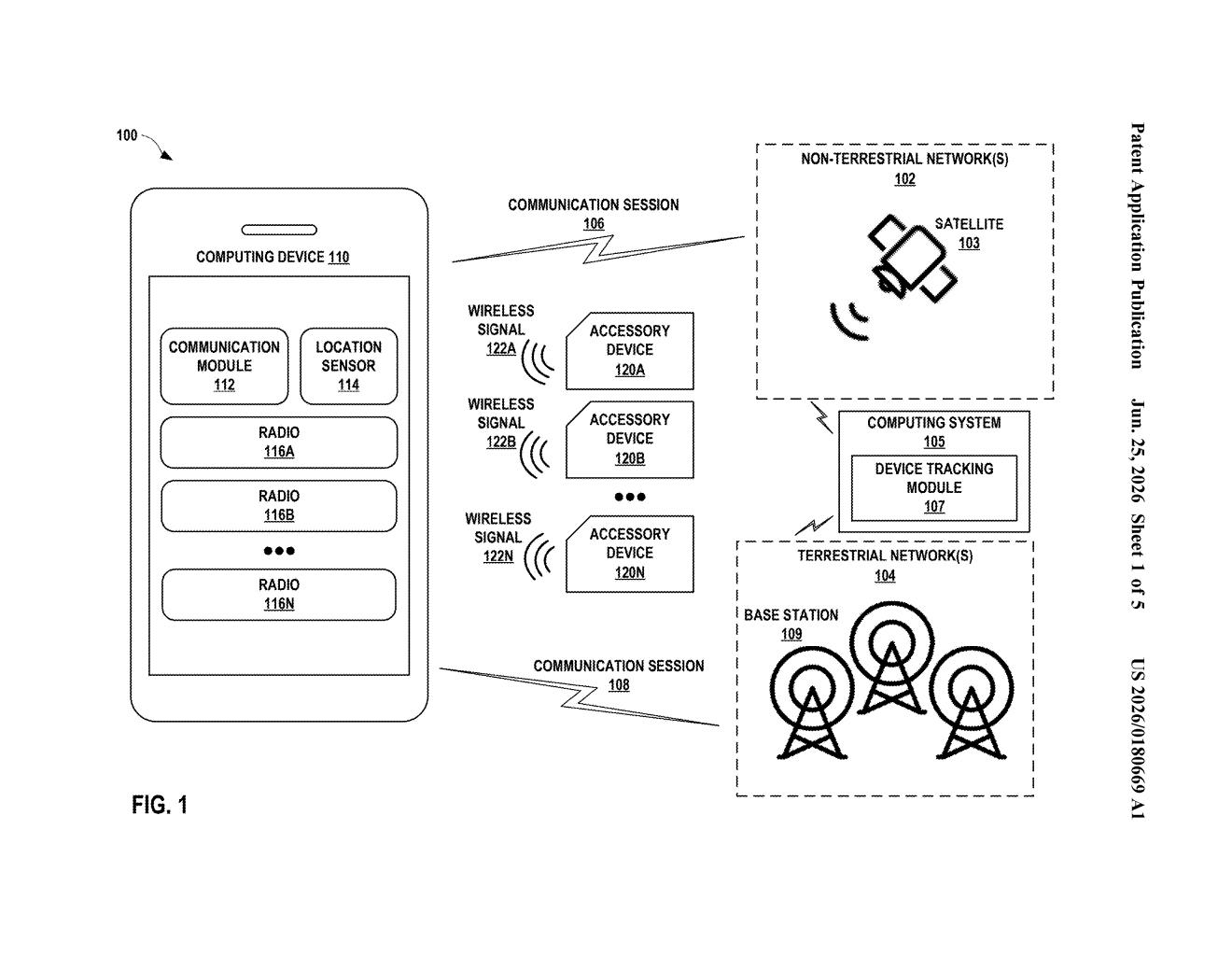
What Google's satellite message padding trick actually does
Satellite messaging works differently from regular texting. When your phone sends a message up to a satellite, the data gets packaged into fixed-size chunks, like packing boxes. If your message is short, part of that box goes out empty.
Google's patent describes a system that notices when one of those boxes isn't quite full and stuffs the extra space with a useful bonus: a list of nearby wireless devices your phone can detect, things like Bluetooth headphones, Wi-Fi routers, or other gadgets in range. Your original message goes out exactly as intended, but the wasted padding gets replaced with something productive.
The practical payoff is for device-finding networks, similar to how Apple's Find My or Google's own Find My Device work. If your phone is pinging satellites anyway, it can also report "I saw this lost pair of headphones nearby" at no extra cost to you or your battery.
How Google detects and packs device data into transmission gaps
The system coordinates between two different radios inside a single device. A first radio (like Bluetooth or Wi-Fi) scans the local environment and builds a list of detected wireless devices nearby. A second radio handles the satellite link, specifically a non-terrestrial network (NTN) connection of the kind now appearing in phones like the Pixel 9 and iPhone 14 and later.
Satellite protocols use fixed transmission size ranges, meaning every packet sent up to a satellite must fit into one of a few predetermined sizes (think S, M, L envelopes). If your actual message only fills three-quarters of the required envelope, the remaining quarter would normally go out as empty filler.
- The device measures the size of the outgoing message.
- It checks whether the message fills the required transmission size range completely.
- If there's leftover room, it pulls from the list of nearby detected devices and inserts as many device identifiers as will fit.
- The full packet, your message plus the bonus device data, goes out as one transmission.
Critically, nothing changes from the user's perspective. The message goes out normally. The device data just hitchhikes along in space that was going to waste anyway.
What this means for finding lost devices via satellite
For Google's Find My Device network, this is a meaningful expansion. That network currently relies on other Android phones with internet connections reporting the location of lost gadgets. Satellite connectivity could extend that reach into remote areas where no cellular or Wi-Fi infrastructure exists, but only if the reporting mechanism is efficient enough not to drain battery or cost the user anything extra. Using padding space cleverly solves that problem.
For you as a user, this could mean your lost earbuds or laptop bag have a realistic shot at being found even if you left them at a trailhead in the backcountry. The patent frames this as an automatic, user-initiated flow: you sent a message anyway, so the system just made better use of the trip.
This is quiet infrastructure work, but it's the kind that makes a real feature actually useful. Google's Find My Device network is only as good as its density of reporters, and satellite coverage solves the biggest gap: places with no other Android devices around. Stuffing device reports into spare satellite-packet space is an elegant solution to a real constraint.
There are more where this came from
We read every patent application Big Tech publishes and send you the ones worth knowing. Plain English, free, every week.
Want this weekly breakdown for a company we don't cover? Patentlyze Pro →