
Google Patents Technology That Breaks Videos Into Sections for Faster Streaming
Google is patenting a video compression method that slices each frame into self-contained rectangular tiles, so a decoder can process each piece without waiting for the rest of the frame.
What Google's video tiling patent actually does
Imagine streaming a video and your device only needs to decode the part of the screen you're looking at, or one section of a video wall, without touching the rest of the image. That's the core idea here.
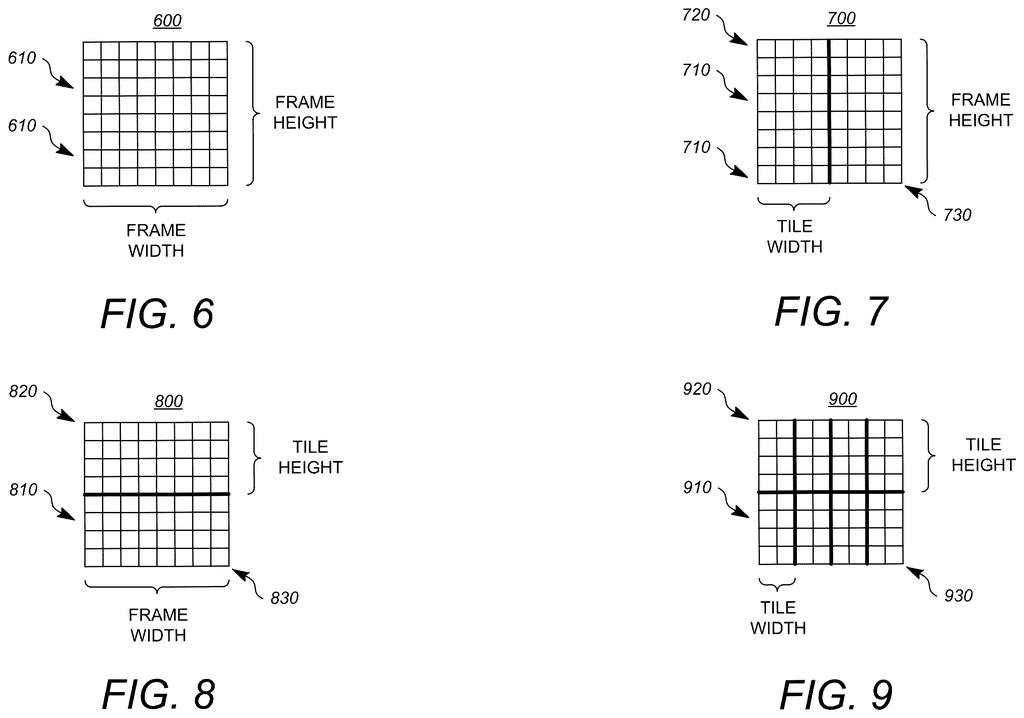
Google's patent describes a system where each video frame is divided into rectangular tiles. Each tile is encoded as a fully independent image, meaning a decoder can unwrap one tile without needing any information from its neighbors. The file also stores exactly how many bytes each tile takes up, so the decoder can jump straight to any tile it needs.
This kind of approach is useful anywhere you need selective or parallel decoding, like video conferencing, 360-degree video, or multi-screen displays where different parts of a frame go to different places.
How the encoder sizes and labels each independent tile
The patent describes both an encoding and a decoding process built around independent rectangular sub-sections, referred to as tiles.
On the encoding side, the encoder assigns each tile a tile-width (how many blocks wide it is) and a tile-height (how many blocks tall it is). It then encodes that tile as a standalone image, with no reference to pixels in adjacent tiles. Crucially, it writes the tile's encoded-tile size (the byte count for that tile) into the output bitstream, so a decoder always knows exactly where each tile starts and ends.
On the decoding side, the process works in reverse:
- Read the encoded size of the first rectangular sub-section from the bitstream.
- Decode that sub-section as a fully independent image, without needing any other part of the frame.
- Combine the decoded tiles to reconstruct the full frame.
Because each tile carries its own size metadata, a decoder can seek directly to any tile in the bitstream rather than parsing the entire frame. This also means multiple tiles can, in principle, be decoded in parallel on separate processor cores.
What this means for streaming and video compression
For video streaming and conferencing, independent tiling reduces the cost of decoding frames when only part of the image changes or when the video needs to be routed to multiple displays. It also makes error recovery easier: if one tile is corrupted in transit, the rest of the frame can still be decoded cleanly.
Google already maintains the open-source AV1 and VP9 video codecs and contributes heavily to the WebM project, so a patent in this area fits squarely into its codec infrastructure work. The exact byte-size field in the bitstream is a small but practical addition that makes tile-based decoding more reliable in real network conditions where seeking and random access matter.
This is a fairly narrow, infrastructure-level codec patent, not a consumer feature you'll ever see announced at a product event. That said, it addresses a genuine engineering problem in tile-based video coding: without per-tile size metadata, a decoder has to do extra work to find tile boundaries. If this ends up in a future AV1 profile or a WebRTC codec update, it improves video quality and efficiency for millions of users without them ever knowing.
There are more where this came from
We read every patent application Big Tech publishes and send you the ones worth knowing. Plain English, free, every week.
The drawings
8 drawing sheets from US 2026/0222591 A1 · click any drawing to enlarge


Want this weekly breakdown for a company we don't cover? Patentlyze Pro →
Be the first to weigh in