
Google Patents an AI System That Re-Shoots Your Videos From New Camera Angles
What if you could re-shoot a video from a completely different angle — without ever picking up a camera again? Google's latest patent describes an AI system that takes an existing video and re-renders it as if the camera had moved in an entirely new way.
What Google's AI camera-angle re-shooter actually does
Imagine you filmed a birthday speech from a fixed spot across the room, but later wish you'd panned slowly to the left or zoomed in from a different angle. Normally, that moment is gone — you'd have to reshoot it. Google's new patent describes a system that could let you specify a completely new camera path after the fact, and have an AI generate what that footage would have looked like.
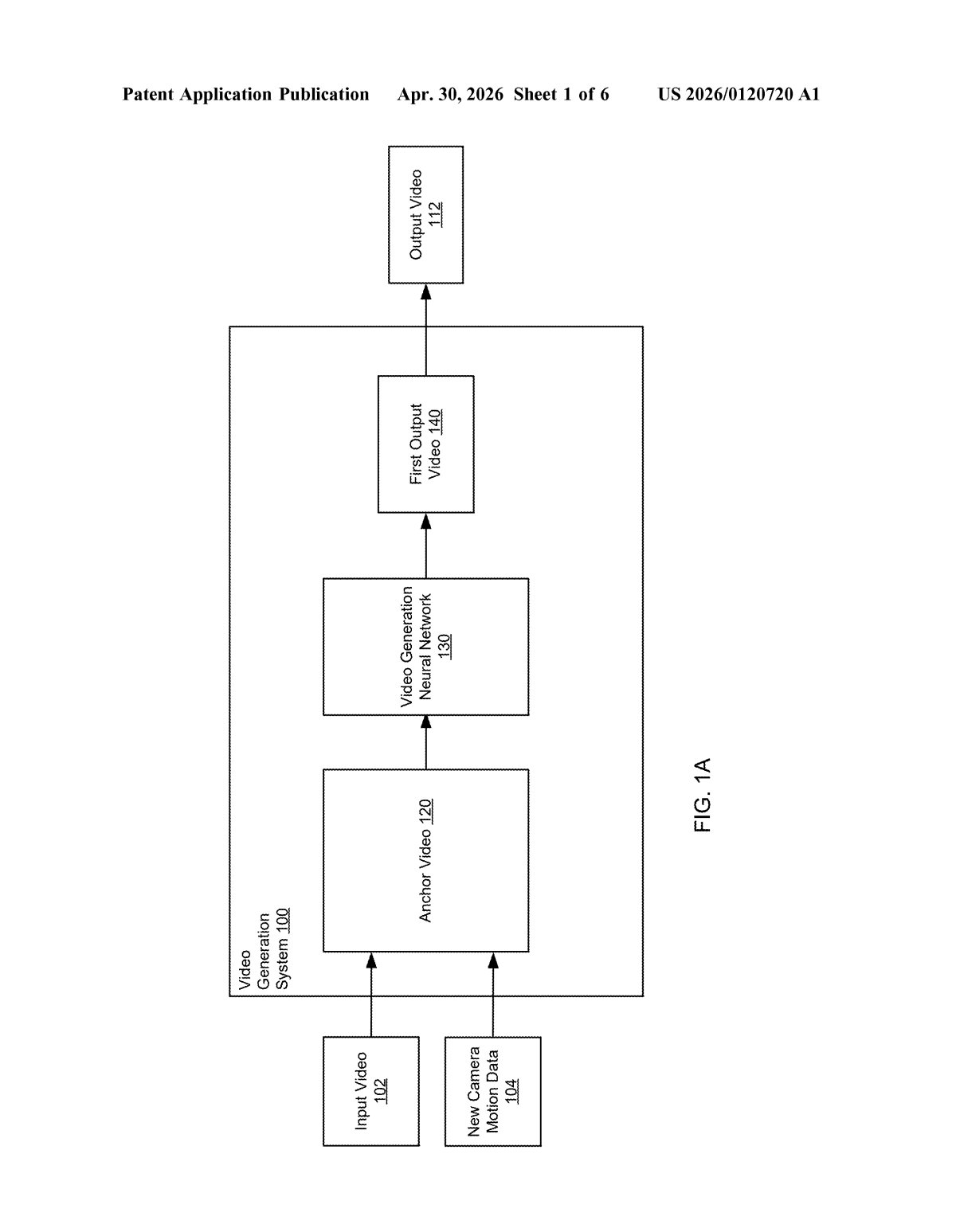
You'd feed the original video into the system along with instructions describing the new camera movement — say, a slow dolly-in or a sweeping orbit. The AI figures out what the scene would look like from that new vantage point and produces a brand-new video clip.
This isn't just cropping or zooming in post-production. The system uses a generative neural network — the same class of AI behind tools like image generators — to synthesize entirely new frames that match the requested camera motion, filling in parts of the scene that the original camera never actually captured.
How the anchor video guides the neural network
The patent describes a two-stage pipeline. First, the system takes the input video and the requested new camera motion data (a structured description of how the camera should move — position, orientation, trajectory over time) and generates what the patent calls an anchor video. Think of the anchor video as a rough geometric draft: it warps and reprojects the original frames to match the new camera path, giving the AI a spatial scaffold to work from.
That anchor video is then fed into a video generation neural network — a deep learning model trained to produce temporally coherent video — which refines the rough reprojection into a polished, realistic output clip. The neural network handles the hard parts: filling in occluded areas (parts of the scene the original camera never saw), maintaining consistent lighting and texture, and keeping motion smooth across frames.
The key insight is that generating the anchor video first gives the neural network a strong structural prior (a starting point grounded in real geometry), rather than asking it to invent new angles from scratch — which would be much harder and more prone to hallucination.
The claim is deliberately broad: it covers any generative neural network architecture applied to this two-step anchor-then-refine approach, which means Google is staking out the general method, not just one specific model implementation.
What this means for video editing and content creation
For everyday creators and professionals alike, this kind of technology could dramatically change the economics of video production. Right now, getting multiple camera angles means deploying multiple cameras or crews — or expensive post-production techniques like photogrammetry rigs. AI-driven re-shooting could make cinematic multi-angle coverage accessible from a single smartphone clip.
This also slots neatly into Google's broader push to make AI-powered video tools a core part of products like Google Photos and YouTube Studio. If the underlying model is good enough, you could one day pan, orbit, or push into a scene you shot years ago — and have the AI fill in what the camera never saw. That's a meaningful shift in what "good enough footage" means.
This is a genuinely interesting filing — not because AI-powered novel view synthesis is new (it's an active research area), but because Google is patenting a specific two-stage pipeline (anchor video + generative refinement) that's practical enough to ship in a consumer product. The talent on the inventor list includes researchers from Google's computational photography and generative video teams, which suggests this isn't just a speculative filing. Keep an eye on Google Photos and YouTube Studio for where this lands.
There are more where this came from
We read every patent application Big Tech publishes and send you the ones worth knowing. Plain English, free, every week.
Want this weekly breakdown for a company we don't cover? Patentlyze Pro →