
Qualcomm Patents a Color-Aware Frame-Dropping System for Smoother Video Playback
When a game runs at 90fps but your screen refreshes at 120Hz, something has to give — and Qualcomm thinks analyzing color data is the smartest way to decide which frames to sacrifice.
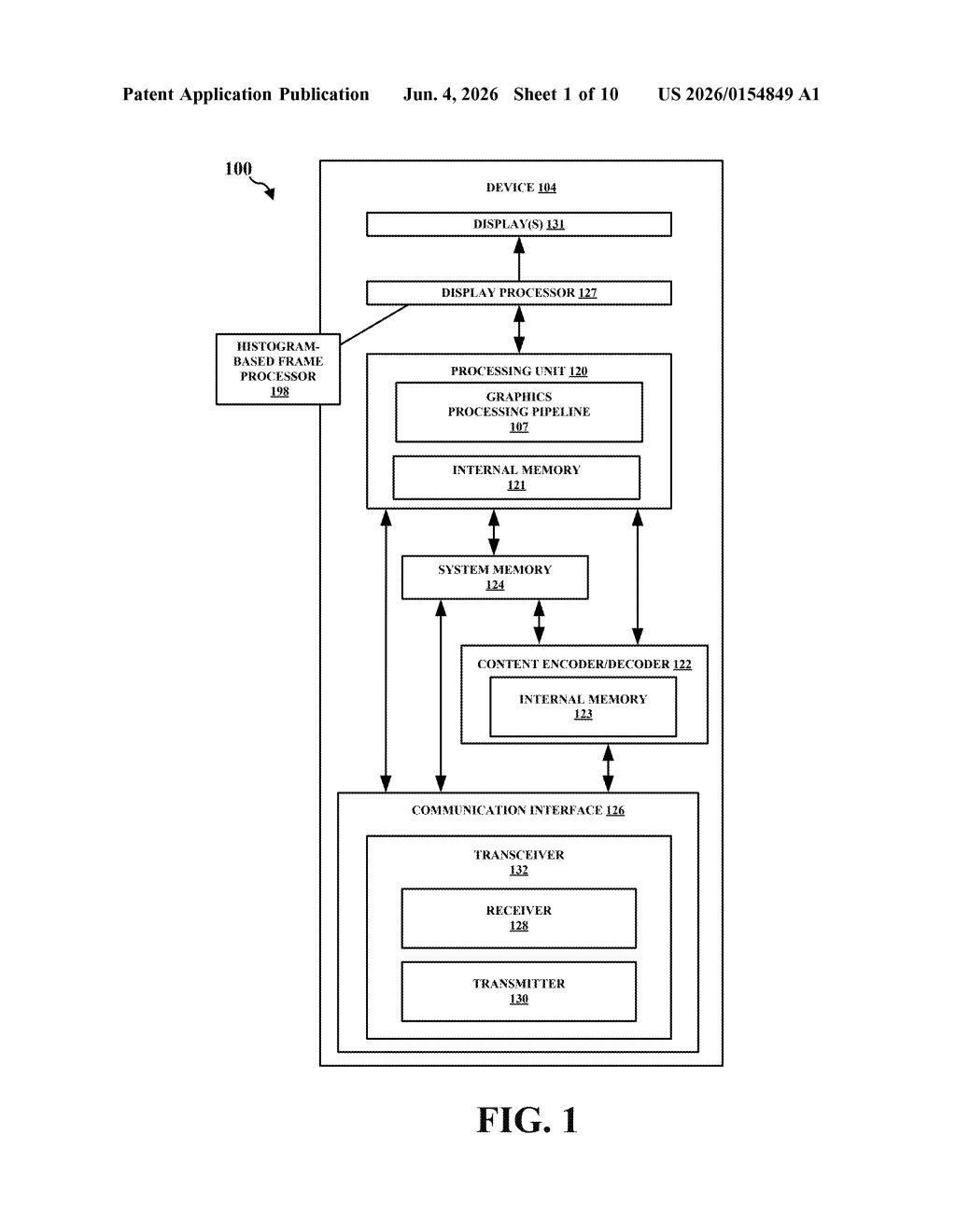
What Qualcomm's histogram frame-drop system actually does
Imagine you're watching a video that was recorded at 30 frames per second, but your phone's screen refreshes 60 times per second. Something has to bridge that gap — usually by either duplicating frames (showing the same image twice) or inserting blank frames. Done poorly, this creates a flickery, stuttery mess.
Qualcomm's patent describes a display chip that looks at a color histogram — basically a summary of how many pixels are dark, mid-tone, or bright in each frame — to decide which frames are safe to drop or duplicate. If two neighboring frames look nearly identical according to their color spread, dropping one won't hurt the viewing experience. If they look very different, the chip keeps them both.
The result is a cleaner frame-rate conversion that preserves the frames that matter most to your eye, without requiring the processor to do a full pixel-by-pixel comparison of every frame.
How the display processor reads color spread to pick frames
The patent describes a display processor that sits between a source application (a game, video player, or UI compositor running at one framerate) and a physical display panel running at a different framerate.
The core idea is building a data structure — essentially a histogram (a bucketed count of color-tone values across pixels) — that captures the "spread" of color tones across a set of consecutive frames. Rather than comparing raw pixel data frame-by-frame (computationally expensive), the chip compares these compact histogram summaries.
Based on that spread, the processor makes two kinds of decisions:
- Drop frames where the color spread between adjacent frames is small — meaning the frames are visually similar and the viewer won't notice the removal.
- Duplicate frames where the spread indicates a scene is relatively static, stretching a single frame across multiple display refresh cycles without introducing obvious artifacts.
The goal is rate matching: aligning the source application's framerate (say, 60fps) to the display panel's native refresh rate (say, 90Hz or 120Hz) with the least visible disruption. The histogram approach is computationally cheaper than motion estimation or full-frame comparison, making it practical for real-time use on a mobile SoC.
What this means for mobile displays and variable framerates
For mobile gaming and video playback, framerate mismatches are a persistent headache — especially as high-refresh displays (90Hz, 144Hz) become standard on mid-range Android phones. Naive frame duplication introduces judder; naive frame dropping introduces stutters. Qualcomm's approach offers a lightweight heuristic that runs inside the display processor itself, meaning it doesn't steal CPU or GPU cycles from the app.
This fits neatly into Qualcomm's Snapdragon display stack, which already handles tone mapping, HDR, and refresh-rate switching. If this makes it into production silicon, you'd likely never know it's running — but the payoff would be smoother scrolling and gaming on Snapdragon-powered Android devices without the battery hit of more compute-intensive frame interpolation.
This is solid, unglamorous display-pipeline engineering. The histogram approach is genuinely clever as a low-cost proxy for visual similarity — it's far cheaper than running optical flow or full motion estimation on every frame pair. Whether it's actually better than existing frame-pacing techniques in practice is the real question, but the underlying logic is sound and this is exactly the kind of IP Qualcomm needs to differentiate its display subsystem from MediaTek.
There are more where this came from
We read every patent application Big Tech publishes and send you the ones worth knowing. Plain English, free, every week.
Want this weekly breakdown for a company we don't cover? Patentlyze Pro →