
Qualcomm Patents a Chip That Speeds Up Small Shapes in 3D Graphics
Every 3D scene is built from millions of triangles, and tiny ones have always caused outsized headaches for GPUs. Qualcomm's new patent describes a chip that handles small and large triangles through completely separate pipelines, rather than forcing them all through the same process.
What Qualcomm's two-track triangle rendering actually does
Imagine a road crew that has to repave both a highway and a network of narrow alleyways. Sending the same massive paving machine down every road would be slow and wasteful. You'd want a different, smaller tool for the tight spaces.
That's the problem Qualcomm is solving for graphics chips. When your phone or laptop renders a 3D scene, it breaks everything into tiny triangles. Some triangles are large and easy to process. Others are so small they cover only a fraction of a pixel, and pushing them through the standard rendering system wastes significant compute time.
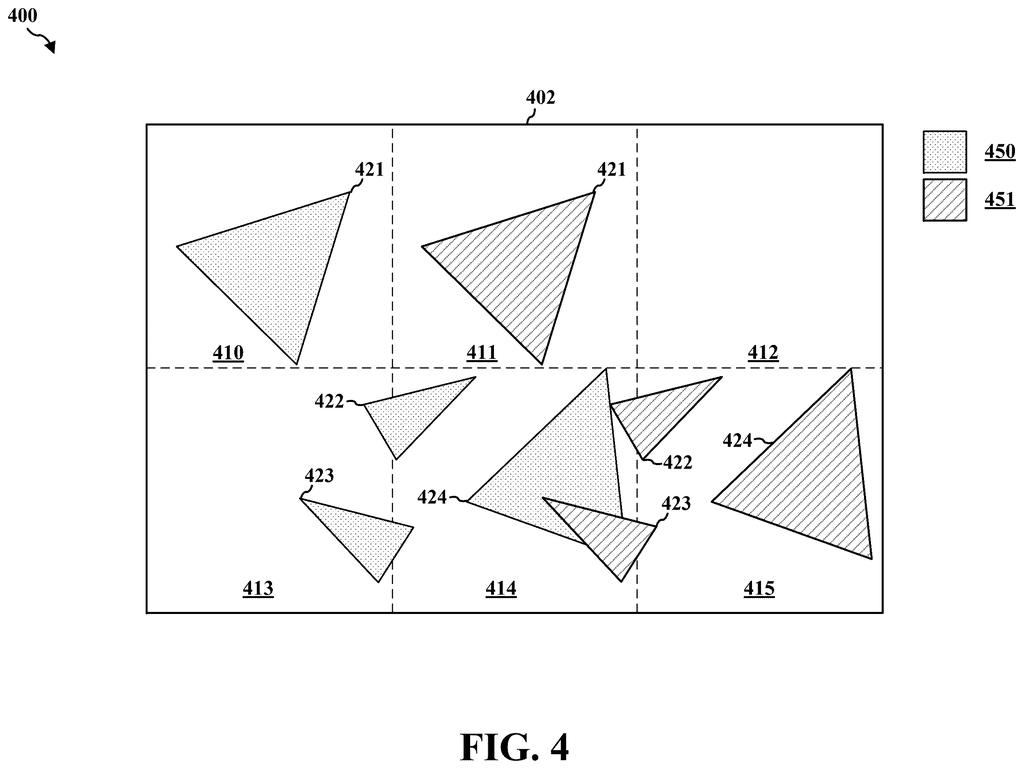
Qualcomm's patented approach measures each triangle before processing begins. Triangles below a certain size threshold get routed to one pipeline built to handle them efficiently, while larger triangles travel through a second pipeline optimized for their needs. The goal is to do less unnecessary work and get cleaner results, especially in scenes with fine detail.
How the chip sorts and splits primitives at a size threshold
In 3D graphics, the basic building blocks of any scene are called primitives, most commonly triangles. A GPU has to rasterize each primitive, meaning it figures out which pixels on screen that triangle covers and fills them with the right color. This process works well for triangles that are a reasonable size, but it struggles with very small ones.
When a triangle is smaller than a single pixel, or only a few pixels across, the standard rasterization pipeline still has to go through all the same steps, often doing significant work to produce almost no visible output. This is a known efficiency problem in GPU design.
Qualcomm's patent describes a hybrid rasterization system that addresses this by:
- Measuring each triangle's size before processing starts
- Comparing that size against a preset threshold
- Routing small triangles (below the threshold) to a first, specialized pipeline
- Routing larger triangles (at or above the threshold) to a second, standard pipeline
The two pipelines can be tuned differently: the small-triangle path can skip steps that don't matter at tiny scales, while the large-triangle path handles shading and coverage calculations in the usual way. The chip holds both pipelines simultaneously and decides on the fly which one each triangle takes.
What this means for mobile GPU efficiency and image quality
For mobile and embedded graphics, where every milliwatt of power counts, cutting wasted work on tiny triangles could translate into real efficiency gains. Qualcomm's Snapdragon chips power a large share of Android phones and some laptops, so any improvement to the underlying GPU architecture would flow into devices used by hundreds of millions of people.
For end users, the practical payoff could be better frame rates or longer battery life in games and 3D apps without any change to how those apps are written. The benefit is largely invisible, which is often the sign of solid low-level engineering: you wouldn't see the feature, you'd just notice the device running cooler or a bit longer on a charge.
This is unglamorous but real GPU engineering. The small-triangle inefficiency problem is well-documented in graphics research, and hardware-level sorting is a genuine solution. Whether Qualcomm's specific implementation ends up in shipping silicon is another question, but the underlying problem is worth solving.
There are more where this came from
We read every patent application Big Tech publishes and send you the ones worth knowing. Plain English, free, every week.
The drawings
16 drawing sheets from US 2026/0212552 A1 · click any drawing to enlarge


Want this weekly breakdown for a company we don't cover? Patentlyze Pro →