
IBM Patents a System That Finds Weaknesses in AI Audio by Subtly Altering Sound
An AI that recognizes voices or transcribes speech can fail on sounds that are only slightly different from ones it handles fine. IBM has patented a method that deliberately engineers those small differences to find the cracks before they reach real users.
What IBM's audio AI stress-testing system actually does
Every time a voice assistant mishears you, somewhere an engineer wonders why it worked yesterday and broke today. The frustrating part is that small changes in how a word sounds, background noise, or audio quality can flip a working AI into a confused one, and those failure points are hard to find before they affect real people.
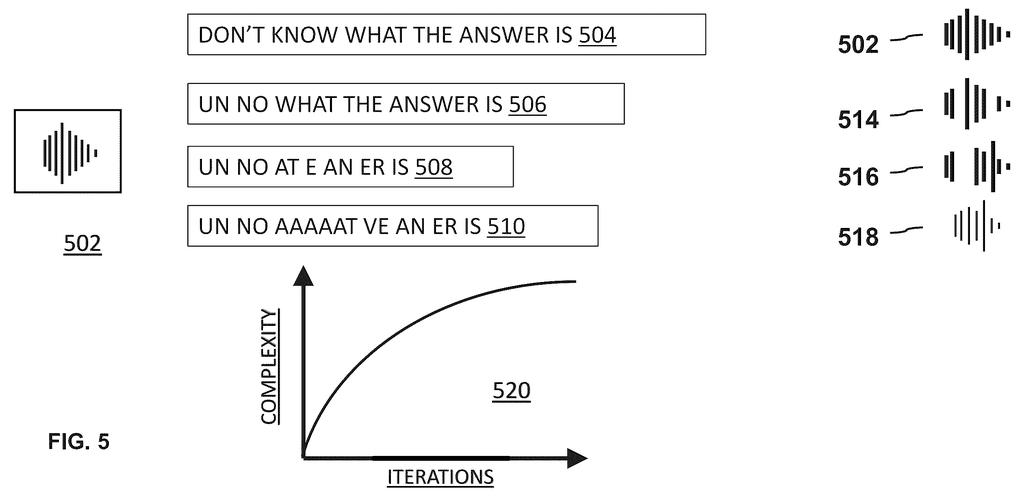
IBM's patented approach turns that problem into a structured test. It takes a sound clip the audio AI already handles, creates a slightly modified version using a generative AI model, then runs both versions through the system and compares the results. If the system responds very differently to two clips that should sound roughly equivalent, something has gone wrong.
The comparison uses a mathematical tool called a distance function, which measures how far apart the two outputs are. Think of it as asking: if you nudged the audio just a little, did the AI's answer change a lot? A big gap flags a vulnerability, giving developers a concrete place to start fixing.
… generating at least one an alternative audio test case, wherein generating comprises using a generative AI model to provide a first modification to the at least one test case; …
Translation: The system uses generative AI to slightly tweak the original test audio.
How the distance function catches a broken response
The patent describes a closed testing loop for external audio AI systems. Here is how each step works:
- Receive a test case: The system ingests an audio test case, meaning a sound clip broken down into components such as phonemes (individual sound units), pitch, volume, and background noise levels.
- Generate an alternative: A generative AI model, one trained to produce realistic audio, creates at least one modified version of the original clip. The modification is controlled and intentional, not random noise.
- Challenge the target AI: Both the original and the modified audio are fed into the external audio AI system being tested. The system records the outputs, such as a transcription, a classification, or a confidence score.
- Compare with a distance function: A distance function (a formula that measures how different two values are, the way a ruler measures physical distance) evaluates whether the outputs diverged significantly. A large divergence means the modification exposed a weak point.
The loop is described as iterative, meaning it can repeat, generating new variations and checking whether each one causes the same kind of failure. Over multiple rounds, the system can map out exactly which types of audio changes cause problems and which do not.
… challenging the external audio AI with the at least one audio test case, and with the at least one alternative audio test case to determine a set of results; …
Translation: It tests how the target AI responds to both the original sound and the modified version.
What this means for AI that hears and transcribes your voice
If you use voice commands, call-center AI, or any app that transcribes or understands speech, the reliability of those tools depends on how thoroughly they were tested before reaching you. A system that only fails on specific accents, quiet voices, or slightly compressed audio files is a system whose developers never found those edge cases during testing.
IBM's approach is essentially an automated adversarial tester, one that hunts for exactly those edge cases by making small, controlled changes to known inputs. For regular users, the practical payoff is fewer mysterious mishearings and more consistent AI behavior across different recording conditions. IBM keeps filing on AI reliability and testing infrastructure, and this patent fits squarely into that work.
That makes this IBM's 51st filing we've tracked since May in our AI guardrails race, after earlier work on catching bad data in rows and logging every AI code change.
From a reader-impact angle, this patent addresses something genuinely annoying: AI voice tools that work most of the time but fail unpredictably. The failure usually happens in conditions that feel normal to the person using them, a different microphone, a noisier room, a slightly faster speaking pace.
The patented method tries to catch those conditions systematically before the product ships. That is a real improvement over ad hoc testing, where engineers guess at edge cases rather than generate them algorithmically.
The mechanism here is not flashy technology aimed at a new product category. It is testing infrastructure, the kind of thing that shows up in better software rather than a new feature announcement. Users who benefit will never know it was there, which is usually the point.
There are more where this came from
We read every patent application Big Tech publishes and send you the ones worth knowing. Plain English, free, every week.
The drawings
5 drawing sheets from US 2026/0279337 A1 · click any drawing to enlarge


Want this weekly breakdown for a company we don't cover? Patentlyze Pro →
Be the first to weigh in