
Intel Patent Enables 5G Devices to Locate Each Other Without Cell Towers
Most location systems rely on a tower or satellite doing the heavy lifting. Intel's patent describes a way for 5G devices to measure their positions relative to each other directly, cutting out the middleman.
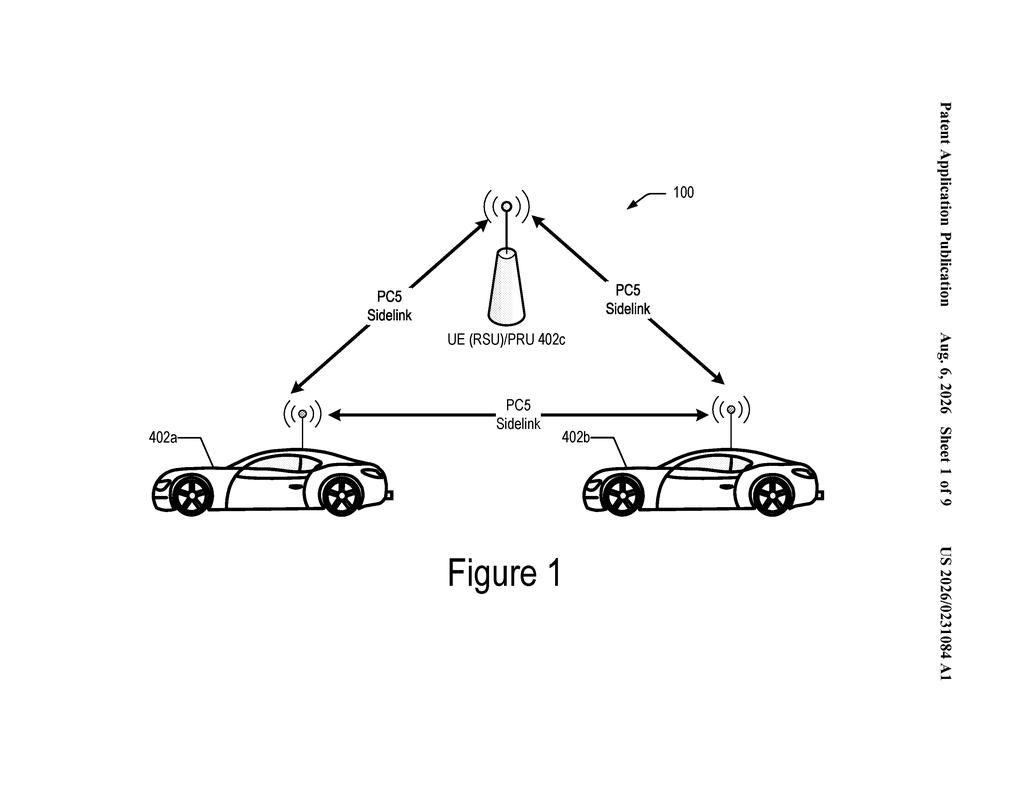
How Intel's device-to-device location system works
Normally, when your phone figures out where it is, it's talking to something overhead: a GPS satellite, a cell tower, or a Wi-Fi router. The network is always in the loop.
Intel's patent describes a different approach. Two 5G devices can exchange special location-reference signals with each other over what's called a sidelink, basically a direct device-to-device radio channel that skips the cell tower entirely. One device asks for the measurements, the other takes them and sends back a report.
The practical appeal is coverage. In places where cell towers are sparse or overloaded, like a stadium, a warehouse floor, or a disaster-relief zone, devices could still figure out where they are relative to each other. That's useful for anything from coordinating first responders to tracking industrial equipment.
A target UE receives a sidelink positioning protocol (SLPP) request to measure and report sidelink (SL) positioning measurements. The target UE measures a set of SL positioning reference signals (PRSs) based on the received request, and transmits a measurement report.
Translation: One device asks another for measurements so they can figure out where each other are located.
Inside the sidelink positioning reference signal exchange
The patent centers on a protocol called SLPP (Sidelink Positioning Protocol), a structured handshake that coordinates location measurements between two devices without routing signals through a base station.
The process works roughly like this:
- A "target" device receives an SLPP request asking it to measure Positioning Reference Signals (PRSs), specially designed radio pulses whose timing and phase can be analyzed to calculate distance or angle.
- The target device listens for a set of those signals transmitted by nearby devices.
- It then compiles a measurement report and sends it back, including the calculated positioning results.
Sidelink (sometimes called PC5 in 3GPP standards) is a direct radio link between devices that was originally designed for vehicle-to-vehicle communication. Intel is extending that concept to general positioning, so any compatible 5G device could participate.
The first independent claim in this filing is listed as canceled, which typically signals that the patent was amended during examination and the remaining claims are in dependent form.
What peer-to-peer 5G location means for real-world use
Device-to-device positioning fills a genuine gap in 5G's location story. GPS fails indoors, and cell-tower triangulation gets imprecise in dense environments. A sidelink-based system means devices in a factory, tunnel, or crowded venue could maintain location awareness by talking to each other instead of waiting for a tower to help.
For Intel, this is part of a broader push to own the radio-processing intellectual property that sits inside 5G modems. Positioning patents like this one tend to feed into modem chipset design, where the ability to handle complex measurement protocols is a real differentiator in competitive bids from phone makers and IoT device manufacturers.
This is a foundational standards-level patent, not a flashy consumer feature. The canceled lead claim is a red flag worth noting: it suggests the filing hit pushback during examination, and the scope of what Intel actually ends up owning here is narrower than the abstract implies. Still, sidelink positioning is a real and growing part of the 5G standards conversation, and Intel staking out positions in that space is strategically sensible even if this particular filing is unlikely to generate headlines on its own.
There are more where this came from
We read every patent application Big Tech publishes and send you the ones worth knowing. Plain English, free, every week.
The drawings
9 drawing sheets from US 2026/0231084 A1 · click any drawing to enlarge


Want this weekly breakdown for a company we don't cover? Patentlyze Pro →
Be the first to weigh in