
Microsoft Patents an AI That Grades Its Own Scheduling Work to Get Better at It
Microsoft is patenting a way to make an AI model teach itself to get better at scheduling — rooms, servers, workers, trucks — by having it generate a bunch of possible answers, score them, and then learn from the best ones.
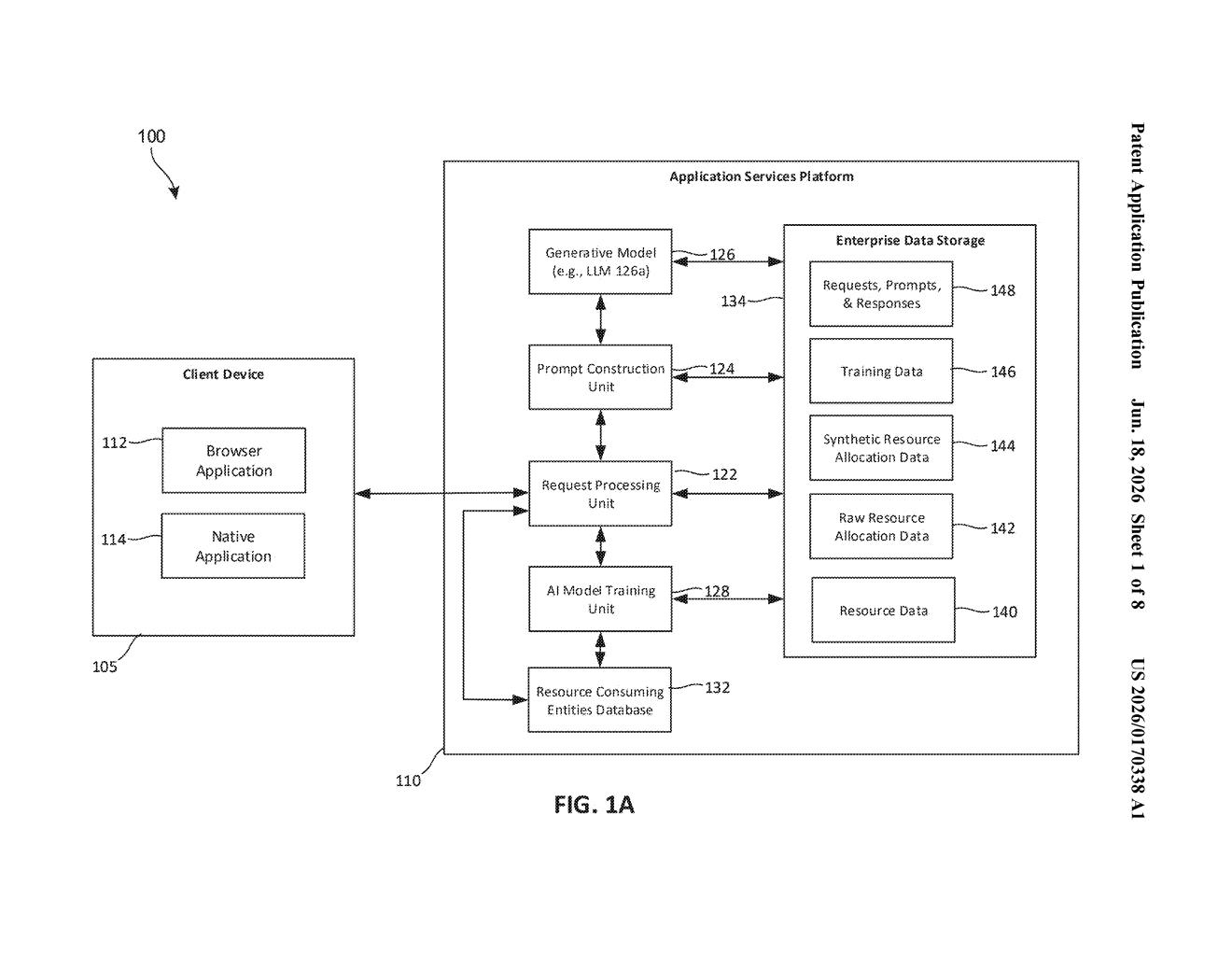
How Microsoft's self-grading AI scheduler works
Imagine you're planning a company-wide event and need to book meeting rooms, assign staff, and reserve IT equipment — all without conflicts. A human scheduler would try a few arrangements, pick the best one, and over time get better at it from experience. Microsoft's patent describes an AI system that does the same thing, automatically.
The system generates multiple possible schedules for whatever resources are involved — office space, computing power, delivery vehicles, communications networks, or people — then runs each one through a scoring system that checks for conflicts, disruptions, and unnecessary steps. The top-scoring schedule gets labeled as a "good example," and the AI learns from it to do better next time.
This process — generate, score, label, learn — repeats over and over, gradually making the AI more accurate at solving scheduling problems without a human having to label every example by hand. It's a way to train AI on real-world logistics without needing a giant pre-labeled dataset.
How the validation loop selects and labels top solutions
The patent describes a two-model setup. A first AI model generates a set of synthetic resource allocation sample solutions — essentially candidate schedules — based on input data that describes events, their start times, durations, the resources they need, and who or what is consuming those resources.
A target generative model (the one being trained) then runs each candidate through a validation function — a scoring mechanism that judges schedules on three criteria:
- Schedule disturbance minimization: how little the proposed schedule disrupts an existing plan
- Scheduling conflict resolution maximization: how well it resolves clashes between competing demands
- Execution steps minimization: how few steps it takes to implement the schedule
The top-ranked solution gets labeled as correct training data. The target model is then fine-tuned (a process where a pre-trained AI is updated on new specific examples, like a generalist taking a crash course in one specialty) using that labeled data. Over repeated cycles, the model gets progressively better at scheduling without needing humans to label examples manually.
The resources in scope are broad: physical spaces, computer memory and processing, utilities, transportation, communication networks, and workforce.
What this means for Microsoft's enterprise scheduling tools
Scheduling is one of those problems that sounds simple but gets exponentially complicated at scale — think hospital staffing, cloud server allocation, or logistics routing. Most AI scheduling tools today either rely on hand-labeled training data (expensive and slow to build) or rigid rules that break down in edge cases. Microsoft's approach sidesteps the labeling bottleneck by having the AI evaluate and label its own best guesses.
For Microsoft, this fits squarely into its push to embed AI into enterprise productivity tools. Copilot for Microsoft 365 already handles meeting scheduling and task management — a self-improving scheduling AI could make those features meaningfully more capable over time, particularly in complex organizational environments where resource conflicts are constant.
This is a solid, practical piece of AI infrastructure work — not flashy, but the kind of patent that quietly powers enterprise software improvements for years. The self-labeling training loop is a real engineering challenge in applied AI, and Microsoft filing this now signals it's thinking seriously about making Copilot-style tools genuinely better at logistics, not just calendar suggestions.
There are more where this came from
We read every patent application Big Tech publishes and send you the ones worth knowing. Plain English, free, every week.
Want this weekly breakdown for a company we don't cover? Patentlyze Pro →