
Microsoft Patent Guards AI Responses Against Fabricated Facts Through Real-Time Data Verification
AI is good at making connections between ideas, but it also makes things up. Microsoft's new patent describes a system that lets an AI fill in gaps during a database query, then immediately checks whether the AI's answer is actually supported by real data before passing it on.
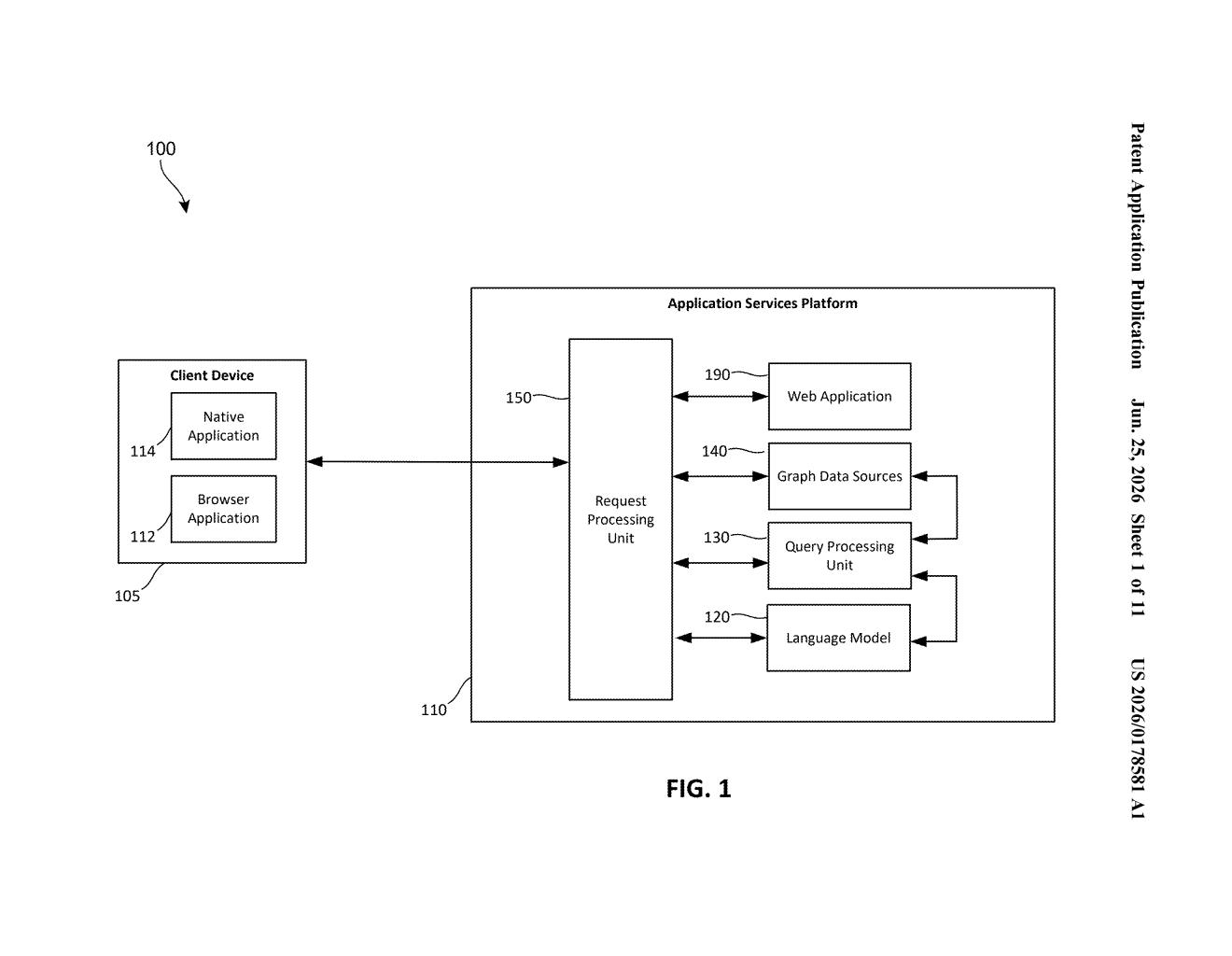
How Microsoft's hybrid query system keeps AI from guessing
Imagine asking a company's internal search tool: "Which of our clients overlap with this new partner's customer base?" A traditional database either knows the answer or it doesn't. An AI might guess, and guess wrong. Microsoft's patent describes a middle path.
The system starts by searching a structured database the normal, reliable way. It then hands those partial results to an AI and asks it to reason about what's missing or implied. If the AI says "based on this, the answer probably involves these additional records," the system doesn't just trust that. It goes back to the database to confirm the AI's inference is actually backed by real data.
Only once the AI's output is verified against the underlying data does the system fetch the final answer and send it back. The goal is to get the AI's ability to understand fuzzy, nuanced questions, without letting it invent facts.
How the three-pass graph search catches AI errors
The patent describes a multi-step query pipeline that alternates between graph database lookups (structured, precise searches through interconnected data) and large language model (LLM) reasoning (the AI's ability to infer meaning and fill in gaps).
Here's how the pipeline runs:
- Step 1 (Graph search): When a query arrives, the system scans a global schema (basically a map of what data exists and how it's connected) to pick the right data sources, then searches the graph for initial results.
- Step 2 (AI reasoning): Those partial results get packaged into a prompt and sent to an LLM. The AI uses its fuzzy reasoning to infer relationships or bridge gaps that the raw data doesn't spell out explicitly.
- Step 3 (Grounding check): The AI's output goes back through the schema and the graph to confirm it's consistent with real, existing data. This process is called grounding, making sure the AI's inferences actually have a factual basis.
- Step 4 (Final fetch): If the AI's answer passes the grounding check, the system runs one more graph search to pull the concrete data associated with that answer and returns it to the user.
The schema plays a central role throughout. By constantly reminding the LLM what data types exist and how they relate, the system reduces the chance the AI will hallucinate (generate confident-sounding but fabricated answers).
What this means for enterprise AI search tools
Enterprise software often sits on top of enormous, interconnected datasets where a single question might touch customer records, product data, financial systems, and partner information all at once. Today, you either get a brittle SQL query that misses nuance, or you get an AI that might invent connections that don't exist. This patent describes a way to combine the two without fully trusting either.
For Microsoft's enterprise products (think Copilot for Microsoft 365, Azure AI, or Fabric), this kind of architecture would let AI assistants answer genuinely complex, multi-part questions about a company's own data while staying anchored to what's actually in the system. The verification step is the key differentiator: it's not just retrieval-augmented generation (where you feed documents to an AI), it's retrieval that audits the AI's reasoning mid-flight.
This is solid, unglamorous infrastructure work that addresses a real and persistent problem with enterprise AI: the AI sounds confident even when it's wrong. The three-pass architecture with a grounding check is a genuinely practical approach, and it fits neatly into Microsoft's existing push to make Copilot trustworthy enough for regulated industries. Don't expect a press release about this one, but do expect to see the pattern show up in Azure or Fabric.
There are more where this came from
We read every patent application Big Tech publishes and send you the ones worth knowing. Plain English, free, every week.
Want this weekly breakdown for a company we don't cover? Patentlyze Pro →