
Microsoft Patents AI-Powered Message Drafting Based on User Profile Data
Microsoft wants your messaging app to know why you're sending a message before you even start typing — and then write it for you, tailored to who you are.
What Microsoft's intent-driven message drafting does
Imagine you're on a professional networking platform and you want to reach out to a recruiter, but you're staring at a blank text box. You know the general idea — you want to introduce yourself and ask about a role — but the words aren't coming. That's exactly the scenario this patent is designed to solve.
Microsoft's system reads your profile data (things like your job title, skills, or career history) and figures out the intent behind your message — are you job-seeking? Networking? Following up? It then uses that intent plus your personal details as inputs to a generative language model (think: a built-in AI writer) to draft message suggestions right inside the chat interface.
Instead of a generic template, you'd see a suggested message that already sounds like you — referencing your background and matched to the purpose of your outreach. You can tweak it or send it as-is.
How the prompt pipeline maps attributes to suggestions
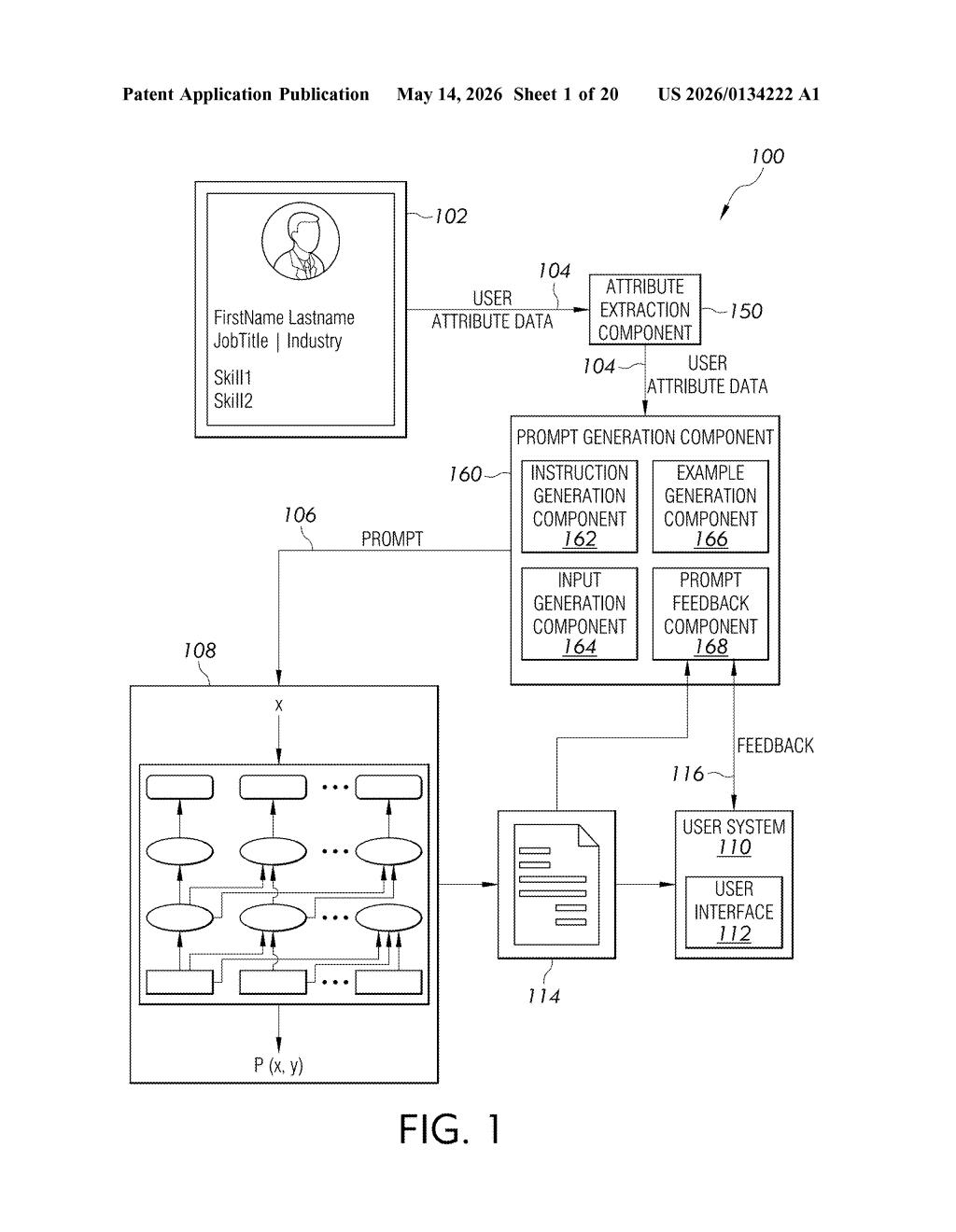
The system works in three main stages: intent detection, prompt construction, and content generation.
Intent detection comes first. The platform looks at the first user's attribute data — structured profile information like career history, skills, location, or stated goals — and uses it to infer a messaging intent (the purpose of the conversation, such as job seeking, introducing yourself, or discussing a career topic).
Next, prompt construction: the system maps a specific subset of those profile attributes to prompt inputs. It builds a structured prompt that includes both the messaging intent and a plan of action — essentially a meta-instruction telling the language model what kind of content to generate and what constraints to follow (the patent calls these "content requirements").
Finally, the generative language model (a large language model running server-side) processes that prompt and outputs one or more message suggestions. Those suggestions are then surfaced directly inside the messaging interface as selectable or editable drafts.
The patent specifically calls out a UI element that lets users pick a conversation topic or goal ("Introduce Myself," "Chat about Career") before the AI drafts the message — giving the user some steering control over the intent the model receives.
What this means for LinkedIn and Microsoft Teams messaging
The patent's diagrams reference a professional networking context — which points squarely at LinkedIn, which Microsoft owns. LinkedIn already has AI writing tools, but this patent describes a more structured, intent-aware pipeline that goes beyond generic "polish my message" prompts. It anchors the AI output to your specific profile data, which could make suggestions feel far less generic.
For Microsoft Teams and other enterprise messaging products, a similar system could help employees draft formal requests, introductions, or follow-ups without starting from scratch. The broader implication: Microsoft is systematically patenting the scaffolding for AI co-pilots embedded in every communication surface it owns.
This is a solid, commercially obvious patent that Microsoft is filing to protect its AI messaging infrastructure across LinkedIn and Teams. The intent-mapping-to-prompt architecture is genuinely thoughtful engineering — it's not just 'send your profile to GPT and hope for the best.' That said, the core concept of AI-assisted message drafting is already shipping in multiple products, so the novelty here is in the specific pipeline design, not the idea itself.
Get our take in your Top Stories
Liked this breakdown? Add Patentlyze as a preferred source on Google, and our plain-English take shows up more often in your Top Stories the next time Microsoft patent news breaks.
There are more where this came from
We read every patent application Big Tech publishes and send you the ones worth knowing. Plain English, free, every week.
Want this weekly breakdown for a company we don't cover? Patentlyze Pro →