
Sony Patents an AI That Turns Your Photo Into a Game-Ready Avatar
Sony is filing patents for a system that takes a real photo of you and a few text descriptors, then generates an avatar that looks like you — but styled to match whatever game or virtual space you're jumping into.
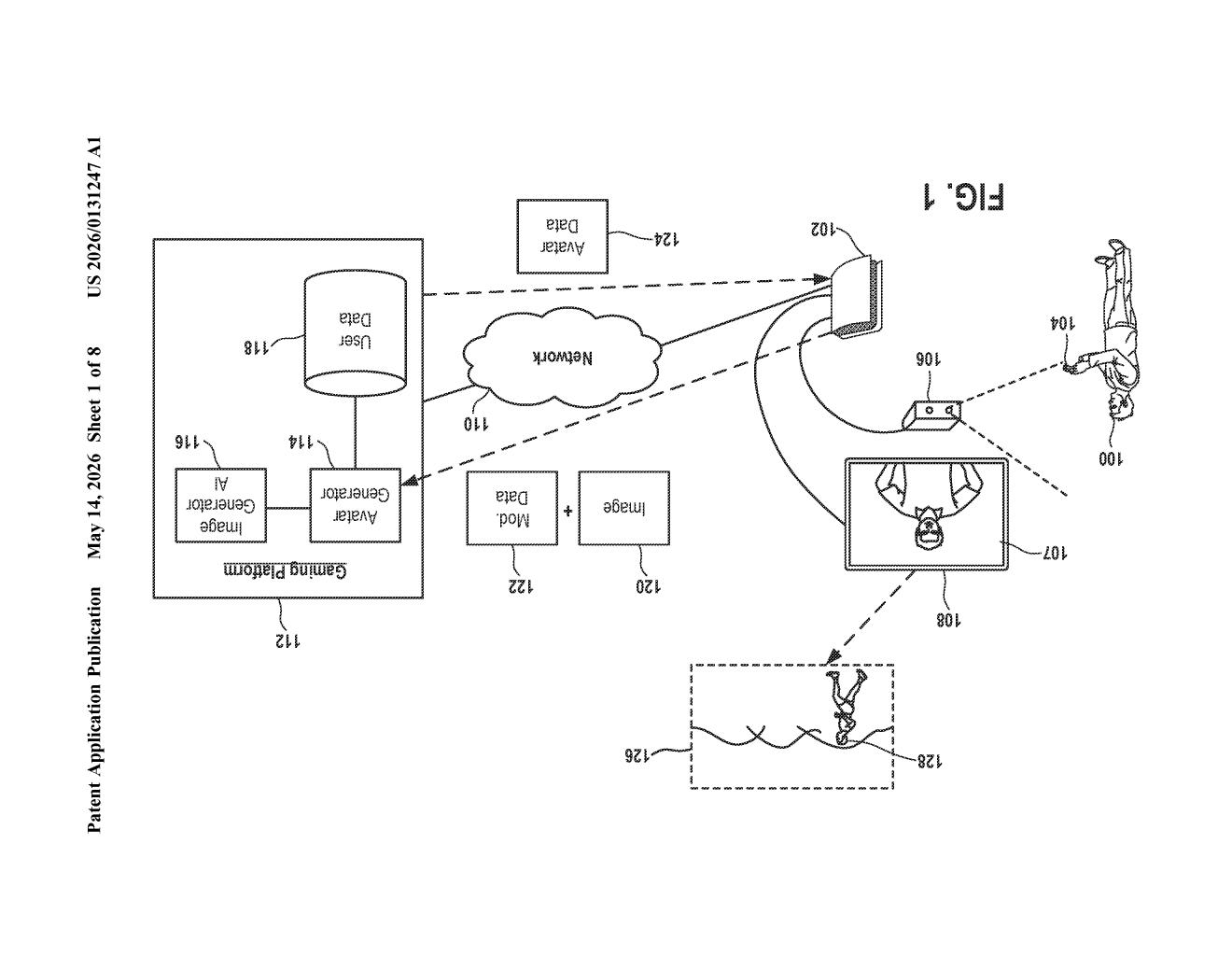
What Sony's style-matched avatar generator actually does
Imagine you want to create an avatar for a new game, but you're tired of fiddling with sliders for hours. Sony's patent describes a system where you upload a photo of yourself and type a few modifiers — maybe "older," "with a beard," or "futuristic armor" — and an AI does the rest.
Here's the clever part: the system doesn't just generate any avatar. It picks an AI model tuned to the visual style of the specific game or virtual environment you're playing. So your avatar in a cartoon-style game looks like a cartoon version of you, while your avatar in a gritty sci-fi world looks like a cinematic version of you.
The finished avatar then gets applied directly to that virtual environment. You skip the slider hell, and you end up with something that actually fits the world you're playing in.
How Sony's AI picks the right model for each game's art style
The patent describes a pipeline with three main inputs feeding into an AI generation step:
- A first image — a photo of the user, used as the visual reference for the avatar's likeness
- Modification data — structured descriptors derived from natural-language input (think: text prompts or menu selections describing features like age, hair style, or outfit)
- Avatar generation context — metadata about the target virtual environment, which determines which AI model gets selected
The key architectural choice here is model selection based on context. Rather than a single general-purpose image generator, Sony describes a system that routes generation through a model specifically tuned to match the aesthetic of the destination environment — a technique sometimes called style-conditioned generation (where the output's visual style is constrained to match a reference, in this case the game's art direction).
The claim is deliberately broad: the AI model can be selected based on the user's own input or the context of the environment, which gives the system flexibility to be automatic or user-driven. Once generated, the avatar is applied directly to the virtual environment — no separate export or import step is described.
What this means for PlayStation avatar personalization
For PlayStation and its growing suite of online spaces — from PlayStation Network profiles to social features inside games — this kind of frictionless, photo-to-avatar pipeline could meaningfully raise the bar for personalization. Right now, most avatar creators are manual and generic; a system that auto-adapts your likeness to each game's art style would feel genuinely different.
The broader implication is competitive: Meta, Apple, and Microsoft are all racing to make avatars feel more personal in their respective platforms. If Sony can ship something that generates a stylistically coherent, likeness-preserving avatar in seconds, that's a real differentiator for player identity across its ecosystem.
This is a well-scoped, practically motivated patent — not a moonshot. Sony is clearly thinking about the gap between "realistic photo" and "game-appropriate avatar" and building infrastructure to close it automatically. The model-selection-by-context idea is the genuinely interesting bit; everything else is table stakes for modern generative AI pipelines.
There are more where this came from
We read every patent application Big Tech publishes and send you the ones worth knowing. Plain English, free, every week.
Want this weekly breakdown for a company we don't cover? Patentlyze Pro →