
Microsoft Patents a Security Engine That Blocks Files Based on Filename Tricks and Device History
Malware often hides in plain sight — a file named 'Report.pdf.exe' looks like a document but runs like a program. Microsoft's new patent describes a security engine that catches exactly this kind of trick, and uses your device's recent file history to decide whether to block it.
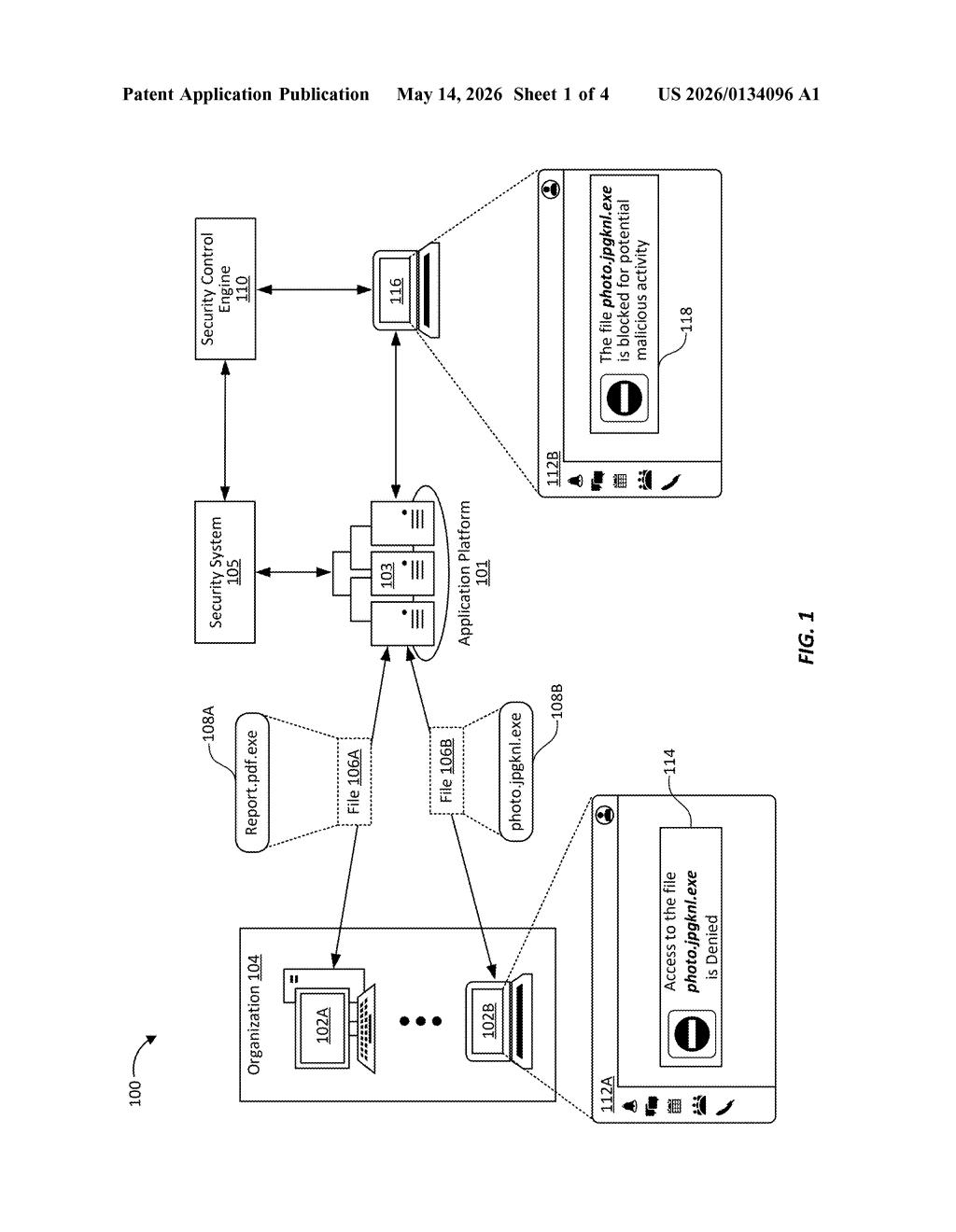
How Microsoft's filename-pattern security engine works
Imagine you download what looks like a PDF from an email, but the actual filename is Report.pdf.exe — a classic trick where attackers hide a program behind a fake document extension. Your computer might open it without question, and suddenly you have malware.
Microsoft's patent describes a security control engine that intercepts any request to open or run a file, then inspects the filename for suspicious patterns — like double extensions, misleading names, or known attacker naming conventions. If something looks off, it doesn't just block the file automatically; it also pulls up the file activity history for your specific device to get more context.
That second step is the clever part. If your device has recently been downloading a flood of weirdly named files, that's a red flag on top of a red flag. The engine combines both signals — the suspicious filename and your device's recent behavior — to decide whether to let the file run or shut it down.
How the engine parses patterns and checks activity history
The patent describes a security control engine sitting between a client device and its file system (or a networked file store). When a user or application tries to execute a file, the engine intercepts that request before anything runs.
The engine then parses the filename to extract what the patent calls a filename pattern — essentially a structural fingerprint of the name. It checks this pattern against a library of known suspicious patterns, such as:
- Double extensions (e.g.,
invoice.docx.exe) - Misleading Unicode characters that make names look legitimate
- Names that mimic trusted system files
If the filename pattern triggers a suspicion flag, the engine doesn't stop there. It retrieves the file activity history for that client device — a log of recent file operations, downloads, and execution attempts. This history provides behavioral context: a single suspicious file on an otherwise quiet machine is treated differently than the same file appearing on a device that's been churning through hundreds of oddly named files in the last hour.
Finally, the engine combines both signals — the filename pattern score and the device-level behavioral history — to make a block-or-allow decision. The claim is notably broad, covering any computing apparatus with a processor and storage that implements this two-factor file-execution gating logic.
What this means for enterprise endpoint security
This patent fits squarely into Microsoft's Defender and enterprise security product line, where endpoint protection is a core selling point. Double-extension and filename-spoofing attacks are genuinely common in phishing campaigns, and many legacy antivirus tools only catch them if a signature database has been updated. A pattern-plus-history approach means the engine can flag novel naming tricks it has never seen before, as long as they match a suspicious structural pattern.
For enterprise IT teams, the device-level history component is particularly useful — it turns individual file checks into a lightweight behavioral analysis without needing a full EDR (endpoint detection and response) pipeline. Whether this ends up as a standalone feature or folds into existing Defender for Endpoint tooling, it addresses a real and persistent attack vector.
This is solid, practical security work rather than a flashy AI play — but that's exactly why it's worth paying attention to. Filename spoofing is a perennially effective attack technique, and layering device activity history on top of pattern matching is a meaningful improvement over pure signature matching. Don't expect headlines, but do expect something like this to quietly ship in Defender for Endpoint within a year or two.
There are more where this came from
We read every patent application Big Tech publishes and send you the ones worth knowing. Plain English, free, every week.
Want this weekly breakdown for a company we don't cover? Patentlyze Pro →