
New Microsoft Patent Locks Down AI Agent Access Rights
As companies deploy AI systems built from dozens of cooperating AI agents, one uncomfortable question keeps surfacing: what stops one agent from grabbing data it was never supposed to see? Microsoft's new patent is a direct answer to that problem.
What Microsoft's AI agent permission system actually does
Imagine a company using several AI assistants at once: one handles HR data, another manages sales records, and a third coordinates between them. The problem is, if these assistants can freely share information with each other, a bad actor (or just a poorly designed system) could trick the HR assistant into handing sensitive employee records to a part of the system that was never supposed to have them.
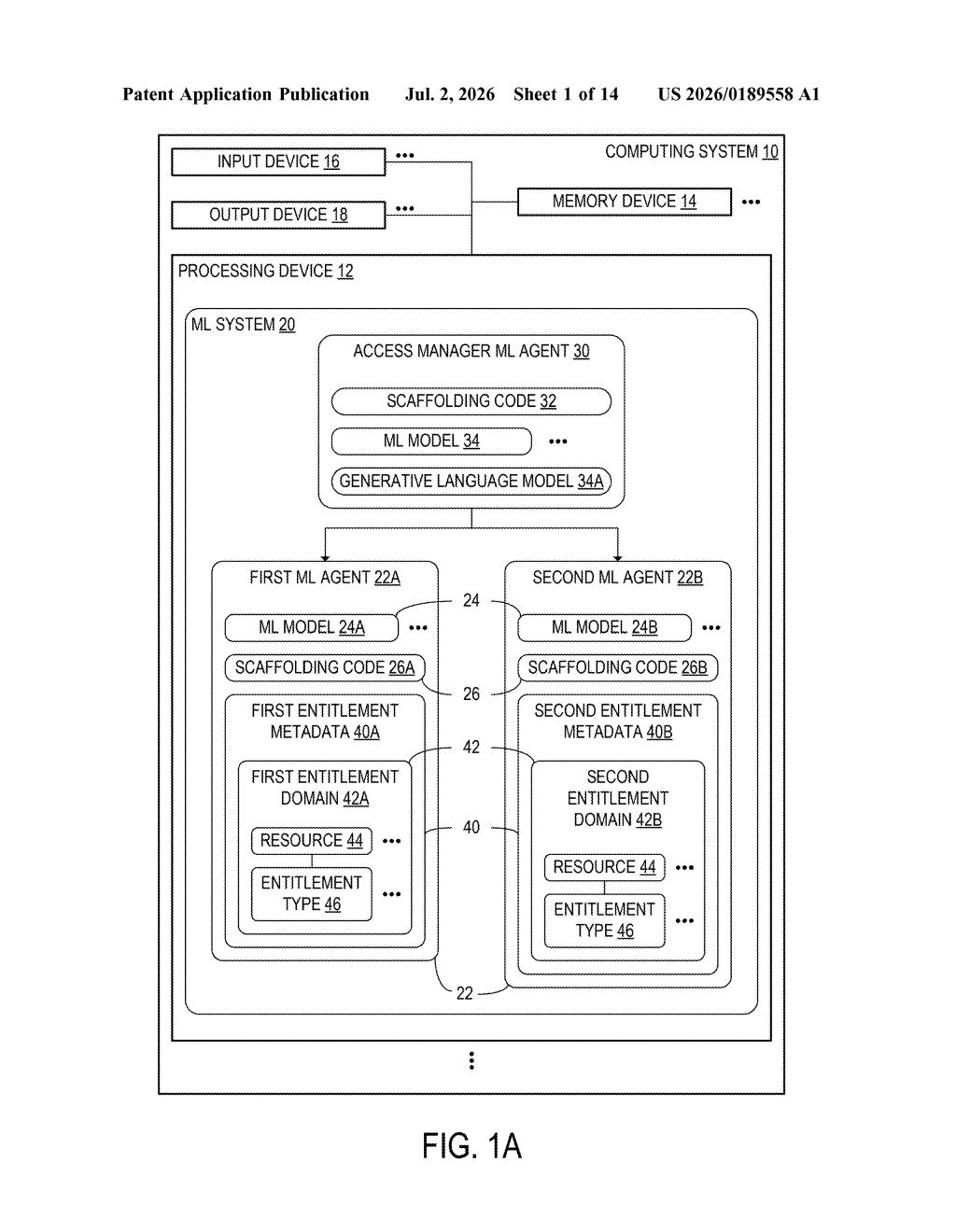
Microsoft's patent describes a way to give each AI agent its own clearly defined permission zone, called an entitlement domain. Each agent knows exactly which files, databases, or tools it's allowed to touch. If one agent wants to hand off a resource to another agent, the system checks both agents' permissions before allowing it.
Think of it like a workplace badge-access system, but for AI. Just because your colleague has access to the server room doesn't mean they can lend you their badge. Both sides of any data handoff have to be cleared first.
How entitlement domains gate resource sharing between agents
The patent describes a multi-agent machine learning system where each AI agent carries a piece of attached metadata called entitlement metadata. This metadata defines a specific domain: the set of resources (think documents, databases, APIs, or computation outputs) that agent is permitted to work with.
When one agent wants to share a resource with another agent, it sends an entitlement request. That request includes two things:
- The specific resource the first agent wants to grant access to (which must already be inside its own permitted domain)
- The second agent's entitlement metadata, describing what that second agent is authorized to access
The system then checks both sets of permissions before the handoff is approved. Only if the resource falls within both agents' authorized domains does the second agent get to use it and produce an output.
This cross-checking mechanism is notable because it prevents privilege escalation (where a lower-privilege agent tricks a higher-privilege one into doing something it shouldn't) and limits the blast radius if any single agent is compromised or misbehaves.
What this means for enterprise AI security and Copilot
The rise of agentic AI, systems where multiple AI models cooperate autonomously on complex tasks, is creating real enterprise security headaches. Today, most AI permission systems are built around users and apps, not around AI agents talking to each other. Microsoft's filing suggests the company is thinking carefully about how to bring traditional access-control principles into a world where AI agents can spin up other agents and pass data between themselves without a human in the loop.
For Microsoft, this connects directly to its Copilot and Azure AI ecosystem, where enterprise customers are already running multi-agent workflows across sensitive business data. A formal permission architecture for agent-to-agent interactions would be a meaningful step toward making those deployments auditable and defensible for regulated industries like finance and healthcare.
This is one of those patents that looks dry on the surface but addresses a genuinely serious gap. Multi-agent AI systems are being deployed in enterprises right now, mostly without a formal permission framework for agent-to-agent data sharing. Microsoft is staking out the architecture here, and given that Sam Schillace (a named inventor) is Microsoft's Deputy CTO, this isn't a backburner research filing.
Get our take in your Top Stories
Liked this breakdown? Add Patentlyze as a preferred source on Google, and our plain-English take shows up more often in your Top Stories the next time Microsoft patent news breaks.
There are more where this came from
We read every patent application Big Tech publishes and send you the ones worth knowing. Plain English, free, every week.
Want this weekly breakdown for a company we don't cover? Patentlyze Pro →