
Salesforce Patents an AI That Shows Where Every Answer Came From
When an AI gives you an answer, how do you know it's not making things up? Salesforce is patenting a system that forces its AI to cite its sources, the way a good researcher should.
What Salesforce's source-citing AI actually does
Imagine asking your company's AI assistant a question like "What were last quarter's sales in the Northeast?" and getting an answer that also tells you exactly which report or database that number came from. That's the core idea here.
Right now, most AI tools give you confident-sounding answers with no trail back to where those answers came from. Salesforce's patent describes a system where the AI doesn't just generate a response but also passes along a source reference, a pointer to the specific location in your data where it found the information.
The result shows up in your interface alongside the answer itself. So instead of just trusting the AI, you can check the original record. For businesses where accuracy matters, like finance, legal, or customer service, that's a meaningful difference from a black-box AI that asks you to take its word for it.
How the LLM traces answers back to a data location
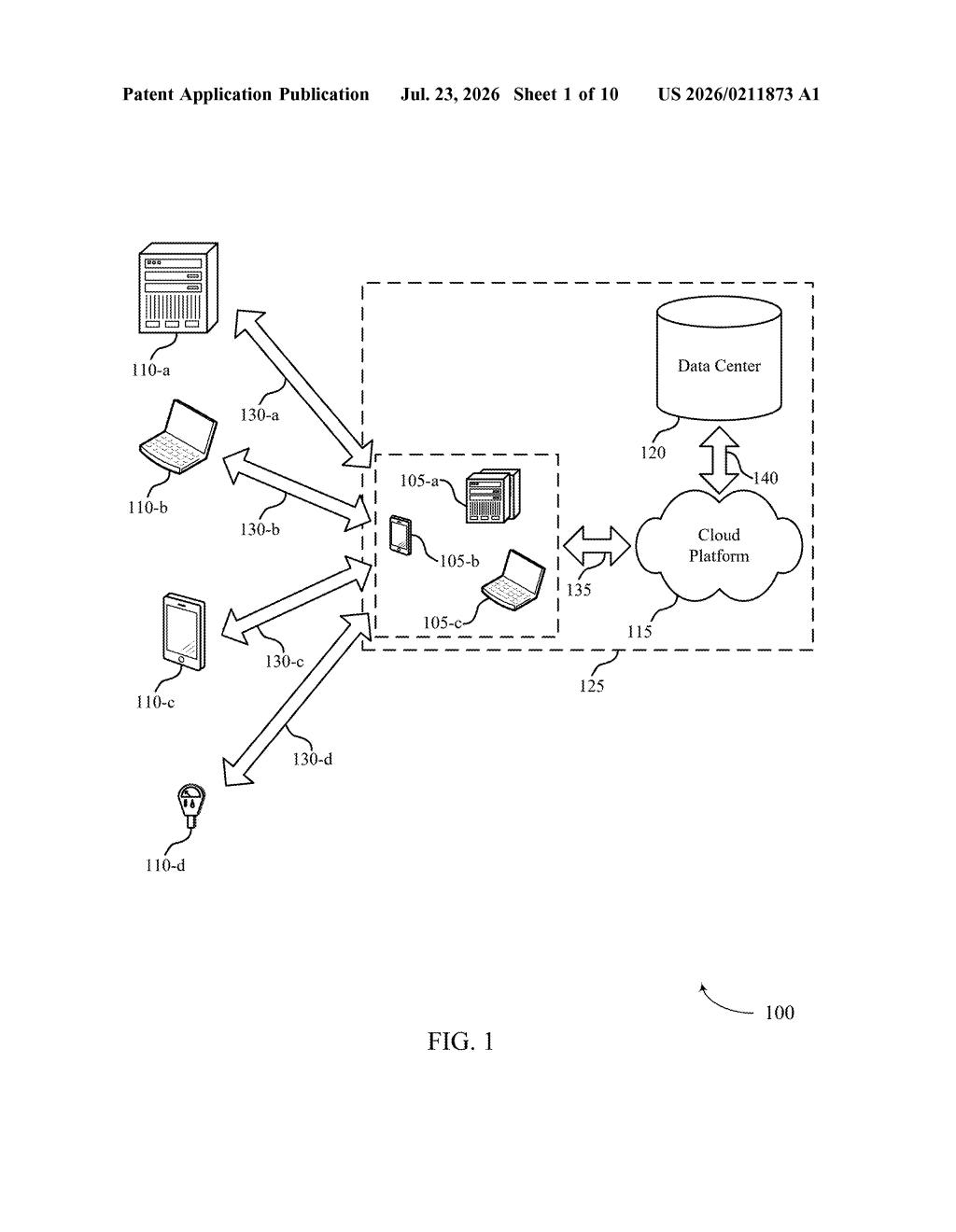
The patent describes a workflow where a large language model (LLM) acts as an intermediary between a user's question and one or more internal data sets.
Here's how the process works:
- A user types a question into a client-device interface (think: a Salesforce CRM window or chat panel).
- The LLM converts that question into one or more data queries (structured requests it can send to databases or other data sources).
- Those queries go out to the relevant data sets, which return both the information itself and a source indicator, a pointer showing where in the data set that information lives.
- The LLM bundles the answer and the source together into a single response, which gets sent back to the user's screen.
The key technical detail is that the source attribution isn't generated by the AI from memory. It comes directly from the data system that was queried, making it a factual record reference rather than a guess. This is sometimes called retrieval-augmented generation (RAG), a method where an AI pulls real documents or data before responding rather than relying solely on what it learned during training.
What this means for trusting AI in business software
The biggest criticism of AI in enterprise software is that it hallucinates, producing plausible but wrong answers with no way for users to verify the output. This patent directly attacks that problem by making source tracing a built-in part of the response, not an optional add-on.
For Salesforce customers, which include large banks, retailers, and healthcare companies, being able to audit an AI answer against a specific database row or report is genuinely useful. It could also help companies meet internal compliance requirements that demand documented sources for business decisions. This is less a moonshot idea and more a practical engineering answer to one of the most common complaints about AI at work.
This is a sensible, unsexy patent that solves a real problem. Source attribution is one of the things users actually ask for when AI disappoints them, and building it into the response pipeline rather than bolting it on after the fact is the right approach. It won't make headlines, but it's exactly the kind of infrastructure work that makes enterprise AI more usable.
There are more where this came from
We read every patent application Big Tech publishes and send you the ones worth knowing. Plain English, free, every week.
The drawings
10 drawing sheets from US 2026/0211873 A1 · click any drawing to enlarge


Want this weekly breakdown for a company we don't cover? Patentlyze Pro →