
Microsoft Patents Tiny Liquid Pumps to Spread Heat Across a Device's Shell
Microsoft's filing describes a thin liquid pump and tiny channels inside a device's casing that carry heat away from the hot spot you feel against your palm.
What Microsoft's liquid-cooled device shell does
Right now, the outside of your phone or tablet can limit how fast the chip inside it runs. When the processor heats one patch of the case past a comfortable temperature, the device slows itself down (engineers call this throttling) until that spot cools off.
Microsoft's patent application goes after that problem with liquid. Thin channels run through or along the casing, and a small pump keeps the liquid moving. The liquid soaks up heat at the hottest patch and carries it to cooler parts of the shell, so the whole case warms evenly instead of one spot getting hot.
The pump doesn't have to run all the time. A temperature sensor can switch it on only when things get warm and speed it up as the heat climbs. The filing gives one example of the payoff: a two-degree drop at the hot spot could allow roughly 10% more performance at the same surface temperature.
… a plurality of fluid channels thermally coupled with the device housing component; and a fluid pump configured to circulate cooling fluid through the plurality of fluid channels in the device housing component …
Translation: A network of tubes and a tiny pump spread liquid inside the outer shell to move heat around.
How the pump moves heat across the casing
The core setup is simple. A chip generates heat, and the part of the housing closest to it gets the warmest, which creates a hot spot and a temperature gradient (a gradual drop in warmth as you move away from the chip). The patent adds a network of fluid channels thermally coupled to that housing part, plus a fluid pump that circulates cooling liquid through them.
The filing describes several ways to build the channels:
- Fourteen parallel, connected channels in the main example figure.
- Channels formed in a thin film layer stuck to the inside of the case, which suits curved shapes.
- Channels cut into the case itself by CNC machining (computer-controlled cutting) or 3D printing.
- Tubing embedded in cut channels, or a sealing layer laid over open channels to stop leaks.
The pump can be a piezoelectric micropump, which flexes a special material when voltage is applied to push liquid along. The filing gives a thickness of 0.5 to 1.0 millimeters. The housing part can be the outer shell or an internal mid-frame (the structural plate that holds the display and circuit board).
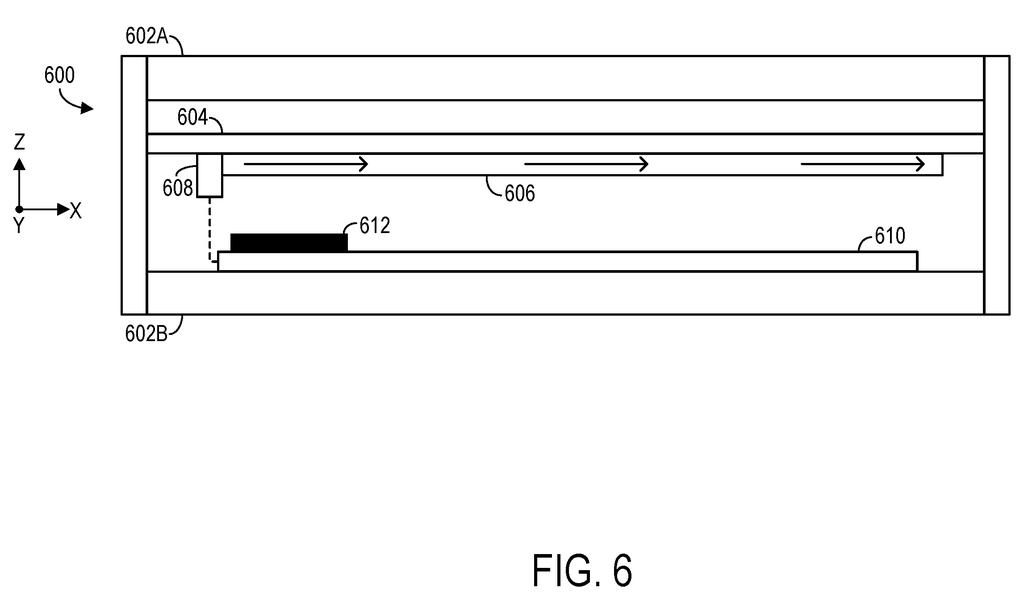
Control is based on temperature. Sensors trigger the pump once a threshold is passed, and the flow rate can rise and fall in proportion to the temperature. A device can also have two separate channel sets with two pumps, each serving a different hot spot. The system can also hand heat off to a fan or other active cooler.
Why a cooler shell could mean a faster phone
The practical stake is how fast and how comfortable your device is. Thin phones, tablets and laptops have little room for fans or thick heat sinks, so many rely on slowing the chip to keep the case comfortable to touch. If the case stays more evenly warm, the chip may not need to slow down as often. That could mean steadier speed in games, video calls or AI features, without a bulkier body.
The filing also pitches this as a way to cut the need for other cooling parts, which could trim size and cost. It even suggests the same idea for a detachable keyboard portion, where comfort under your hands matters. This is a patent application, and the text shows no tested product, so how well it works in a real device is still open.
Microsoft's fifth filing in the battery and power topic we cover since May adds to a set that includes one on AI chip traffic and one on battery scheduling.
Your phone slows itself down when it gets too warm, which means the case around the chip is deciding how much speed you actually get. That is a real cost, paid every time a device throttles during a video call or a long navigation session.
Spreading heat across the whole surface of the device, rather than letting it build up in one hot spot, is a sensible match for that problem. It works with the body the device already has, without adding bulk.
The honest uncertainty is whether a small pump and fluid sealed inside a thin phone can survive years of drops and daily use. The filing describes the sealing approach but offers no durability evidence, so the idea is promising but unproven.
Get our take in your Top Stories
Liked this breakdown? Add Patentlyze as a preferred source on Google, and our plain-English take shows up more often in your Top Stories the next time Microsoft patent news breaks.
There are more where this came from
We read every patent application Big Tech publishes and send you the ones worth knowing. Plain English, free, every week.
The drawings
12 drawing sheets from US 2026/0343806 A1 · click any drawing to enlarge


Show the other 4 sheets


Want this weekly breakdown for a company we don't cover? Patentlyze Pro →
Be the first to weigh in