
Microsoft's New Patent Removes the Central Traffic Bottleneck From AI Computing Hardware
Inside the racks that run AI, one big traffic-directing switch eats power and space. Microsoft's filing proposes wiring small switches into each tray ahead of time, so no software has to direct the traffic.
What Microsoft's switch-free AI rack does
Imagine an office where every employee's mail has to pass through one central sorting room, run by a clerk following a rulebook. It works, but the room takes up space, burns electricity, and sometimes backs up.
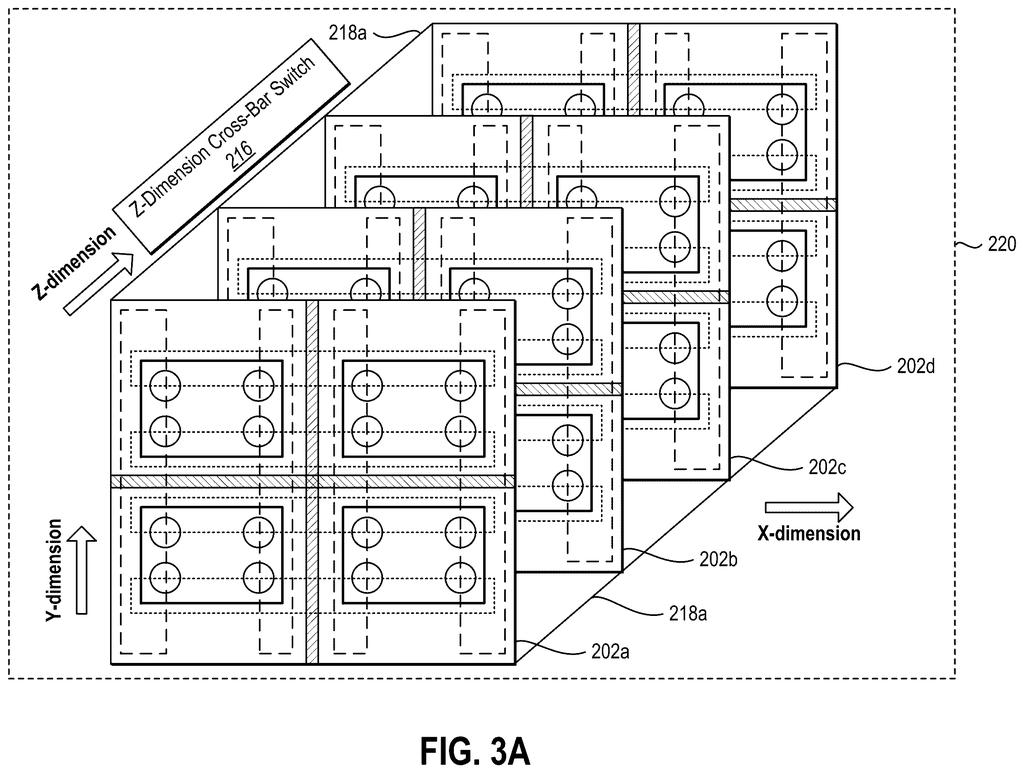
That is roughly how the computers behind AI are wired today. A rack holds many specialized AI chips, and one large switch directs data between them. Microsoft's filing removes that big switch. Instead, small crossbar switches (grids of tiny links that connect inputs to outputs) sit inside each tray of chips. They are set up in advance for one specific AI model, so every incoming cable already has a fixed exit.
Because the routes never change, no software has to direct traffic. The filing says that saves power, frees rack space for more trays, and costs less than the big switch.
… a y-dimension crossbar switch configured to a fixed AI model communication topology; an x-dimension crossbar switch configured to the fixed AI model communication topology; …
Translation: Two specific switches are hardwired to handle AI communication in a rigid pattern.
How the pre-wired crossbars link each chip
A rack is a tall cabinet of computers. Each tray in it holds a set of AI accelerators (specialized chips built for the math behind AI, such as tensor processing units). In a typical setup, cables from all those chips run to one network switch, which routes data under software control.
The filing puts two crossbar switches into every tray, one for the x direction and one for the y direction. Both are set to a fixed communication topology, meaning a routing plan worked out in advance for the specific AI model that will run. Each cable going in has one set exit, so nothing needs to decide anything while the model runs.
The claims give a concrete layout:
- A tray holds sixteen chips in four groups of four.
- Cables link groups side to side through one switch and top to bottom through the other.
- Across a rack, a third switch joins the trays (four in one example), set to the same plan.
The switches can pass data forward or loop it back, and the description says every chip ends up within one crossbar hop (one jump through a switch) of its destination. The switches are Ethernet-based serializer/deserializer parts, which convert data between many-lanes-at-once and single-lane form for fast travel.
… replace the network switch typically included in an AI accelerator rack with crossbar switches that are added to trays of AI accelerators within the rack.
Translation: Standard network switches are removed and replaced with direct crossbar switches on the hardware trays.
Why a smaller switch could cut AI server costs
If you use a chatbot or an image tool, the hardware behind each answer is expensive to build and to power. Data center power and rack space are a big part of that bill. The filing says pre-wired switches would use far less power than a software-controlled one, cost less, and free room in the rack, so the same cabinet could hold more trays and more computing.
Because the routes are fixed, a rack wired this way is built around one model's traffic plan. That suits large, steady jobs. The filing names no product, so treat it as a design direction for data centers, something behind the scenes that would only show up for you as cheaper or faster AI services.
That makes this Microsoft's 22nd filing we've tracked since July in the AI chip wars watchlist, adding to work like cheaper math for AI and lower memory for text generation.
Claim 1 is short. It covers a tray with several AI chips, two switches that are each set to a fixed, model-specific routing plan, and cables linking different sets of chips across them. It names no chip count and no chip type, so a tray of any size with that two-switch layout falls inside the wording as written.
The one firm requirement is the fixed plan. A tray whose switches are reconfigured by software as workloads change would sit outside that language. The later claims add detail: sixteen chips in four groups of four, Ethernet switches, and a third switch joining four trays.
If granted, it would cover a specific wiring layout, and a reasonably wide one at the tray level. As an engineering swap of one big switch for several small ones, it is a modest idea with a clear payoff in power and space.
Get our take in your Top Stories
Liked this breakdown? Add Patentlyze as a preferred source on Google, and our plain-English take shows up more often in your Top Stories the next time Microsoft patent news breaks.
There are more where this came from
We read every patent application Big Tech publishes and send you the ones worth knowing. Plain English, free, every week.
The drawings
6 drawing sheets from US 2026/0343778 A1 · click any drawing to enlarge


Want this weekly breakdown for a company we don't cover? Patentlyze Pro →
Be the first to weigh in