
Microsoft Files Patent to Split AI Work With Your Device Without Giving the Model Away
Microsoft has filed a patent application for letting your device do part of an AI model's math while the model's secrets stay locked away. The trick is that your device crunches numbers it can't read.
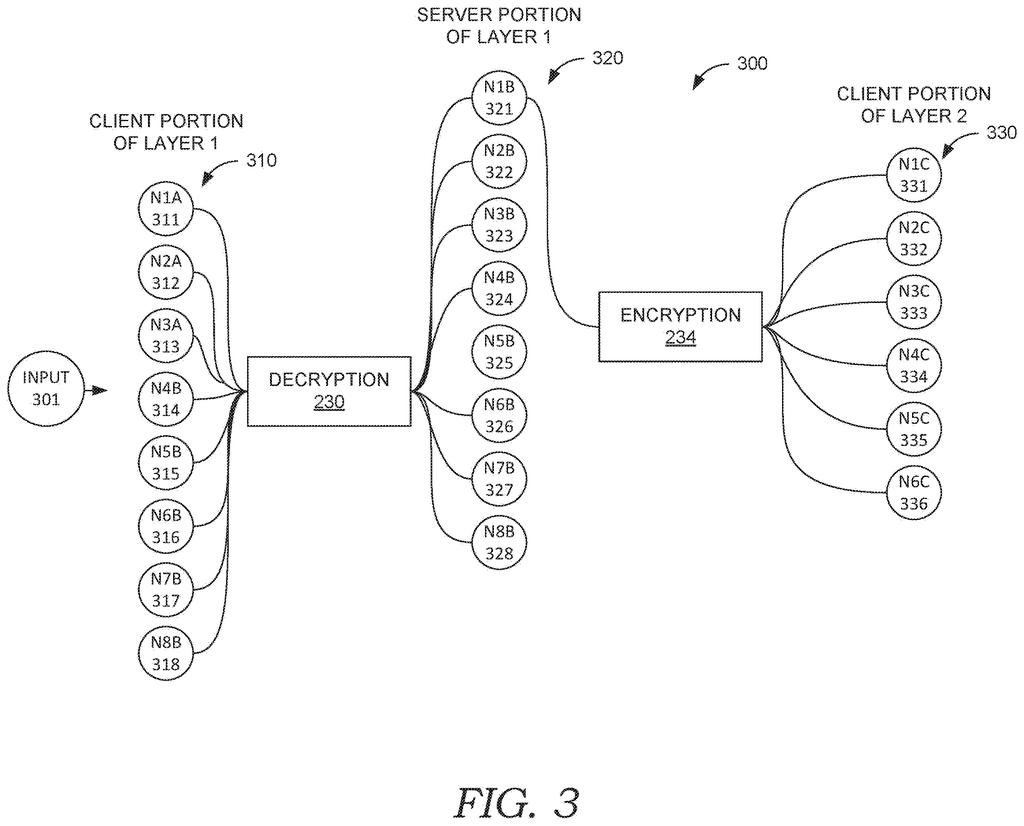
What Microsoft's split-up AI model actually does
Ever wondered why the smartest AI chatbots live in giant data centers instead of on your phone? Part of the answer is theft. If a company hands you the finished, expensive-to-train AI, someone could open it up and copy it.
Microsoft's patent application tries a middle path. Every layer of the AI's thinking gets split in two. Your device handles the plain multiplying and adding, but on scrambled numbers, so it can't read what it's working with. A Microsoft server handles the one trickier step in each layer and sends the result back.
The scrambling is called homomorphic encryption, a way of doing math on locked data and getting the right answer once it's unlocked. Your device never gets the key.
How the device does math it can't read
A neural network (the software behind chatbots) is built from layers of tiny calculators called neurons. Each neuron does two kinds of work. The linear part multiplies an input by a learned number (a weight) and adds a bias (a small adjustment). The activation function is a non-linear shaping step that decides how strongly the neuron responds.
The claims split each neuron between two places. The client (your device) runs only the weight and bias math. The server runs only the activation step. In the filing's flow:
- Your input, such as a typed prompt, goes to the server, which encrypts it and sends it back.
- The device multiplies and adds using encrypted weights and biases, producing an encrypted in-between result.
- The server decrypts that result, applies the activation, re-encrypts the answer and returns it for the next layer.
The weights are encrypted before they reach the device, and the device is not given the key, so anyone inspecting it finds only scrambled numbers. The filing describes one key for every layer or a different key per layer. It also covers weaker and stronger forms of homomorphic encryption, which differ in how many math operations they can survive.
What Microsoft's locked AI split means for you
Running big AI models costs a lot of chips, memory and electricity. The filing says that using client devices could reduce the need to build larger data centers, but shipping a trained model to a device risks giving it away. This design tries to get both: your hardware does some of the work, and the model owner keeps the valuable part locked.
For you, the practical effect would be mostly invisible: chat or image features that lean a bit less on distant servers. The filing does not say whether anything built on this would be faster. For companies selling AI, it points toward a way to put models on laptops, phones and headsets without exposing the thing they spent months training.
That makes this Microsoft's 16th filing we've tracked since August in our on-device AI privacy watchlist, extending work seen in filings on scrubbing identity from speech and tiered protection for personal data.
The problem is real. A trained AI model can cost enormous sums to build, and a copy of it on a device someone controls is a copy that can be pulled apart. Companies want to use your hardware to cut their server bills, so protecting the model on that hardware is a live concern.
The fix is sized sensibly for that one problem. Your device does the heavy multiplication on locked numbers, and the server finishes each layer. The cost is that every layer needs a trip across the network, so the server never leaves the loop.
The protection also serves the model owner. According to the description, your prompt still travels to the server in readable form, so this does nothing for your privacy. Read it as an anti-copying tool for AI companies that happens to shift some computing onto your device.
Get our take in your Top Stories
Liked this breakdown? Add Patentlyze as a preferred source on Google, and our plain-English take shows up more often in your Top Stories the next time Microsoft patent news breaks.
There are more where this came from
We read every patent application Big Tech publishes and send you the ones worth knowing. Plain English, free, every week.
The drawings
7 drawing sheets from US 2026/0342536 A1 · click any drawing to enlarge


Want this weekly breakdown for a company we don't cover? Patentlyze Pro →
Be the first to weigh in