
A New Microsoft Patent Trains Speech Recognition on Voices Scrubbed of Identity
Microsoft's patent tries to teach speech software to understand people without letting it learn whose voice it is hearing. It blanks out the real voice, adds a computer-read copy of the same words, and trains on both.
What Microsoft's voice-scrubbing patent does
You're sitting in an exam room, confirming your name and birth date while a microphone records every word. Down the line, a company may want to use recordings like that to teach software to understand speech, and your voice works a lot like a fingerprint.
Microsoft's patent describes a way to scrub the voice out of that audio before it becomes training material. The system makes a cleaned-up copy of the recording. It also writes out what was said and has a computer read it aloud in a stock voice. Neither version sounds like the original speaker.
The software then learns from both versions together. The computer-read copy helps fill in where the scrubbed copy has gaps, so recognition stays accurate. The filing reports a 19% drop in word errors in its own comparison.
… generating, from the speech signal, training data for an automatic speech recognition (ASR) model by filtering the speech signal to obtain a filtered speech signal and generating a synthetic speech signal from a transcription of the speech signal …
Translation: The system creates training materials by cleaning up real audio and generating fake voice data from a text transcript.
How the scrubbed and synthetic voices combine
The patent covers a way to build training data for an ASR model (automatic speech recognition, the software that turns spoken words into text). It starts with a recording that carries a real person's voice characteristics, such as pitch, tone and accent.
From that recording it makes two anonymized versions:
- A filtered signal, where the sensitive voice is removed. The description says it can be replaced with noise or digital silence, or canceled out.
- A synthetic signal, made by transcribing the words and having a text-to-speech system read them aloud.
Both versions go in as a multi-channel input, like two microphones, even though only one was used. A combining step merges them into a single stream, frame by frame (short slices of time) or by frequency bin (slices of the pitch range), giving each slice a weight. The description says a neural network or self-attention model (software that learns which parts matter most) can set those weights.
The finished data goes to a device that trains the ASR model. Other claims cover choosing a licensed stand-in voice, picked as either the closest or the least similar match to the speaker, and using the trained model on live speech.
In response to identifying the sensitive speech component, a filtered speech signal is generated by removing the sensitive speech component from the speech signal.
Translation: Once private elements are detected, they are stripped out of the audio recording.
Why anonymous voice data matters for Microsoft
Voice recordings are personal data, and the filing says privacy laws and growing user awareness are pushing companies to protect them. The usual fix, swapping a voice for another one, can hurt accuracy because the swap is imperfect and handles background sound poorly. This patent aims to keep the privacy while recovering the accuracy.
The example in the filing is a medical visit, where a patient confirms personal details and describes symptoms and the software fills in medical records. If something like this worked, recordings of conversations like yours could help improve transcription software without your voice ending up in the training pile. The patent is a filing, not a product, and it doesn't say where the system would be used.
Microsoft's 14th filing we've tracked since August in our on-device AI privacy watchlist follows earlier applications on shielding sensitive data and spotting private data early.
Every privacy fix costs something, and here the cost is audio. Blanking out a voice leaves holes in the recording, so the system needs a second, computer-read copy to fill them. That means extra steps for every clip: scrub it, transcribe it, read the transcript aloud, then blend the versions.
The weak spot is the middle step. The computer-read copy comes from a transcript, and a transcript from a cheap first-pass recognizer can contain mistakes that carry into the training material. The only result in the filing is the company's own 19% drop in word errors, with no outside check.
Still, the trade reads as worth it for any team that has to train on sensitive voices, since extra computing is cheaper than a privacy mishap. It is a sensible, workmanlike piece of engineering.
Get our take in your Top Stories
Liked this breakdown? Add Patentlyze as a preferred source on Google, and our plain-English take shows up more often in your Top Stories the next time Microsoft patent news breaks.
There are more where this came from
We read every patent application Big Tech publishes and send you the ones worth knowing. Plain English, free, every week.
The drawings
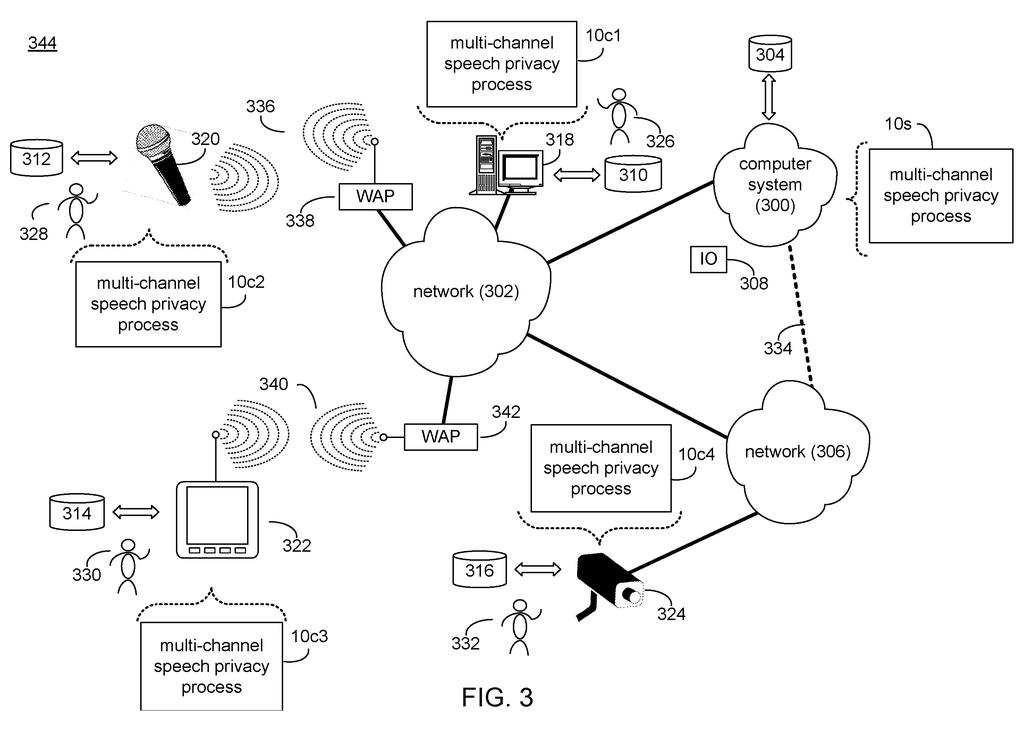
3 drawing sheets from US 2026/0311677 A1 · click any drawing to enlarge


Want this weekly breakdown for a company we don't cover? Patentlyze Pro →
Be the first to weigh in