
Microsoft Files Patent for Teaching AI a Concept From a Handful of Example Words
Microsoft's patent application lets you teach software a whole category by typing a few words, then telling it which of its guesses are right or wrong. The twist is that it keeps asking, round after round, until it gets the idea.
What Microsoft's word-list teaching tool does
Ever tried to explain a category to a friend by listing a few examples? You say 'Honda, Ford, Peugeot,' and your friend adds Toyota and Maserati on their own.
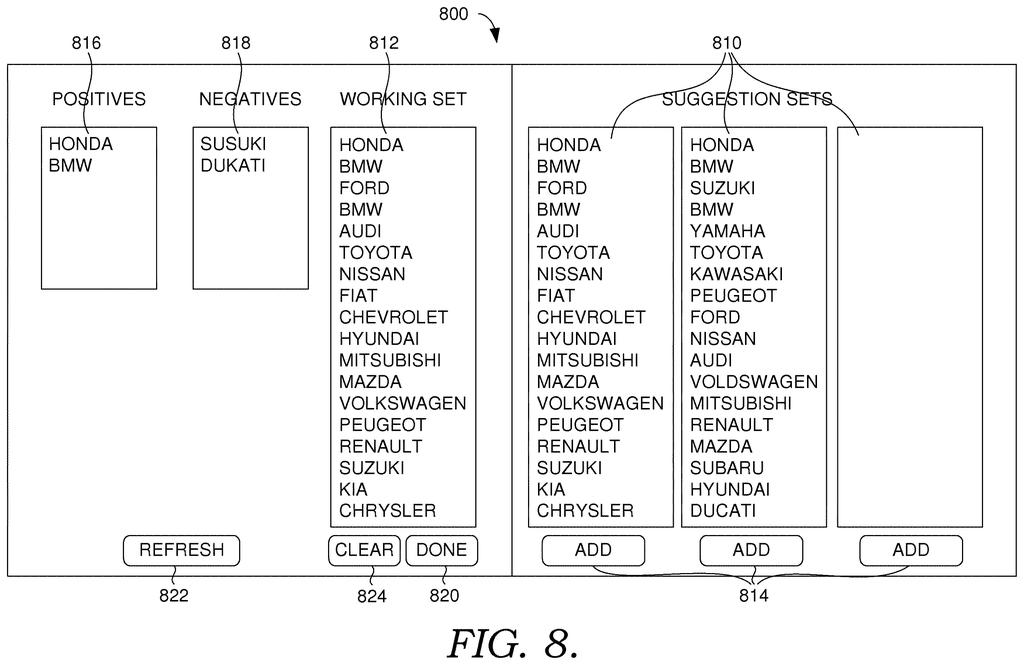
This Microsoft patent application builds that same back-and-forth into software. You type a few words that belong to an idea, like car brands. The system guesses more words that fit and shows them on screen. You tell it which guesses are right and which are wrong, and it learns from your answers.
After a few rounds, the software has a solid grasp of the idea, and you can save what it learned as a trained model. The goal, according to the filing, is to let ordinary people teach computers without a machine-learning degree. That matters because the filing says there are too few experts to build the thousands of sorting tools that search and ads would want.
… performing two or more training iterations, the two or more training iterations comprising: generating one or more second words using the machine learning model; outputting the one or more second words on a user interface; receiving user input directed to the user interface; and performing training of the machine learning model based at least on the user input …
Translation: The system repeatedly suggests words to the user, takes their feedback, and improves the AI based on those responses.
How the suggest-and-correct loop trains the model
The claims cover a loop. A machine learning model (software that learns patterns from examples) starts out holding some words tied to a particular concept, such as car brands. It then runs at least two training rounds. In each round it does the following:
- Generates new words using the model
- Shows those words on a user interface
- Receives the user's input on them
- Retrains itself based on that input
When the rounds finish, the trained model is the output. In the dependent claims, the model is a neural network classifier (a model that answers 'does this belong?'). The user marks each suggested word as a positive example (it belongs) or a negative example (it does not). The classifier can then score new words, and the screen can show accepted and rejected words in two separate groups.
The description adds where suggestions can come from: previously stored word lists, a click graph (a record of which web pages people clicked after each search), tables found on the web, and the model's own internal word representations. Each word can carry its own weight (how much it counts), and the weights can be tied together so a rare word like Maserati borrows knowledge from a common one like Honda.
The filing also describes a fix for words with double meanings. By checking the two words before and after 'May,' the system can tell a month from the polite request, and 'President Ford' from the car brand.
Why Microsoft's patent aims at non-experts
Search engines still trip over short queries. The filing notes that a search for 'seattle sushi' can return hotels instead of restaurants, because the engine misses what kind of question you asked. Sorting queries and web pages into categories like restaurants or stock quotes is one fix, and this patent aims at making those category-builders cheap to create.
The bigger idea is who does the teaching. The filing says experts are a bottleneck and that building 10,000 of these tools without a change in approach is impractical, so it puts the work in the hands of people who know the subject. This application continues a family of filings that goes back to 2013, so the thinking is old even if the paperwork is new. Nothing in it names a specific product.
Microsoft's 43rd filing we've tracked in our Enterprise AI coverage since May follows meeting replay work and old codebase mapping with another look at how AI handles workplace tasks.
The cost of this design is your time. Every round needs a person to read suggestions and mark them, so the system moves only as fast as the human helping it. The filing leans into that on purpose: it argues people are good at saying what words mean, and computers are good at applying that meaning across a hundred million web pages.
The second cost is trust in the suggestions. If the system proposes the wrong words, such as a surname that doubles as a car brand, the teacher has to catch it. The description spends pages on words like 'May' that fool a simple word list, which shows how easily this idea breaks at the edges.
Still, the trade reads as worth it: a few thumbs-up and thumbs-down answers is a small price for a tool that people without engineering training can run. The claims are broad, so the real test is whether the rounds feel quick enough that people keep going.
Get our take in your Top Stories
Liked this breakdown? Add Patentlyze as a preferred source on Google, and our plain-English take shows up more often in your Top Stories the next time Microsoft patent news breaks.
There are more where this came from
We read every patent application Big Tech publishes and send you the ones worth knowing. Plain English, free, every week.
The drawings
23 drawing sheets from US 2026/0310892 A1 · click any drawing to enlarge


Want this weekly breakdown for a company we don't cover? Patentlyze Pro →
Be the first to weigh in