
Brainwaves Could Flag AI Errors the Moment They Appear
What if your AI assistant could tell it made a mistake just by noticing a flicker of surprise in your eyes? Microsoft is patenting exactly that — a system that watches your body's involuntary reactions to catch AI errors before you even have to say anything.
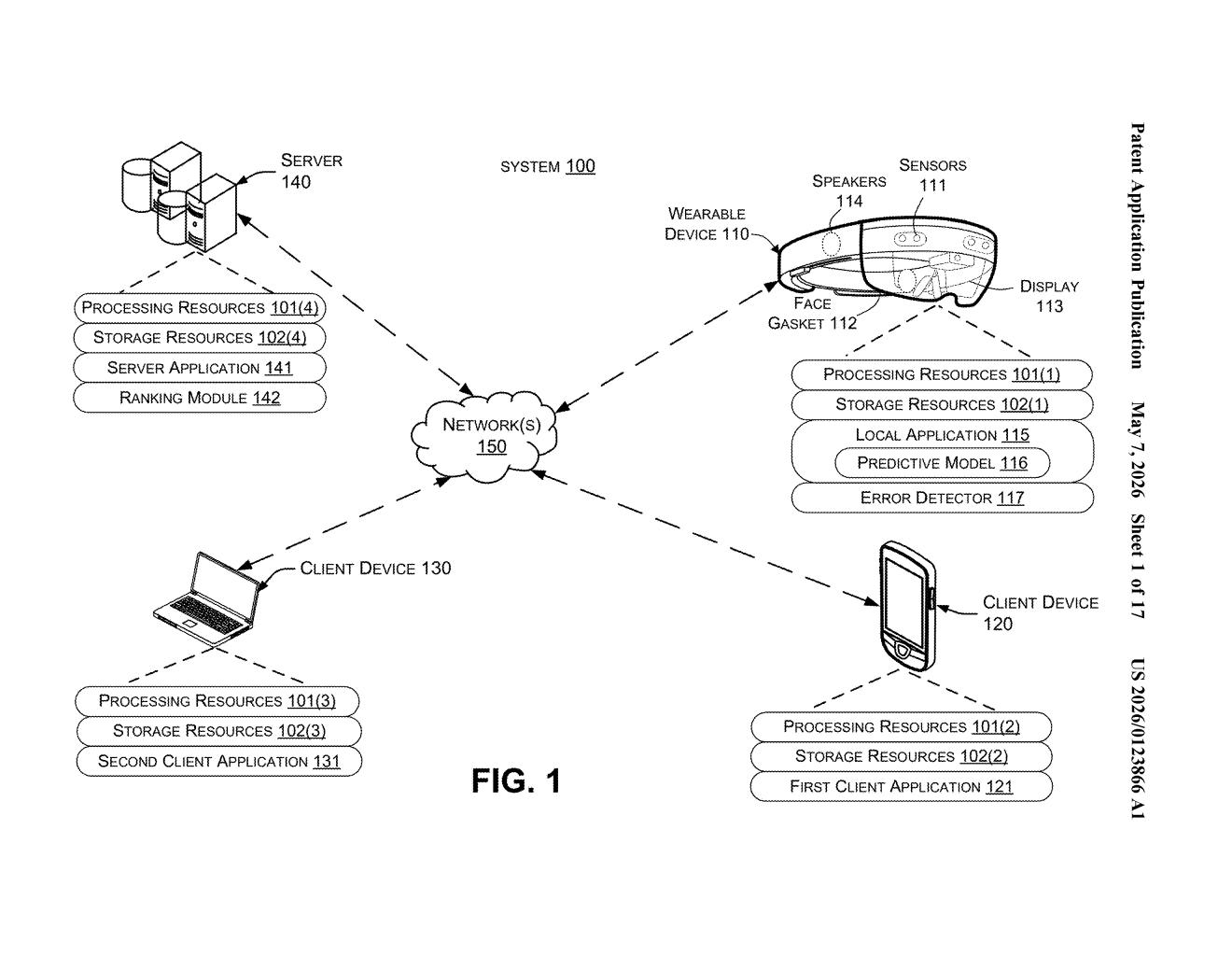
How Microsoft reads your brain to spot AI errors
Imagine a speech-to-text tool transcribes the wrong word, or an AI navigation system suggests a turn you know is wrong. Right now, you have to manually correct it — tap a button, retype, speak again. Microsoft's patent wants to skip that friction entirely.
The idea: your body already knows when something is wrong before you consciously act on it. Your pupils dilate slightly, your brainwaves shift in a recognizable pattern — these are involuntary signals that researchers associate with surprise or error detection. Microsoft's system would watch for those signals using sensors like EEG headsets or eye-trackers.
When you look at an AI's output and your body registers that's not right, the system logs it as a likely error — without you lifting a finger. That signal can then be used to flag the mistake, override the bad prediction, or even feed back into training the AI to do better next time.
How gaze, EEG, and pupil dilation form a feedback loop
The patent describes a three-stage pipeline that ties together attention tracking, physiological sensing, and AI error evaluation.
Stage 1 — Attention detection: The system first figures out what you're looking at, typically using gaze tracking. It needs to confirm you're actually focused on a specific AI prediction output before it starts reading your body's reaction. No point measuring your surprise if you weren't looking at the thing in question.
Stage 2 — Physiological reaction sensing: Once your attention is confirmed, the system monitors biosignals. The patent specifically calls out:
- EEG (electroencephalogram) — electrical brainwave readings, particularly the "error-related negativity" (ERN) response, a well-studied neural signature that fires when humans detect a mismatch or mistake
- Pupillary diameter — your pupils dilate measurably when you're cognitively surprised or stressed
Stage 3 — Error output and feedback: If the physiological reaction clears a threshold for "perceived error," the system outputs an error indication. That signal can do several things: flag the prediction for review, replace it with an alternative, or be logged as a training data point so the underlying predictive model gets better over time.
The underlying insight draws from decades of neuroscience research on implicit human error detection — your brain knows something is wrong roughly 100-200ms before you consciously register it.
What this means for AI reliability and human-computer trust
For AI-assisted workflows — think real-time captioning, predictive text, clinical decision support, or autonomous vehicle interfaces — catching errors silently and immediately could be a meaningful quality-of-life improvement. You wouldn't need to interrupt your flow to correct a mistake; the system would notice your involuntary reaction and handle it.
There's also a longer-term angle here: this patent essentially describes a continuous, passive human-in-the-loop training signal. Every time you notice an AI error, the model learns. That's a very different paradigm from periodic batch retraining on labeled datasets. The catch, of course, is that it requires sensors most people don't wear yet — EEG headsets aren't exactly mainstream. But with Microsoft's investment in mixed-reality hardware like HoloLens and its broader AI infrastructure push, the sensor problem may close faster than it seems.
This is genuinely interesting neurotech-meets-AI work, not a routine filing. The underlying neuroscience — error-related negativity in EEG is real and well-replicated — gives this more credibility than most biometric patent speculation. The big open question is hardware: EEG is still awkward to wear, and the consumer path isn't obvious. But if Microsoft is betting on an AR/mixed-reality future where you're wearing sensors anyway, this feedback loop becomes a surprisingly elegant solution to AI reliability.
There are more where this came from
We read every patent application Big Tech publishes and send you the ones worth knowing. Plain English, free, every week.
Want this weekly breakdown for a company we don't cover? Patentlyze Pro →