
Qualcomm Patents a Way for 5G Networks to Ask Your Phone How Much AI It Can Handle
Before a 5G network can offload AI tasks to your phone, it needs to know how much AI horsepower your phone actually has. Qualcomm's new patent builds a structured handshake for exactly that.
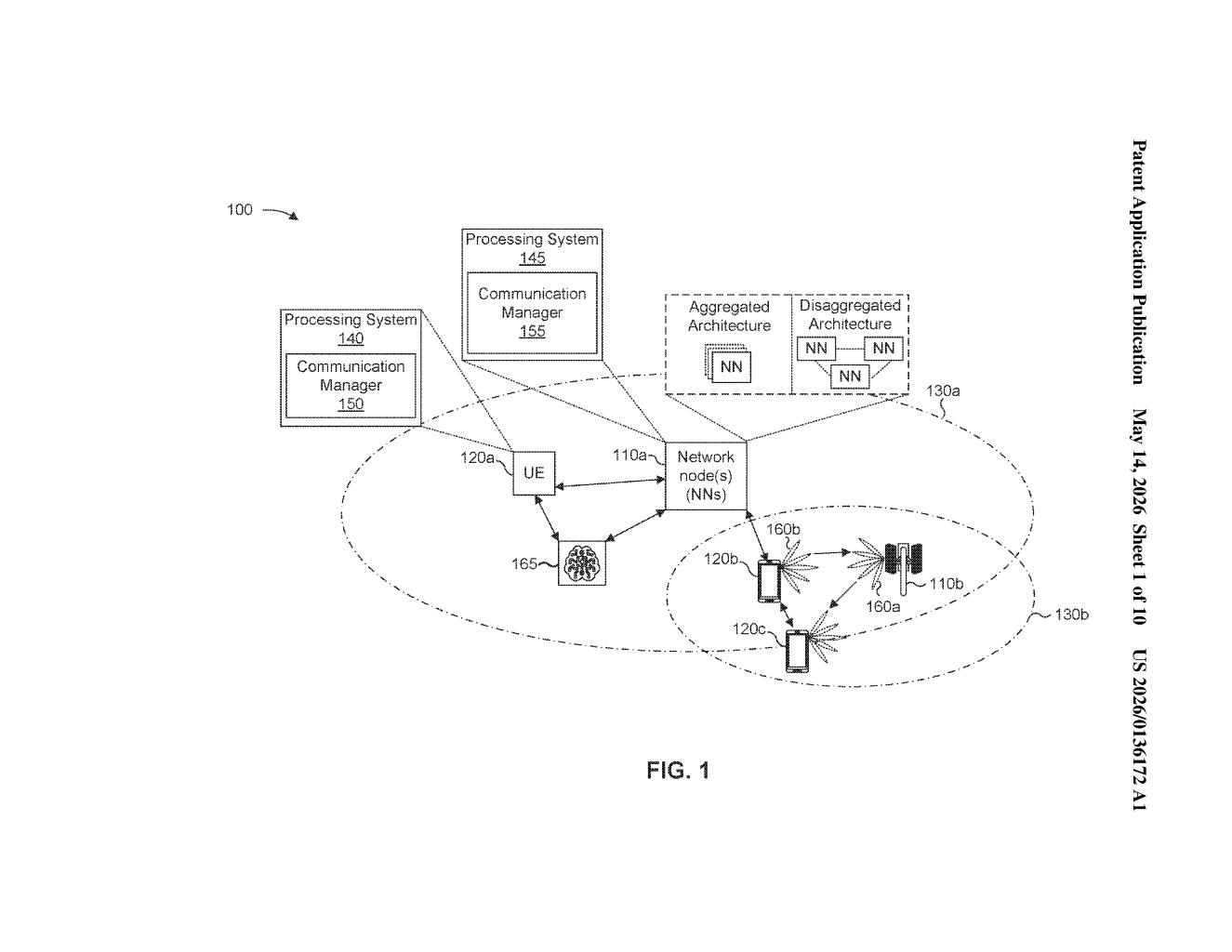
What Qualcomm's ML processing reporting actually does
Imagine your phone is connected to a 5G network that wants to run some AI tasks — maybe beam-forming, signal prediction, or channel estimation — partly on your device instead of a remote server. Before it can do that intelligently, the network needs to know what your phone is actually capable of.
This patent describes a protocol where your phone tells the network two things: how many machine learning processing units (basically, dedicated AI compute slices) it can spare for each specific AI task, and the absolute maximum it supports overall. The network sends a request, and your phone responds with a detailed capability report.
It's less about running AI and more about coordinating AI — making sure the network doesn't ask your phone to do more than it can handle, or under-use the capacity sitting idle on your chip.
How the UE counts and reports MPUs per ML operation
The patent describes a capability-reporting framework between a user equipment (UE) — that's your phone or tablet — and the wireless network infrastructure.
The flow works in three steps:
- The network sends configuration information instructing the UE to prepare a capability report about its ML processing units (MPUs).
- The UE responds with a report listing the number of MPUs it can allocate to each specific ML operation in a defined list, plus its overall maximum MPU capacity.
- The network uses that data to send a second round of configuration — essentially assigning workloads the UE is confirmed able to handle.
MPUs here are discrete units of machine learning compute — think of them like threads or cores, but scoped specifically to AI inference tasks. The key insight is that reporting per-operation capacity (not just a single total number) lets the network understand how the phone's AI resources are partitioned, not just how big the pile is.
This is squarely aimed at the 3GPP standardization work on AI/ML for the air interface — the radio link between your device and the tower — where on-device ML is increasingly part of how signals get processed.
What this means for AI workloads in 5G networks
As 5G and eventually 6G networks lean on AI to optimize radio performance — things like predicting channel conditions or shaping antenna beams — the network and device need a shared language for capability negotiation. Without it, networks either under-assign tasks (wasting your phone's AI silicon) or over-assign them (causing failures or latency spikes that affect your call quality).
For Qualcomm specifically, this is strategic: the company sells both the modems and the AI accelerators inside most Android flagship phones. A standardized MPU-reporting protocol would play directly to Qualcomm's strength — their chips already have the silicon, and now they're helping write the rules for how networks discover and use it.
This is dry standards-layer infrastructure work, but it's the kind of filing that quietly shapes how an entire ecosystem behaves. If this protocol gets folded into 3GPP specs, every chipmaker building 5G modems will have to support it — and Qualcomm, having filed early, is well-positioned to influence how the capability taxonomy gets defined.
There are more where this came from
We read every patent application Big Tech publishes and send you the ones worth knowing. Plain English, free, every week.
Want this weekly breakdown for a company we don't cover? Patentlyze Pro →