
Qualcomm's New Patent Cleans Up the Seams Between Video Decoding Tiles
When your phone decodes a video, it quietly slices each frame into processing tiles — and the seams between those tiles can introduce subtle visual artifacts. Qualcomm's latest patent targets exactly that seam problem, with a more careful filtering approach that knows which pixels to trust and which to skip.
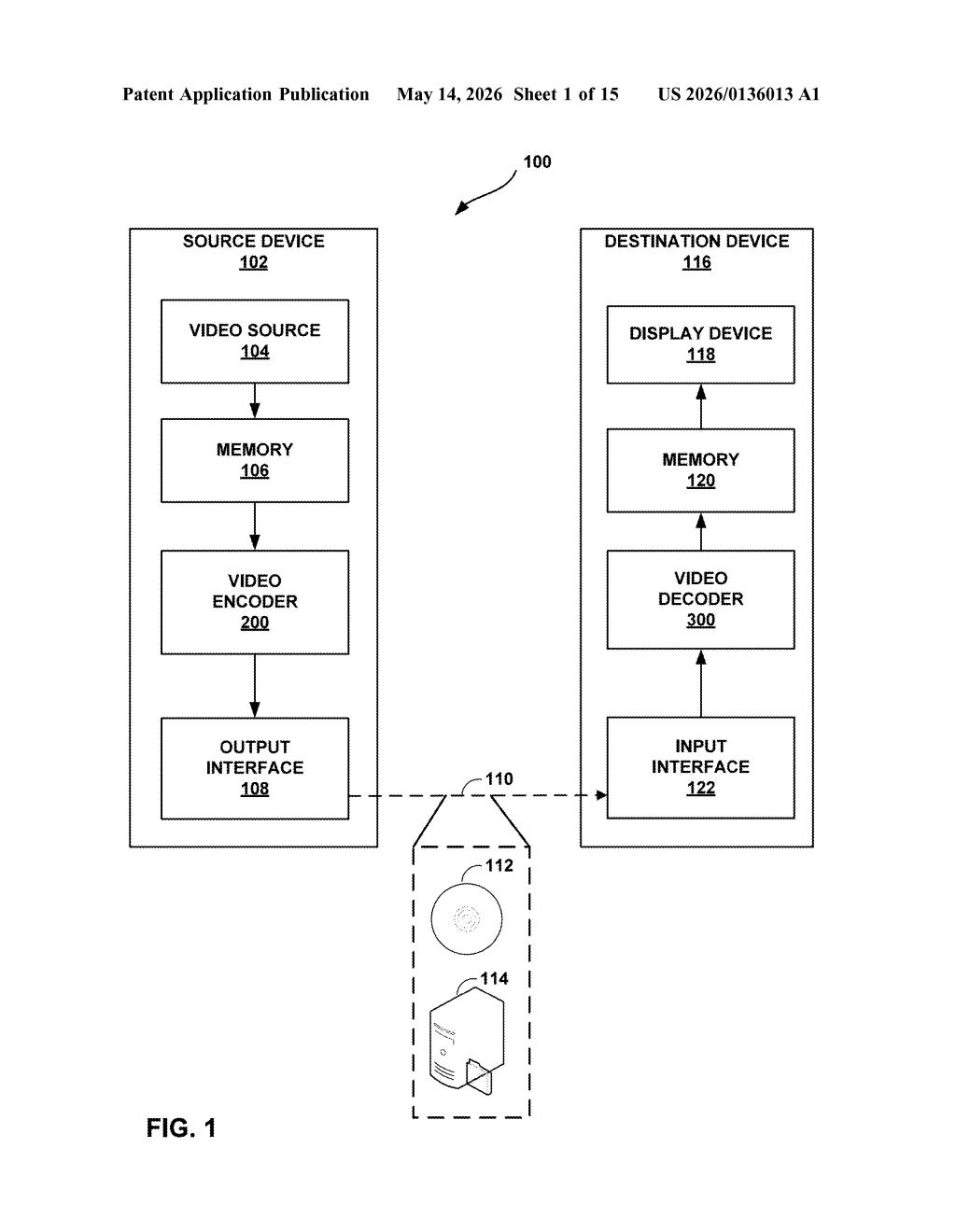
What Qualcomm's virtual boundary video filter actually does
Imagine your video decoder is like a team of workers, each handling a small section of a painting. To save time and memory, they work on their sections simultaneously — but that means the worker at the edge of one section can't always see what their neighbor is doing. Virtual boundaries are the invisible lines between those sections.
The problem is that when a decoder tries to clean up a pixel sitting right next to one of those invisible lines, it might accidentally peek at pixels from the neighboring section that haven't been processed yet. That contamination can cause subtle but real visual glitches.
Qualcomm's patent describes a method where the decoder deliberately avoids using those boundary-adjacent pixels when computing a specific type of color correction filter called CCSAO (Cross Component Sample Adaptive Offset). Instead, it only reaches for pixels it can safely use, keeping the filter accurate without stalling the whole decoding pipeline.
How CCSAO skips boundary samples to stay accurate
The patent focuses on Cross Component Sample Adaptive Offset (CCSAO) — a post-processing filter used in modern video codecs that corrects color errors by looking at relationships between different color channels (like how brightness relates to color). It's part of the in-loop filtering stage, where the decoder cleans up compression artifacts before the frame is displayed.
The core technical problem: decoders split frames into coding tree units (CTUs) — small rectangular blocks processed in parallel. Virtual boundaries mark the edges between these blocks. A pixel sitting right next to a virtual boundary is dangerous to use as a reference, because its neighbor across the line may not be fully decoded yet.
Qualcomm's method works like this:
- For each pixel being filtered, the decoder checks all its neighboring pixels.
- It identifies which neighbors sit on a virtual boundary (horizontal or vertical) and which do not.
- It computes the band classification (the category that determines which correction offset to apply) using only the safe, non-boundary neighbors.
- It then applies the CCSAO correction using that clean classification.
The patent also extends this logic to bilateral filters and Adaptive Loop Filters (ALF) — two other common video cleanup passes — applying the same boundary-avoidance discipline across the board.
What this means for video quality on Snapdragon devices
This kind of low-level codec work directly affects the visual quality you see in streamed and locally decoded video on devices running Qualcomm's Snapdragon chips. VVC (Versatile Video Coding) and next-generation codecs lean heavily on multi-pass in-loop filters like CCSAO and ALF — so getting the boundary handling right is not optional, it's foundational.
For the broader industry, this is the kind of patent that ends up embedded in codec reference implementations and hardware decoder blocks. It's not flashy, but it's the difference between a decoder that looks correct and one that occasionally produces faint banding or color shifts near tile boundaries — especially visible on large, high-resolution displays.
This is highly specialized codec infrastructure work — not the kind of patent that makes headlines, but exactly the kind that quietly improves every video you watch on a Snapdragon-powered device. Qualcomm's codec team has a long track record of this type of meticulous standards-adjacent filing, and CCSAO is a genuinely tricky filter to get right near boundaries. Worth noting for anyone following VVC adoption.
Get our take in your Top Stories
Liked this breakdown? Add Patentlyze as a preferred source on Google, and our plain-English take shows up more often in your Top Stories the next time Qualcomm patent news breaks.
There are more where this came from
We read every patent application Big Tech publishes and send you the ones worth knowing. Plain English, free, every week.
Want this weekly breakdown for a company we don't cover? Patentlyze Pro →