
Qualcomm Patents a Sensing System That Bounces Signals Across Multiple Radio Standards
Your phone already has Wi-Fi, Bluetooth, and 5G radios sitting side by side — Qualcomm's new patent wants to turn all of them into a coordinated sensing system, transmitting on one standard and picking up reflections on another.
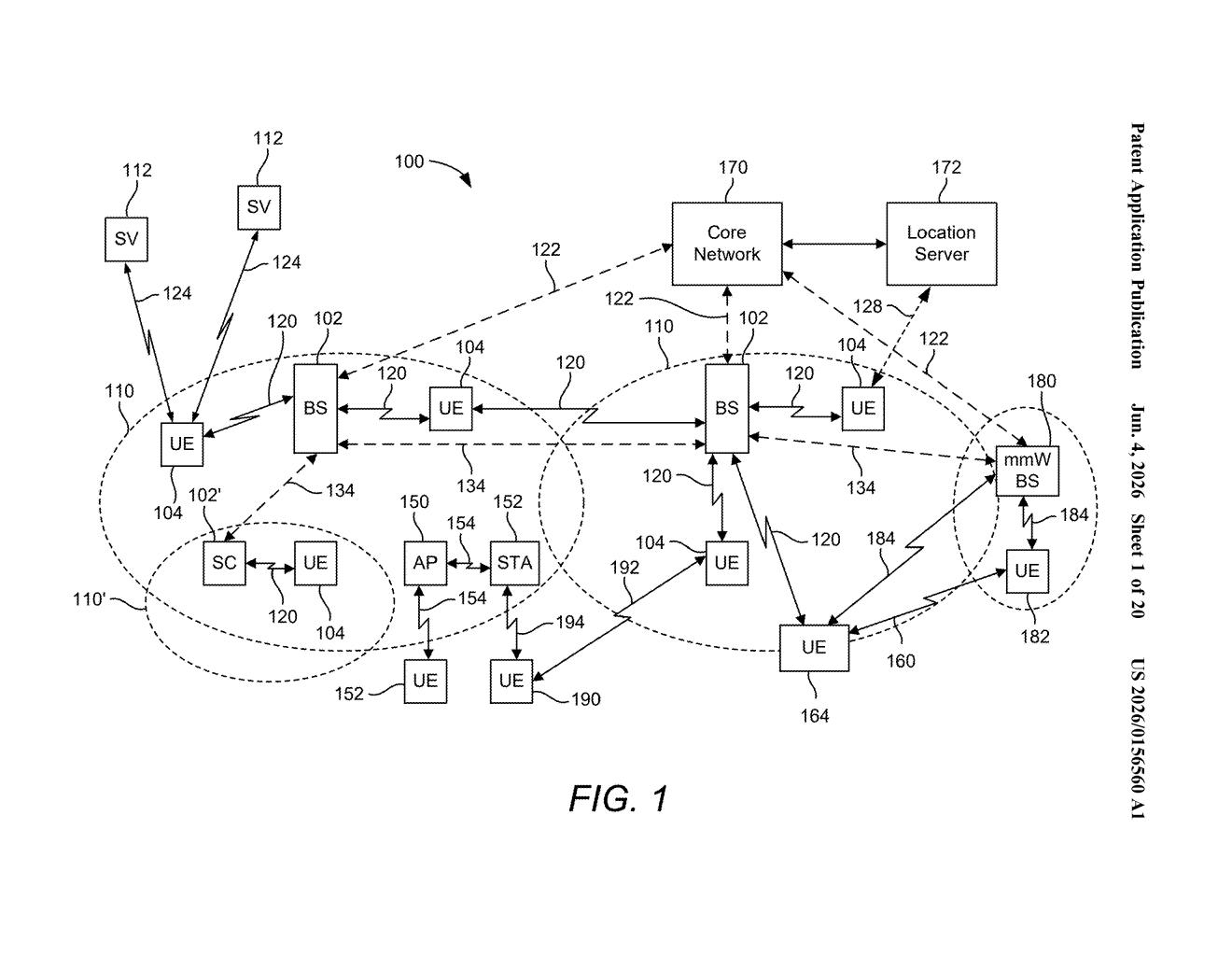
What Qualcomm's multi-radio sensing actually does
Imagine a bat using its own echoes to map a dark cave. Wireless sensing works the same way — a device sends out a radio signal, and when that signal bounces off a person or object, the device catches the reflection and figures out what's nearby. It's the same idea behind radar, just built into consumer devices.
The problem is that today's devices use each radio — 5G, Wi-Fi, Bluetooth — in isolation. Qualcomm's patent describes a setup where your device sends a sensing signal out through one radio (say, 5G), but listens for the bounced-back reflections using a different radio (say, Wi-Fi). That means you can mix and match antennas and frequency bands that weren't designed to work together.
The practical upside is better coverage and flexibility. Different radio technologies have different antenna orientations and frequency characteristics, so using several of them together can help fill in the blind spots that any single radio would leave on its own.
How the transmit-on-one, receive-on-another setup works
The patent describes a sensing node — a device like a phone, router, or base station — that uses its multiple onboard radios for coordinated environmental sensing rather than just communication.
Here's the core mechanism:
- A first radio operating under one Radio Access Technology (RAT) — say, 5G NR — transmits a sensing reference signal (a known waveform specifically shaped for detecting reflections) via its antennas.
- One or more second radios operating under different RATs — Wi-Fi, Bluetooth, or another cellular band — use their own separate antennas to receive the reflections of that same signal.
- The received reflections are then processed to infer information about the surrounding environment — object presence, location, or movement.
The key insight is bistatic sensing (transmitter and receiver are physically or technologically separated), applied within a single device across its heterogeneous radio stack. Because different RATs use different frequency bands and antenna arrays, the system can potentially capture reflection data from angles and distances that a single-radio setup would miss.
The patent doesn't prescribe a specific fusion algorithm for combining the multi-RAT reflection data, but the architecture is designed to make that cross-radio data collection possible in the first place.
What this means for next-gen wireless sensing devices
Wireless sensing — using radio signals to detect people, gestures, or objects without cameras — is a growing capability in consumer devices, smart home hardware, and automotive platforms. Most current implementations are confined to a single radio standard. Qualcomm's approach of mixing transmit and receive across different RATs could mean more complete spatial coverage from hardware that's already in the device, without adding new antennas.
For Qualcomm specifically, this fits squarely into the company's strategy of making its multi-radio chipsets do more than just move data. If you can sell a chip that handles 5G, Wi-Fi, and Bluetooth and turns all three into a sensing platform, that's a compelling pitch to device makers building the next generation of health monitors, smart home hubs, and AR headsets.
This is a focused, technically coherent patent that addresses a real limitation in single-radio sensing systems. It won't generate consumer buzz, but it's exactly the kind of chipset-level plumbing that determines whether wireless sensing ever becomes a mainstream feature. Qualcomm is the right company to file this — they're the ones selling the multi-radio modems in the first place.
There are more where this came from
We read every patent application Big Tech publishes and send you the ones worth knowing. Plain English, free, every week.
Want this weekly breakdown for a company we don't cover? Patentlyze Pro →