
Nvidia Patents an AI That Rewrites Resource Plans From Plain-Language Instructions
Nvidia has filed a patent for an AI system that takes plain-language requests, figures out what kind of planning problem you're describing, pulls the right data, and spits out a freshly optimized allocation plan. Think of it as a planner that actually listens.
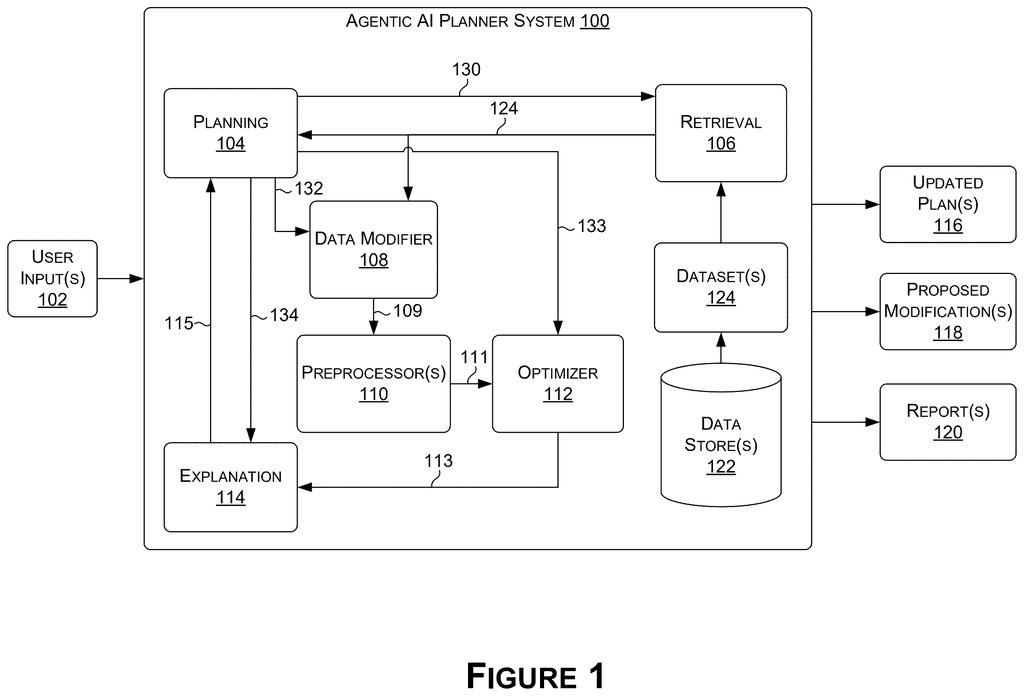
What Nvidia's AI planning system actually does for you
Ever tried to explain a budget change to a spreadsheet? You update one cell and everything else breaks, and the tool has no idea what you actually meant.
Nvidia's patent describes a system where you can type something like "shift 20% of the compute budget to the marketing team next quarter" and an AI figures out what you mean, retrieves the relevant data, and produces an updated plan that satisfies your goals without violating existing constraints. It categorizes your request, finds the data it needs, and runs an optimization process to come up with the best version of the revised plan.
This is aimed squarely at business and enterprise settings where resource allocation decisions (who gets what budget, headcount, or compute capacity) happen constantly but are still largely manual. The system is meant to make those decisions faster and easier to explore.
receive a user input comprising one or more modifications to a first allocation plan; determine a category of the user input based at least on content of the user input; retrieve a dataset from one or more data stores that is relevant to the category of the user input and the one or more modifications to the first allocation plan; …
Translation: The system reads your plain-language request and figures out what kind of resource change you want.
How the system turns your request into an updated plan
The patent describes a pipeline with several distinct steps:
- Category detection: The system reads your input and classifies what kind of planning request it is, so it knows which data and which rules apply.
- Relevant data retrieval: Based on that category, it pulls a targeted dataset from one or more data stores, keeping only what's relevant to your request and the existing plan.
- Model generation: The retrieved data is shaped into a formal optimization model, which defines variables (the things that can change), constraints (the rules that can't be broken, like a fixed total budget), and objectives (what the system is trying to maximize or minimize, like cost efficiency).
- Optimization and output: A solver finds the best values for all the variables within those constraints, and the system outputs an updated allocation plan along with a response to the original request.
The key move here is the middle step: converting a free-form user request into a structured optimization problem automatically. Traditionally that translation requires a human analyst. The patent puts an AI in that role, acting as an interpreter between what you say and what the math needs to know.
An updated allocation plan may be generated based at least on values for the variable(s) determined using an optimization process based at least on the model(s).
Translation: The AI runs math formulas to build a brand new schedule that fits your goals.
What this means for AI assistants in the enterprise
If this works as described, it could shrink the time between "what if we reallocate resources here?" and "here's what that actually looks like" from hours or days to seconds. That's a meaningful change for any organization that runs frequent planning cycles, whether that's IT resource scheduling, workforce planning, or compute budget allocation inside a cloud provider.
The breadth of claim 1 is worth noting: it covers any allocation plan, in any domain, modified by any user input that can be categorized. That's a wide net. Nvidia's interest in AI-driven enterprise software shows up clearly here, well beyond its core chip business, and this filing fits squarely into that direction.
Nvidia's eighth filing we've tracked since July in our AI agents that act watch follows one on game bug reports and one briefing software on databases, adding another piece to software that acts on your behalf.
Claim 1 covers any processor that takes a user's request, figures out what category that request belongs to, pulls relevant data, builds a mathematical model with goals and limits, and spits out a revised plan. No specific industry, planning type, or method is required. That is a deliberately wide net.
In practice, that net could catch nearly any software that lets someone describe a change in plain language and receive an updated resource plan in return, whether for staffing, inventory, budgets, or logistics.
Whether Nvidia holds that territory long-term depends entirely on what examiners find in prior research, since the underlying idea of connecting conversational tools to planning software has been around long enough to generate a substantial paper trail.
There are more where this came from
We read every patent application Big Tech publishes and send you the ones worth knowing. Plain English, free, every week.
The drawings
9 drawing sheets from US 2026/0278498 A1 · click any drawing to enlarge


Want this weekly breakdown for a company we don't cover? Patentlyze Pro →