
Nvidia Patent Builds Detailed 3D Worlds From a Text Prompt
Type a sentence, get a fully furnished 3D world. Nvidia has filed a patent for a system that uses AI to build virtual environments in stages, starting from a bare scene and progressively filling it with objects large and small.
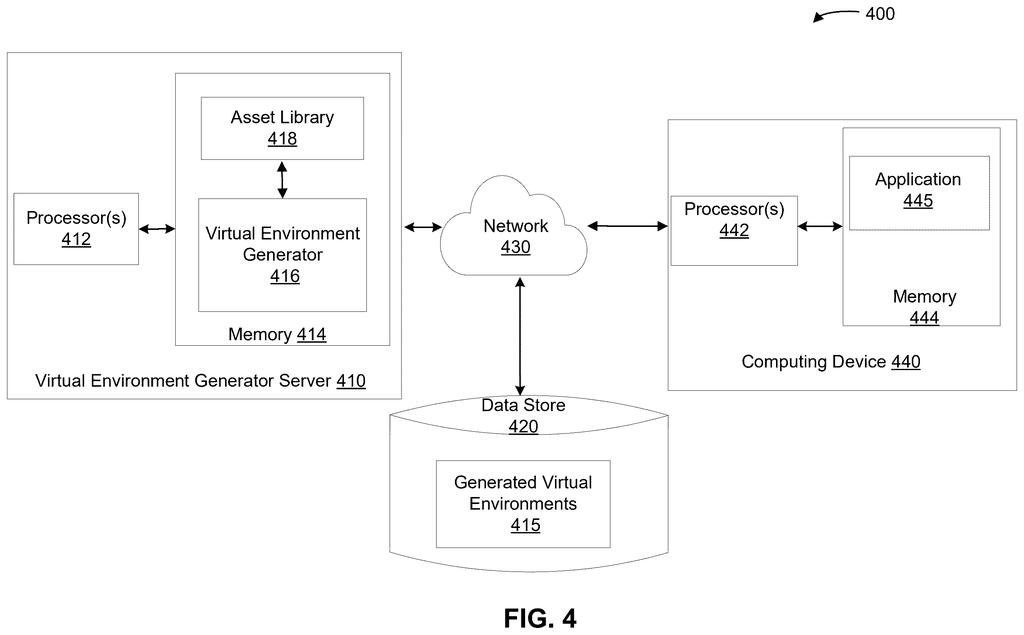
How Nvidia's text-to-3D-world system actually works
Imagine you want to train a robot to navigate a warehouse, but building a realistic 3D warehouse from scratch takes a team of designers weeks. Nvidia's patent describes a system that lets you skip all that by just typing a description.
You give the system a text prompt like "a cluttered industrial storage room," and it builds a virtual space in three passes. First it creates the bare environment (walls, floor, basic structure), then it populates the scene with large items like shelves and pallets, and finally it scatters smaller objects like boxes, tools, and labels throughout.
The key idea is the layered approach: big structures first, fine details last. That mirrors how a human designer would work, and it keeps smaller objects from floating in mid-air or clipping through furniture. The result is a plausible, usable 3D scene generated almost entirely by AI from a single typed sentence.
How the three-pass scene construction pipeline layers assets
The patent describes a three-stage pipeline for constructing a virtual 3D environment from a text prompt, using what Nvidia calls a vision-language-action model (a type of AI that combines image understanding, natural language, and decision-making to place objects in a scene).
Stage one takes the text input and generates a base environment: the room or outdoor space itself, without any objects in it.
Stage two adds a set of large "scene elements" (think furniture, shelving units, vehicles, structural fixtures) that define the layout and function of the space.
Stage three fills in smaller additional assets, defined in the patent specifically as objects smaller than the first scene element placed in stage two. This size-ordering rule is the structural core of the invention: it ensures the AI populates the scene hierarchically rather than randomly, so small items are always placed in the context of the larger objects already present.
The intended use case is generating synthetic training data for AI systems, particularly robotics. Rather than collecting real-world footage or hand-building simulation environments, developers could generate thousands of varied, text-specified scenes automatically.
What this means for robot training and simulation data
For robotics and AI development, synthetic training data is a big deal. Teaching a robot arm to pick up objects, or training a self-driving system to handle unusual scenarios, requires enormous amounts of varied visual data that is expensive and slow to capture in the real world. A system that can produce diverse, plausible 3D environments on demand from text could dramatically cut that cost.
The layered construction approach is the practical contribution here. It mirrors how real-world scenes are organized (big structures define space, small objects fill it), which makes generated environments more physically coherent and therefore more useful for training AI that has to operate in the real world.
This is squarely aimed at Nvidia's robotics simulation business, where generating varied training environments at scale is a real bottleneck. The three-pass hierarchical approach is sensible engineering rather than a flashy idea, but that's exactly what makes it credible as something that will ship inside Isaac Sim or a similar tool. If it works as described, it reduces a days-long environment-design task to seconds.
There are more where this came from
We read every patent application Big Tech publishes and send you the ones worth knowing. Plain English, free, every week.
The drawings
11 drawing sheets from US 2026/0220891 A1 · click any drawing to enlarge


Want this weekly breakdown for a company we don't cover? Patentlyze Pro →
Be the first to weigh in