
Nvidia Files Patent for AI That Hunts Security Holes in Blueprints
Before a company builds a computer system, security experts sit down and ask how someone could break into it. Nvidia's new filing hands that chore to a chain of AI models that read the design diagrams and write up the answer.
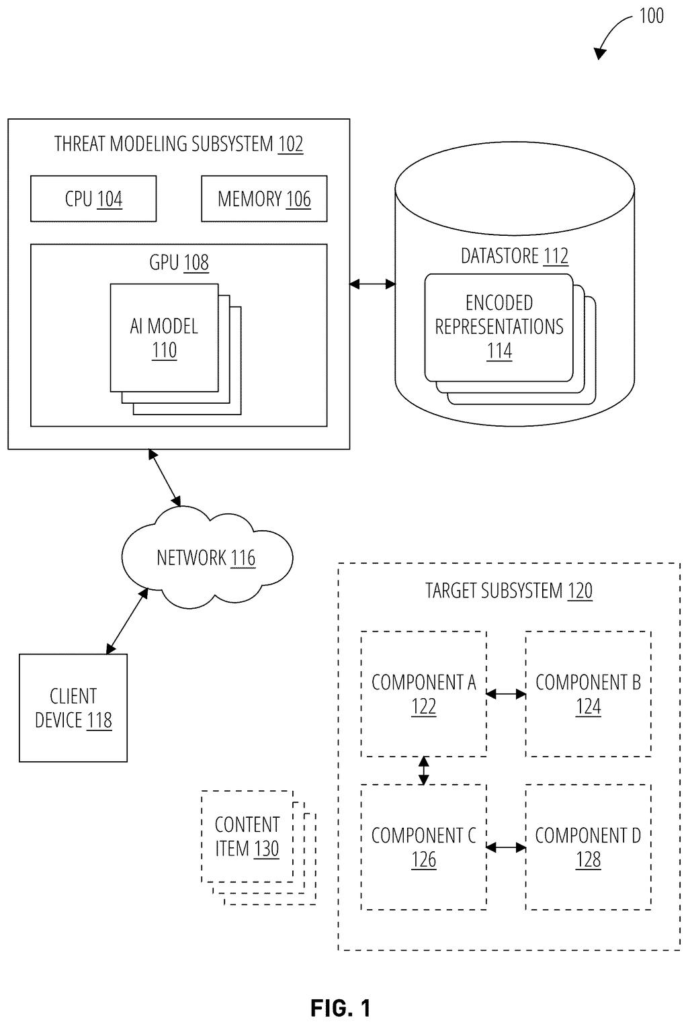
What Nvidia's AI threat-modeling system does
Imagine you're about to build a house, and before the first brick goes down, an expert studies your floor plan and says: "That back window is easy to break, and nobody will see the side door." In software, that expert review is called threat modeling, and it usually means specialists poring over diagrams and documents by hand.
Nvidia's filing describes an AI version. You feed it the drawings and design documents for a system. It reads them, figures out which parts connect to which, and then lists the ways an attacker could get in.
It doesn't stop at the bad news. The system also suggests fixes, checks whether the design already has them, and gives each threat a risk score so you can see the scariest problems first.
… provide at least a first portion of the encoded representations of the diagram parser output and the second subset of the plurality of content items related to the target system architecture as input to a first generative AI model to obtain a plurality of potential threats related to the target system architecture.
Translation: The system feeds processed architecture data into a generative AI model to uncover potential security risks.
How the AI reads diagrams and lists attacks
The filing describes a pipeline of several AI models passing work down the line, each one handling one step of a security review.
First, a diagram parser (a tool that turns a picture of a system into a written description) reads architecture drawings. It can be an AI vision model or a plain program that reads diagram file formats. Its output lists the system's parts and the connections between them. Next, an embedding model (software that converts text into numbers so a computer can find related passages later) encodes that description along with design documents and data flow diagrams, and stores them in a searchable database.
Then a generative AI model (the same kind of tech behind chatbots) goes connection by connection, pulling up the relevant notes and listing potential threats. The prompt can steer it toward established frameworks such as STRIDE.
The filing also describes extra stages that the dependent claims cover:
- Mitigations: a second model checks reference material, like known countermeasure documents and company policies, to say whether a threat is already handled or what to do about it.
- Recommendations: a third model combines that with the original design.
- Risk scores: a fourth model scores each threat using items such as past threat models and estimates of attacker effort.
One example in the description: if two devices talk over an encrypted connection, a snooping threat counts as already handled. If the documents never say, it's flagged as unknown.
Disclosed are systems and techniques for threat modeling with artificial intelligence.
Translation: The document describes methods for using artificial intelligence to analyze system security risks.
Why security teams could care about this filing
If you work anywhere near software, the practical upside is a security review that happens early and often, rather than once, late, and only when a specialist has time. The description even notes the system can review a design before the thing has been built, which is when mistakes are cheapest to fix. For everyone else, fewer overlooked holes in the services you use is the hoped-for result.
There's a caveat. a growing pile of Nvidia security-software filings suggests it is thinking about this area, but this one is early: the examiner's first review rejected the claims as filed, which is routine and usually followed by amendments. The filing also describes no accuracy tests, so how well the AI actually finds real threats remains unanswered.
Nvidia's 11th filing we've tracked in AI guardrails race since July follows a chatbot output slider and a tool spotting pipeline failures.
For a person using an app or a cloud service, the benefit here is invisible but real: a design flaw caught on paper never becomes a data leak later. You would notice it only by not noticing a breach.
The design choice that matters most is showing its work. The system is described as quoting the exact passage of the documents that proves a threat is handled, or saying plainly when the documents are silent. That makes the output something a human reviewer can check, instead of an AI verdict you have to take on faith.
The filing offers no results, so treat it as a sensible blueprint rather than proof it works. Still, handing the tedious first pass of a security review to software is a practical use of AI, and it's one that could spare engineers hours of diagram-staring.
Get our take in your Top Stories
Liked this breakdown? Add Patentlyze as a preferred source on Google, and our plain-English take shows up more often in your Top Stories the next time Nvidia patent news breaks.
There are more where this came from
We read every patent application Big Tech publishes and send you the ones worth knowing. Plain English, free, every week.
The drawings
13 drawing sheets from US 2026/0330024 A1 · click any drawing to enlarge


Show the other 5 sheets


Want this weekly breakdown for a company we don't cover? Patentlyze Pro →
Be the first to weigh in